







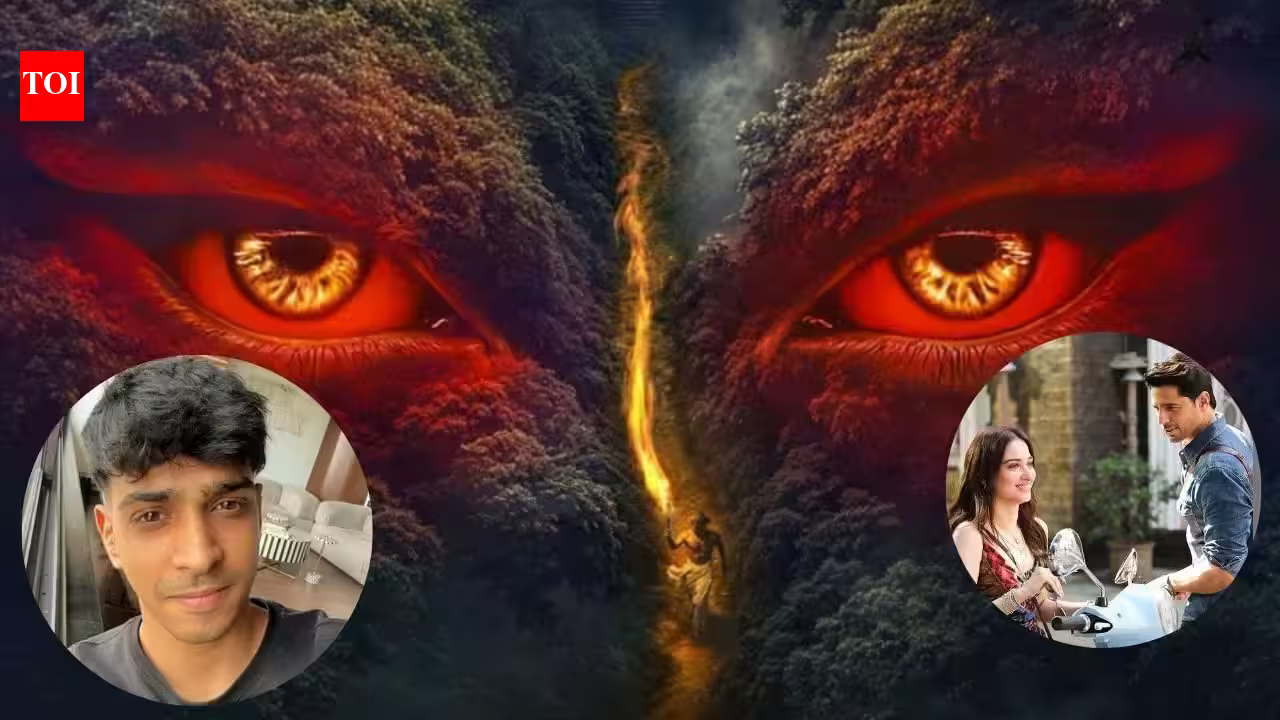
In the high-stakes world of Bollywood production, where trailer drops are meticulously crafted to generate massive buzz, every frame and every note of background music is usually accounted for with surgical precision. However, when the trailer for the upcoming Sidharth Malhotra-starrer, The Vvaan: Force of the Forest, hit the digital space recently, it didn’t just trigger excitement for its mythological-thriller premise—it sparked an immediate intellectual property dispute that sent legal teams scrambling.
At the center of the storm was musician Sargam Vaish, who found himself in the surreal position of hearing his own master recording—a specific arrangement of the devotional classic “Aigiri Nandini”—being blasted across social media to promote a major motion picture, all without his authorization.
The Viral Allegation: When Music Meets Unauthorized Use
It began on September 20, when Vaish took to Instagram to flag a jarring discrepancy. As the trailer for The Vvaan: Force of the Forest rolled, fans and industry insiders alike were captivated by the atmospheric, intense rendition of “Aigiri Nandini” that underscored the visuals. For most, it was just another stellar production choice. For Vaish, it was a red flag.
He claimed that the specific version featured in the trailer was not a generic cover, but a bespoke master recording he had crafted specifically for a project associated with director Ram Gopal Varma. According to the musician, he retained the master rights to this particular arrangement. The inclusion of his work in the trailer—without an NOC (No Objection Certificate) or any form of compensation agreement—was, in his view, a clear-cut case of copyright infringement. For an independent musician, seeing one’s professional labor utilized in a multi-crore production without so much as a courtesy call is a nightmare scenario, and Vaish was quick to hold the film’s production house, Balaji Motion Pictures, accountable.
A Swift Resolution Behind Closed Doors
In an industry often marred by protracted legal battles, the resolution to this conflict was remarkably swift. Within 24 hours of Vaish going public with his grievances, representatives from Balaji Motion Pictures reached out to initiate a dialogue.
On September 21, the legal team for the production house met with the musician to rectify the oversight. By the end of that meeting, the two parties had reached an amicable settlement, with the producers moving to formally acquire the sync rights to the track. While it is rare to see such friction resolved in a single day, the move underscores the changing tide in Indian cinema, where production houses are becoming increasingly wary of the reputational damage that can stem from ignoring independent creators in the digital age.
Vaish noted in subsequent interviews that the executives were cooperative and professional, expressing their apologies for the oversight. The agreement effectively legitimizes the use of the track in the film’s promotional materials, allowing the marketing campaign to proceed without the looming threat of a copyright strike.
The Ghost in the Machine: Who Leaked the Recording?
While the legal rights to the song have been secured, a lingering, uncomfortable question remains: how did the audio get into the hands of the film’s editors in the first place?
Vaish has been transparent about the fact that he was never contacted by the production, which suggests that the recording was acquired through a third party—or perhaps by accident. In the era of digital file sharing, it is not uncommon for production teams to source “temp tracks” or temporary placeholders while editing a trailer. Often, these placeholders—intended to be replaced by original compositions—end up in the final edit due to a lack of oversight or internal communication breakdowns.
For now, the source of the leak remains an enigma. Both the musician and the production house are currently investigating the chain of custody for that specific file. For the creative community, this serves as a cautionary tale: the digital trail of a file is difficult to erase, and “borrowing” music for an edit can lead to significant public scrutiny.
The Vvaan: A Visionary Mythological Thriller
Putting the legal hurdles aside, The Vvaan: Force of the Forest remains one of the most anticipated projects on the upcoming slate. Directed by the duo Deepak Kumar Mishra and Arunabh Kumar—names synonymous with quality storytelling in the digital sphere—the film represents a departure from traditional Bollywood tropes. By casting Sidharth Malhotra alongside Tamannaah Bhatia, the production is betting big on a fresh, powerhouse pairing that is expected to draw audiences in record numbers.
The plot is equally ambitious, moving away from standard commercial narratives to explore a folk-horror premise. Following an urbanized, rational man who finds himself forced to confront the ancestral, forbidden mysteries of his village, the film promises a blend of VFX-heavy spectacle and grounded emotional conflict. With a supporting cast that includes stalwarts like Sunil Grover, Maniesh Paul, Shweta Tiwari, and Anup Soni, the production feels like an ensemble piece with serious pedigree.
Looking Ahead: A Lesson in Rights Management
As we look toward the film’s release on September 25, 2026, the resolution of the Aigiri Nandini dispute serves as a vital reminder to the entertainment industry. Intellectual property is the bedrock of creative production; when that foundation is shaky, it can undermine even the most high-budget projects.
The incident has highlighted the importance of robust rights management and the necessity for production houses to maintain tight control over their assets. For Sargam Vaish, the experience has ended on a high note—he has gained recognition for his work and ensured that his contributions are fairly compensated. For the producers of The Vvaan, it is a lesson learned in the importance of due diligence.
As the industry continues to evolve, the expectation is that transparency between major studios and independent artists will become the gold standard. After all, the best trailers are the ones that spark excitement for the film, not a legal firestorm. With this hurdle cleared, all eyes are now on The Vvaan to see if it can live up to the massive anticipation surrounding its eventual theatrical debut.
Disclaimer: This content is auto-generated for informational purposes only.
Source: Read Original News