









Strategic Importance of the Mahanadi Basin Discovery
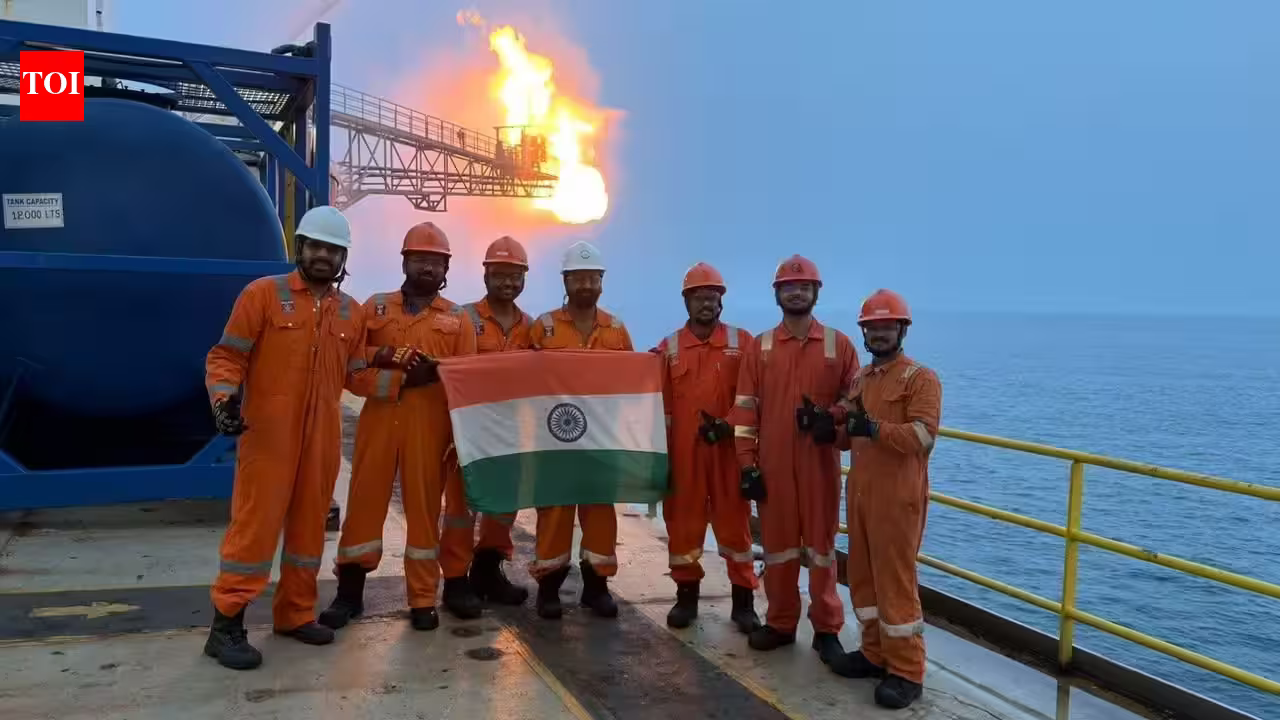
The recent gas discovery by the Oil and Natural Gas Corporation (ONGC) in the Mahanadi Basin, located 43 kilometers off the coast of Odisha, marks a significant milestone in India’s ongoing quest for energy security. Situated at the MN-DW18-1-H-D well, this find is part of the broader Samudra Manthan deepwater exploration campaign. By identifying gas at a depth of 1,441–1,452 meters, ONGC has validated the potential of frontier offshore regions that have historically remained under-explored.
For the Indian energy sector, the discovery is more than just a successful drilling result; it represents a tactical shift in how state-run entities approach high-risk, high-reward exploration. The proximity of the well to the Odisha coastline is a critical factor. Unlike deepwater fields located hundreds of kilometers from the shore, which require massive, standalone infrastructure investments, this location suggests the possibility of faster monetization. If further appraisal confirms commercial viability, the field could be integrated into existing or future regional energy clusters, significantly reducing the capital expenditure typically associated with deepwater production. This efficiency aligns with the broader objective of the Petroleum and Natural Gas Rules, 2025, which encourage the development of offshore resources through shared evacuation infrastructure.
The Samudra Manthan Initiative and National Energy Policy
The Samudra Manthan National Offshore Exploration Scheme stands as the structural pillar behind this discovery. Designed to operate through the fiscal year 2030-31, the scheme is an ambitious governmental roadmap aimed at augmenting India’s hydrocarbon reserves by more than 600 Million Metric Tons of Oil Equivalent (MMTOE). The program represents a departure from traditional, siloed exploration efforts by promoting a holistic ecosystem that includes extensive seismic surveys, scientific drilling, and the creation of an integrated manufacturing and services zone dedicated to the oil and gas sector.
The initiative addresses the historical challenge of limited offshore data. By prioritizing the collection, processing, and interpretation of high-quality seismic data, the government aims to de-risk frontier basins, making them more attractive for both state-led and potentially private investment. Furthermore, by fostering an integrated manufacturing ecosystem, the scheme seeks to localize the supply chain for complex deepwater equipment. This move is essential to reduce reliance on expensive international contractors and specialized technology providers, thereby lowering the total cost of production per unit of gas or oil discovered in Indian waters.
Mitigating Import Dependence Through Domestic Output
India’s energy vulnerability is characterized by a reliance on imports for nearly 90% of its crude oil requirements. This heavy dependence leaves the economy susceptible to global supply shocks, geopolitical tensions, and sudden fluctuations in shipping costs, particularly through critical chokepoints like the Strait of Hormuz. When global conflicts threaten supply chains, India’s trade balance and fiscal stability face immediate pressure.
The current discovery, while modest in isolation, serves as a proof-of-concept for the national mandate to expand domestic hydrocarbon output. As global energy transitions continue, the role of natural gas is being re-evaluated as a bridge fuel, and increasing domestic availability is essential to insulate Indian industry from volatile international markets. By incentivizing explorations in the Mahanadi Basin and other deepwater regions, the government is attempting to create a more resilient domestic energy mix. This is not merely an economic imperative; it is a structural necessity for maintaining the momentum of India’s industrial growth without being held hostage to international supply disruptions.
Technological Frontiers in Offshore Exploration
The drilling of the MN-DW18-1-H-D well, facilitated by the drillship Platinum Explorer, highlights the technical capability that Indian exploration firms are now deploying in deepwater environments. Drilling at these depths requires precise engineering, advanced reservoir modeling, and the ability to operate under extreme pressure conditions. The “encouraging flow and reservoir pressure” reported by ONGC during the initial testing phase suggests that the geological characteristics of the Mahanadi Basin could support sustainable production levels.
However, the transition from exploration to extraction remains a capital-intensive journey. The next phase, involving rigorous appraisal and evaluation of recoverable resources, will determine the actual footprint of the field. ONGC’s commitment to scientific assessment ensures that the project remains data-driven, minimizing the likelihood of wasted infrastructure investment. The use of digital program management, a key component of the Samudra Manthan scheme, is intended to streamline these phases. By leveraging real-time data analytics and integrated project management, the state explorer aims to optimize the lifecycle of the discovery from the appraisal phase to the Final Investment Decision (FID).
Long-term Outlook for the Indian Hydrocarbon Sector
The discovery in the Mahanadi Basin underscores a broader trend of revitalization in India’s upstream sector. For decades, the focus of exploration was primarily on shallow water and onshore basins. As these fields mature, the shift toward deepwater and ultra-deepwater exploration is inevitable. The success of this exploration campaign will influence the confidence of the entire sector, including potential joint-venture partners and service providers who watch these developments closely.
Furthermore, the policy framework surrounding this discovery suggests a forward-looking approach to infrastructure. By enabling the development of shared facilities, the government is lowering the barrier to entry for smaller or satellite fields that would otherwise be deemed uneconomical. This creates a cumulative effect where multiple smaller discoveries can aggregate their output to justify the cost of pipeline and processing infrastructure.
As India moves toward 2030, the success of the Samudra Manthan initiative will be measured not just by the volume of reserves discovered, but by the speed at which these reserves are converted into available energy. The Mahanadi Basin find provides a tangible starting point for this trajectory. If ONGC can successfully navigate the commercial evaluation and development phases, it will set a template for future exploration in the Bay of Bengal and beyond, potentially transforming the eastern coast into a vital energy hub for the nation. The success of such projects remains critical to balancing India’s growing energy demand with the necessity of fiscal prudence and increased energy self-reliance.
Disclaimer: This content is auto-generated for informational purposes only.
Source: Read Original News