







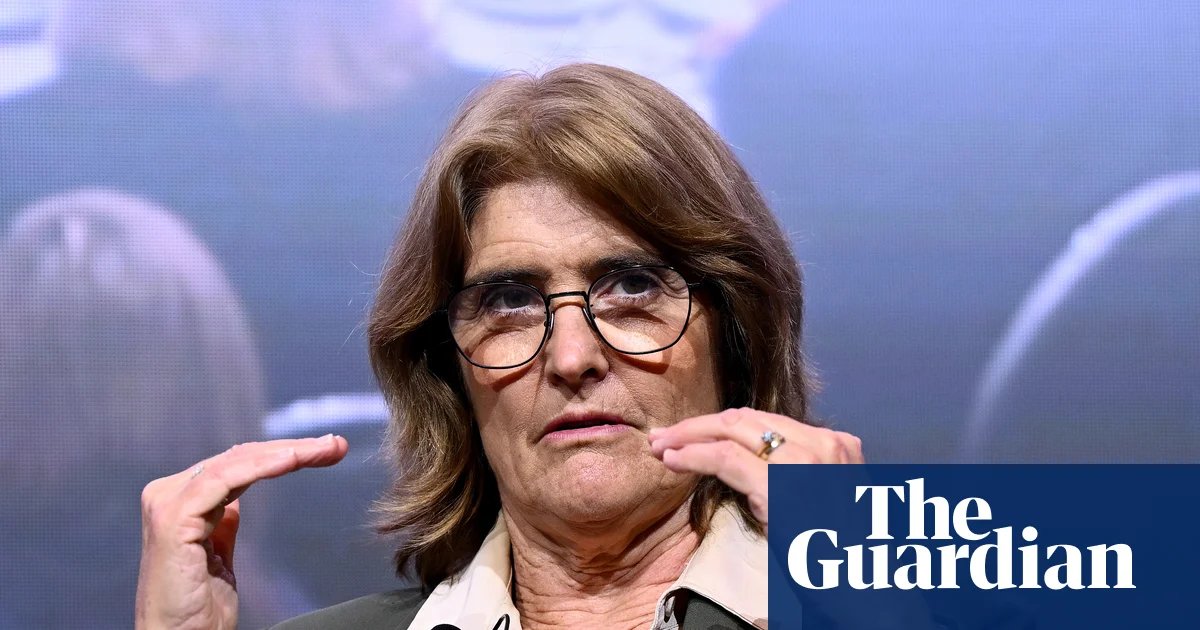
Reserve Bank Governor Michele Bullock has sounded a note of caution regarding the Albanese government’s heavy reliance on artificial intelligence to rescue the Australian economy. Speaking at a CEDA event in Sydney, Bullock warned that there is currently no empirical evidence that AI is driving efficiency, fueling fears that the technology may be nothing more than a speculative bubble.
The Governor’s remarks come as the federal government’s latest intergenerational report projects a “profound” boost to economic activity by 2066, a forecast predicated largely on the assumption that AI will drive consistent productivity gains. Treasurer Jim Chalmers has famously described AI as “the most transformative thing that will happen in our lifetime.”
However, Bullock expressed skepticism, pointing to research from South Korea suggesting that employees adopting AI tools often maintain the same output while working fewer hours. “While people fiddle around and try and figure out what to do with this new technology, productivity can actually decline,” Bullock noted. She cautioned that central banks globally are wary of a potential tech bubble, noting that while rapid investment in data centers is currently driving inflation, the anticipated economic payoffs remain unseen.
The RBA’s warning adds significant pressure to the Albanese government, which is facing mounting criticism over its economic strategy. While ministers argue that AI is essential to solving Australia’s economic malaise, economists have already flagged the government’s 1.2% annual productivity growth projection as overly optimistic.
The Governor’s address also touched on the nation’s precarious housing market, which is bracing for a potential interest rate hike next week. With market traders betting at over 90% that the RBA will lift the cash rate to 4.6%—a 14-year high—Bullock acknowledged that the current slump in house prices is significant. Prices have dropped 3.1% over the past three months, driven by consecutive rate rises and government reforms to investor tax breaks.
Bullock noted that home loan approvals have plummeted, particularly among investors, signaling a shift in the property market. She described the current downturn as a “slight dip” following a long period of unsustainable growth, but acknowledged that housing affordability remains a critical issue.
Addressing the politically sensitive topic of immigration, the Governor clarified that while new arrivals have been the primary driver of economic growth over the past year, they are also exacerbating the housing crisis because supply cannot keep pace with demand.
As the RBA prepares for its policy meeting next Tuesday, the government finds itself caught between the need to manage inflation and the political necessity of achieving the productivity targets outlined in its long-term economic vision. For now, the Governor remains unconvinced that the AI “great white hope” will be the engine of that growth.
Disclaimer: This content is auto-generated for informational purposes only.
Source: Read Original News