






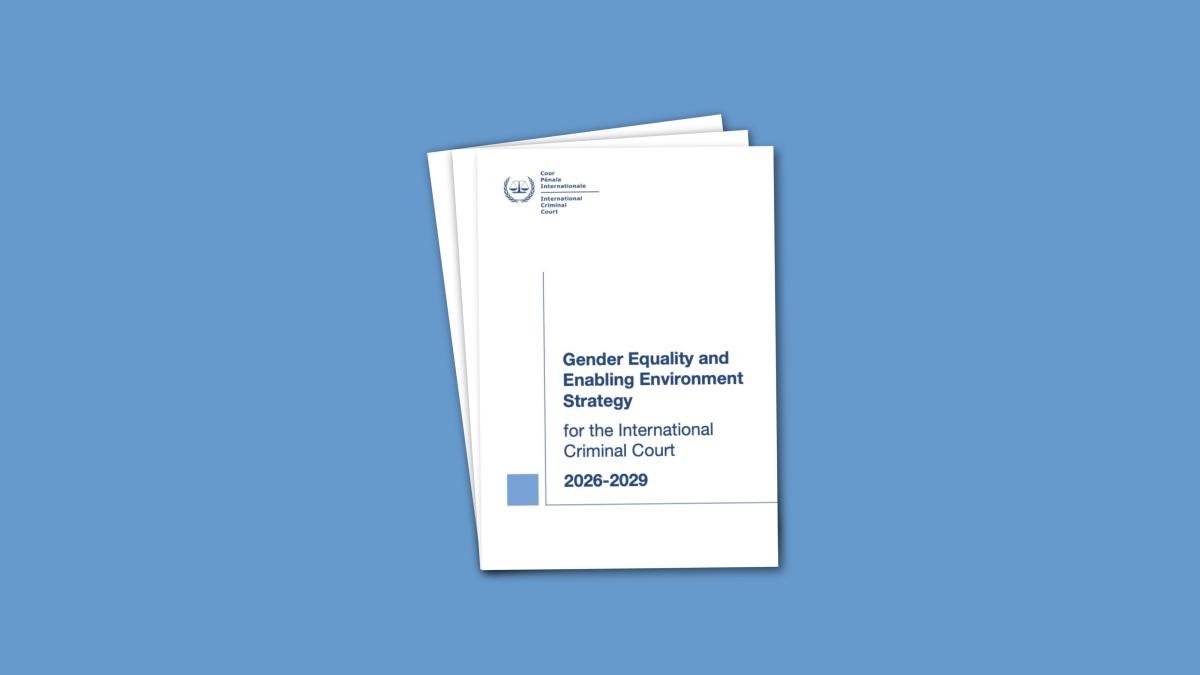
The International Criminal Court (ICC) has officially launched its Gender Equality and Enabling Environment (GEEE) Strategy for 2026–2029, signaling a significant evolution in how the institution manages its internal culture and workforce development. Announced on September 22, this new framework replaces the previous 2023–2025 roadmap, aiming to embed the principles of accountability, fairness, inclusion, and integrity into the daily operations of the Court.
The transition from a “Gender Equality and Workplace Culture” strategy to one focused on an “Enabling Environment” reflects a broader, more holistic approach to institutional management. While the previous iteration laid the groundwork for addressing gender disparities, the 2026–2029 strategy expands the focus to encompass the various systemic conditions that allow personnel to excel. By fostering an environment that is not only equitable but also supportive and responsive, the Court intends to ensure that its staff can contribute fully to the fulfillment of its complex global mandate.
A core component of the new strategy is its explicit adoption of an intersectional approach. The ICC acknowledges that the experiences of its employees are shaped by multiple, overlapping facets of identity. By recognizing these complexities, the Court aims to move beyond generic diversity initiatives toward a more tailored, inclusive model that respects the diverse expressions and identities of its global workforce.
During the launch event, ICC President Tomoko Akane underscored that gender equality is not merely a policy preference but an “absolute institutional prerequisite.” She noted that the Court’s dedication to cultivating a workplace governed by dignity and mutual respect is essential to maintaining the legitimacy of the international criminal justice system. “With the formal implementation of our second strategic framework, we reaffirm our dedication to cultivating a workplace governed by dignity, equity and mutual respect—tenets that remain indispensable to the administration of international criminal justice,” Akane stated.
The strategy is designed as a collective, Court-wide endeavor, requiring ownership across all organs and departments. This systemic integration is intended to ensure that the values the ICC promotes in its external judicial work—such as the rule of law and human rights—are reflected in its internal practices.
Deputy Prosecutor Mame Mandiaye Niang highlighted the connection between a healthy internal culture and the Court’s external effectiveness, noting, “By embracing diversity and advancing gender equality, we strengthen not only our workplace, but also our collective ability to deliver on the Court’s mandate.”
For his part, Registrar Osvaldo Zavala Giler emphasized the importance of momentum. He reflected on the successes of the 2023–2025 framework, which established key institutional milestones, and noted that the new strategy is tasked with turning core values into consistent, everyday actions. The goal is to build a resilient workplace that can withstand the unique pressures inherent in the high-stakes field of international criminal law.
To ensure accountability and transparency throughout the implementation period, the Court has committed to a schedule of regular reporting. These reports are intended to serve as a feedback loop, allowing the administration to identify recurring patterns, address obstacles to progress, and promote an ongoing institutional dialogue regarding workplace conditions.
As the ICC begins the transition to this new framework, the message from its leadership is clear: the Court’s influence in the international arena is inextricably linked to the health, diversity, and equity of its own internal environment. By refining its internal practices, the institution aims to model the very standards of justice and equality that it seeks to uphold in its courtroom proceedings across the globe.
Disclaimer: This content is auto-generated for informational purposes only.
Source: Read Original News