








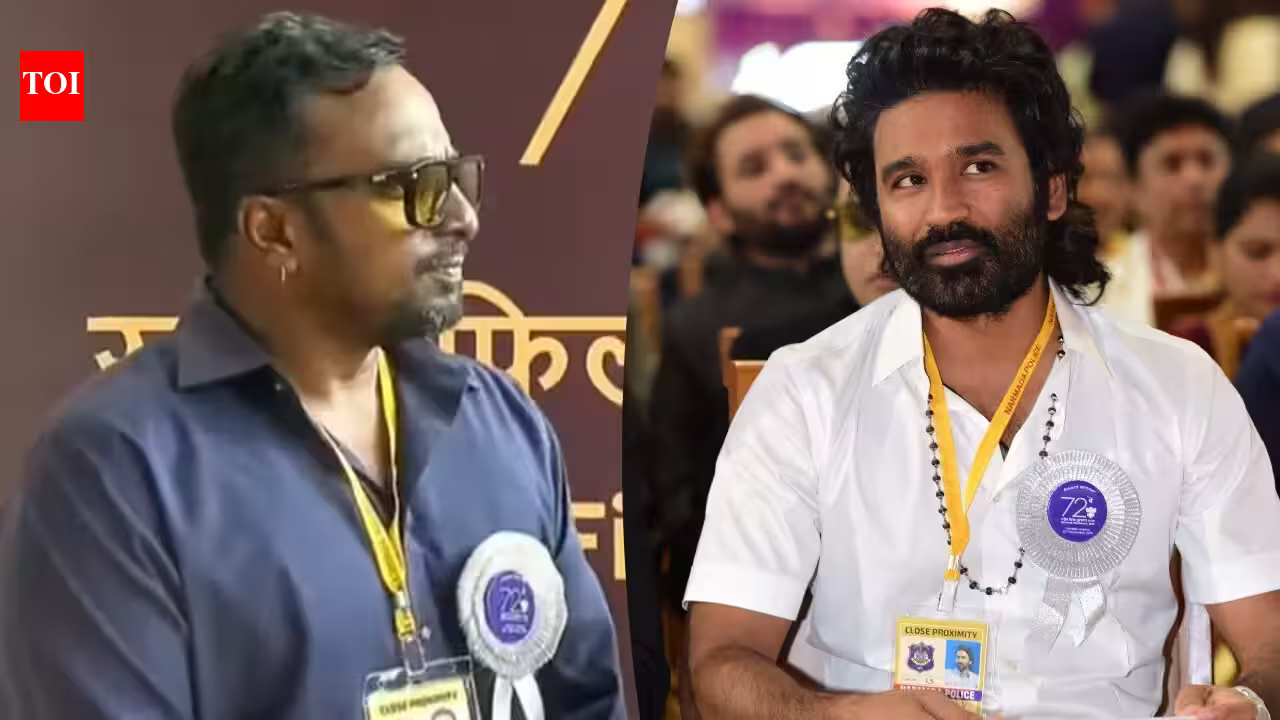
The glitz and glamour of the 72nd National Film Awards were recently punctuated by a moment of profound creative synergy. As the film fraternity gathered to honor the year’s finest cinematic achievements, the spotlight landed squarely on director Arun Matheswaran and the multifaceted powerhouse that is Dhanush. Their collaboration, the gritty, high-stakes period epic Captain Miller, walked away with a prestigious National Award, serving as a reminder that when visionary filmmaking meets raw, authentic talent, the result is nothing short of transcendent.
The film, which blends historical turbulence with deep-seated social commentary, was honored with the award for Best Feature Film Promoting National, Social and Environmental Values. Simultaneously, Dhanush’s portrayal of the titular character earned him a Special Mention, a nod that speaks volumes about his consistency as an actor who breathes life into even the most challenging scripts.
A Director’s Tribute to a Master Performer
For Arun Matheswaran, the road to this accolade was paved with grueling schedules, meticulous world-building, and the heavy weight of historical storytelling. Standing on the red carpet, the director was candid about the singular force that steered the ship through the choppy waters of production: his lead actor.
“Working with Dhanush is always special and a pleasure,” Matheswaran noted, his demeanor reflecting a rare professional kinship. “He’s a brilliant actor, so half your job is done.”
Coming from a filmmaker known for his uncompromising aesthetic and penchant for visceral, raw storytelling, this isn’t just standard industry flattery. Matheswaran’s films often demand a level of psychological and physical intensity that leaves most actors depleted. For Captain Miller, Dhanush had to undergo a radical physical transformation, shifting from the nuances of a disillusioned soldier to the hardened intensity of a rebel icon. Matheswaran admits that the film was an incredibly difficult shoot, citing the logistical and emotional complexity of depicting the British colonial era with an unflinching lens. Yet, he maintains that having an actor who understands the director’s internal monologue before a single frame is shot made all the difference.
The Weight of the Rajat Kamal
The ceremony reached its zenith when Dhanush stepped onto the stage to receive his Special Mention from President Droupadi Murmu. The sight of the actor, known for his grounded, understated public persona, holding the Rajat Kamal, served as a powerful capstone to the film’s journey.
While the trophy and the Rs 2 lakh cash prize are tangible reminders of the win, for the team, the award represents something far greater: validation. In an industry often preoccupied with box-office numbers, Captain Miller dared to ask difficult questions about systemic oppression, the true meaning of freedom, and the environmental sanctity of ancestral lands. To have that narrative recognized at the national level validates the gamble taken by both the director and his lead, proving that commercial action cinema can, and should, carry the weight of socio-political discourse.
Crafting a Cinematic Revolution
To understand why Captain Miller resonated so deeply with the jury, one must look at the structural ambition of the film. Set during the height of British rule in India, the story follows Analeesan—a man who starts his journey within the machinery of the British Indian Army only to find his moral compass shattered. His transformation into “Captain Miller” is not just a change in attire or name; it is a spiritual pivot.
Matheswaran’s direction creates a sensory experience that feels dusty, blood-soaked, and urgent. He doesn’t treat the period setting as a static backdrop but as a living, breathing antagonist. The collaboration with an ensemble cast—including the legendary Shiva Rajkumar, Priyanka Mohan, Nivedhithaa Sathish, Aditi Balan, and Sundeep Kishan—was essential. Yet, it was Dhanush’s ability to anchor the chaotic, sprawling narrative that kept the audience tethered to the film’s emotional core. His performance is a masterclass in subtlety; he conveys the fatigue of war and the spark of resistance through little more than a weary gaze or a stiffening of the shoulders.
Building a Legacy Beyond the Awards
For Arun Matheswaran, this National Award is more than just a trophy on a shelf; it is a milestone that marks his arrival as a distinct voice in Indian cinema. Having recently followed up Captain Miller with the buzz-worthy project featuring Lokesh Kanagaraj and Wamiqa Gabbi, Matheswaran is clearly a director in his prime, one who is unafraid to challenge both his actors and his audience.
However, the shadow of Captain Miller looms large over his filmography. It forced him to reconcile with the limitations of scale and the potential of storytelling. The recognition by the National Film Awards confirms that his brand of “New Wave” Tamil cinema is not just a localized trend but a narrative style that commands respect on a national stage.
As for Dhanush, this Special Mention is merely another entry in a career that has long defied labels. Whether he is playing the boy next door or a hardened revolutionary, he brings a unique, “everyman” quality that makes his larger-than-life characters feel frighteningly real.
Final Reflections on the Road Ahead
The collaboration between Matheswaran and Dhanush has set a high bar for future historical dramas. As the dust settles on the 72nd National Film Awards, the industry is left with a pertinent takeaway: the best films aren’t born from the largest budgets, but from the most aligned visions.
When the director is humble enough to say that his actor did half the work, and the actor is professional enough to trust his director’s vision, the resulting magic is inevitable. Captain Miller serves as a benchmark for what happens when talent and intent align perfectly. For those who watched the ceremony, it wasn’t just a celebration of a film; it was a celebration of two artists who refused to compromise on their vision, ensuring that their story—one of resistance, sacrifice, and the enduring fight for equality—will be remembered for years to come.
Disclaimer: This content is auto-generated for informational purposes only.
Source: Read Original News