







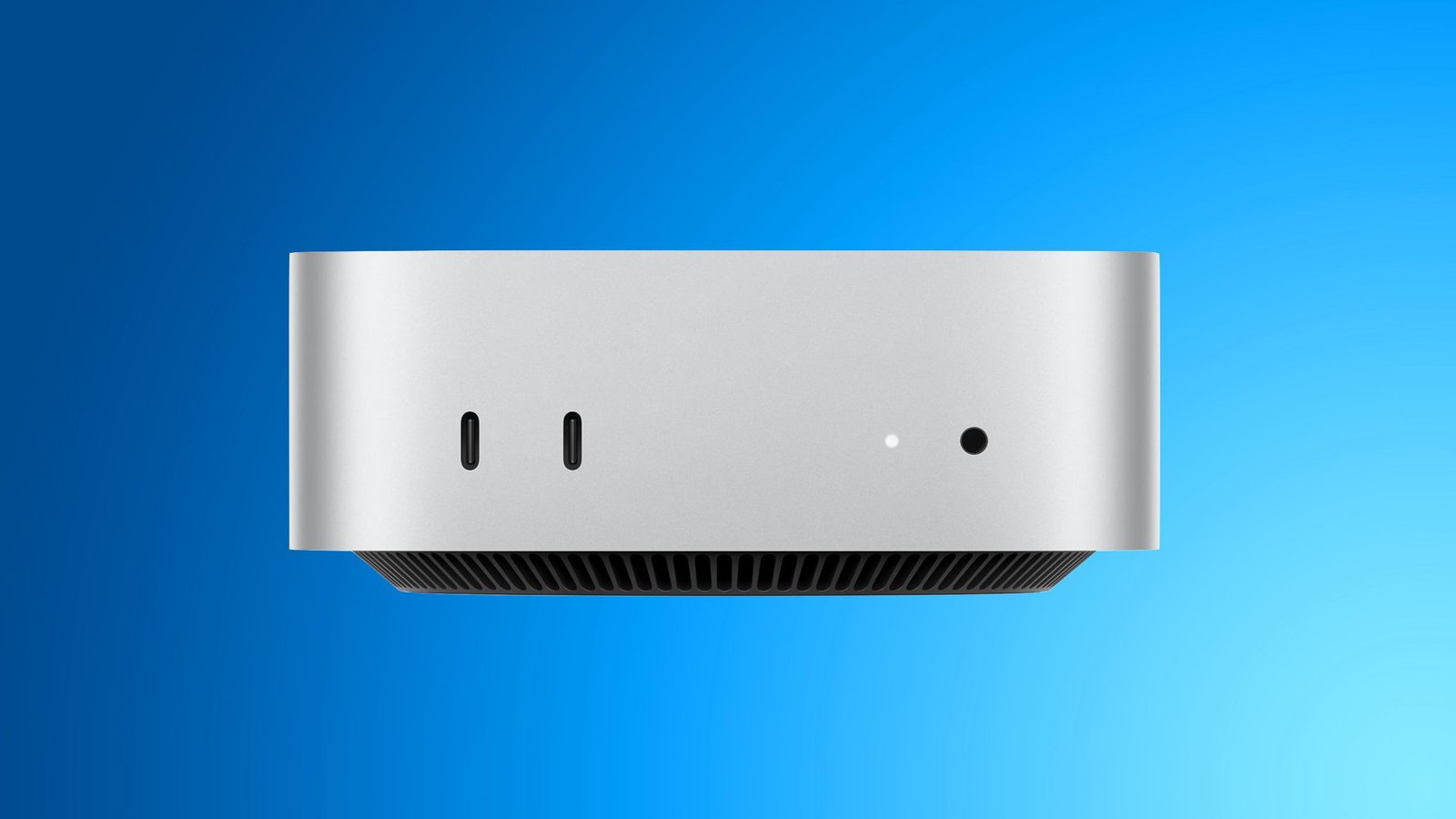
The Return of Soldered Storage in the M6 and M5 Pro Mac mini
The landscape of desktop computing hardware often shifts with each product cycle, and the latest iteration of the Apple Mac mini has introduced a significant design reversal. Following the release of the M6 and M5 Pro chip-equipped models, technical teardowns and industry reports have confirmed that the NAND flash storage is once again soldered directly to the logic board. This design choice marks a return to a non-modular storage architecture, effectively ending the brief window of user-accessible, removable storage that characterized the M4 and M4 Pro generations.
For a period, the Mac mini represented a unique intersection of consumer-grade desktop hardware and serviceability. Users could purchase base-model units with minimal storage and subsequently utilize aftermarket modules to expand their capacity at a fraction of the cost charged by the manufacturer. However, the move back to soldered NAND confirms that the M4 series was a solitary exception rather than the beginning of a new hardware standard. As per recent documentation from industry observers, the M6 and M5 Pro architectures integrate storage controller functions and memory chips in a manner that permanently ties the drive to the main board, rendering third-party physical upgrades impossible.
Impact on Consumer Costs and Configuration Planning
The inability to upgrade storage post-purchase fundamentally changes the acquisition strategy for potential buyers. Previously, the availability of aftermarket plug-and-play SSD modules allowed users to bypass the high premium associated with high-capacity factory configurations. By selecting the entry-level 256GB storage tier and upgrading independently, customers realized hundreds of dollars in savings.
With the current M6 and M5 Pro models, this cost-saving strategy is no longer viable. Buyers are now required to commit to their storage requirements at the point of purchase. For professional users, creative workers, or individuals managing large media libraries, this necessitates a more cautious approach to initial configuration. Choosing the correct capacity at checkout is now critical, as the permanent nature of the soldered NAND means that the machine’s long-term utility is fixed at the moment it leaves the warehouse. This reversal places the full financial burden of storage scaling onto the consumer from the initial transaction stage.
Understanding the Performance Gap in 256GB Models
Beyond the shift in modularity, the new Mac mini series introduces variations in data throughput performance based on the selected storage tier. Technical benchmarks conducted with disk testing utilities have revealed that the 256GB configurations of the new Mac mini utilize a single NAND flash chip. This is a departure from the dual-chip configuration found in models with 512GB of storage or higher.
The hardware implementation of a single chip effectively cuts the potential bandwidth for data transfer in half compared to the dual-chip setup. Benchmarking results using standard disk speed tests show that the 512GB models reach read and write speeds in excess of 6,000 MB/s. In contrast, the 256GB models, limited by their single-chip architecture, operate at roughly 3,000 MB/s. While this speed is technically faster than the performance seen in previous generation entry-level models, it represents a substantial hardware limitation for users who require high-speed data access for tasks such as 8K video editing, large-scale database management, or rapid file rendering.
Hardware Implications for Power Users
The discrepancy in read and write speeds is not merely an academic concern for enthusiasts; it holds practical implications for sustained system performance. When a system performs memory swapping—using the SSD as temporary RAM—the speed of that SSD directly influences how responsive the operating system feels during heavy multitasking or when memory-intensive applications reach their limit.
While the average user performing web browsing or document editing will find that the 256GB model’s speed is more than adequate for daily tasks, power users are incentivized to look toward the 512GB configuration as the functional baseline. The dual-chip architecture of the 512GB model provides the overhead necessary for sustained write operations, preventing the drive from acting as a bottleneck. Recognizing these differences is essential for businesses and professionals who depend on consistent disk performance to maintain productivity, as the hardware limitations are now permanently baked into the unit.
Future Outlook for Modular Mac Hardware
The reversal of storage modularity in the Mac mini has prompted a wider discussion regarding the trajectory of consumer electronics design. While the industry frequently moves toward thinner, more integrated systems to improve thermal management and overall physical footprint, these gains often come at the expense of end-user repairability and customizability. The “Expand Mac mini” community has indicated that despite their efforts to develop compatible hardware, the technical hurdles presented by the M6 and M5 Pro logic boards make future aftermarket support appear unlikely.
As the industry moves toward highly proprietary, integrated components, the definition of a desktop computer continues to drift away from the traditional, component-based PC model. While the new Mac mini maintains a high level of raw processing power and efficiency, the restriction on storage upgrades underscores a shift toward a “purchase and replace” lifecycle. Consumers must now weigh the performance benefits of the latest silicon against the lack of physical hardware flexibility. As it stands, the M4 series remains a rare, closed chapter in the history of the Mac mini, serving as a reminder of a design philosophy that favored user-driven hardware expansion.
Disclaimer: This content is auto-generated for informational purposes only.
Source: Read Original News