








Jersey’s strategy for tackling the invasive Asian hornet population is undergoing a significant shift, as the Environment Minister, Senator Mary Le Hegarat, has officially acknowledged that the species can no longer be realistically eradicated from the Island. Moving forward, the government’s focus will transition from total elimination toward long-term management and the mitigation of the hornet’s impact on local ecosystems and public safety.
The Asian hornet (Vespa velutina), a predator native to Southeast Asia, has become increasingly established in Jersey over recent years. Despite rigorous efforts by authorities and a dedicated network of volunteers to track and destroy nests, the species’ ability to reproduce and spread has proven difficult to contain. Senator Le Hegarat confirmed that the hornet is now considered a permanent fixture of the local environment, a reality the Island must learn to navigate.
“We have reached a point where the eradication of Asian hornets is not a realistic prospect,” Senator Le Hegarat stated. “We must now shift our resources toward managing their impact. This is a pest problem that Jersey will need to live with.”
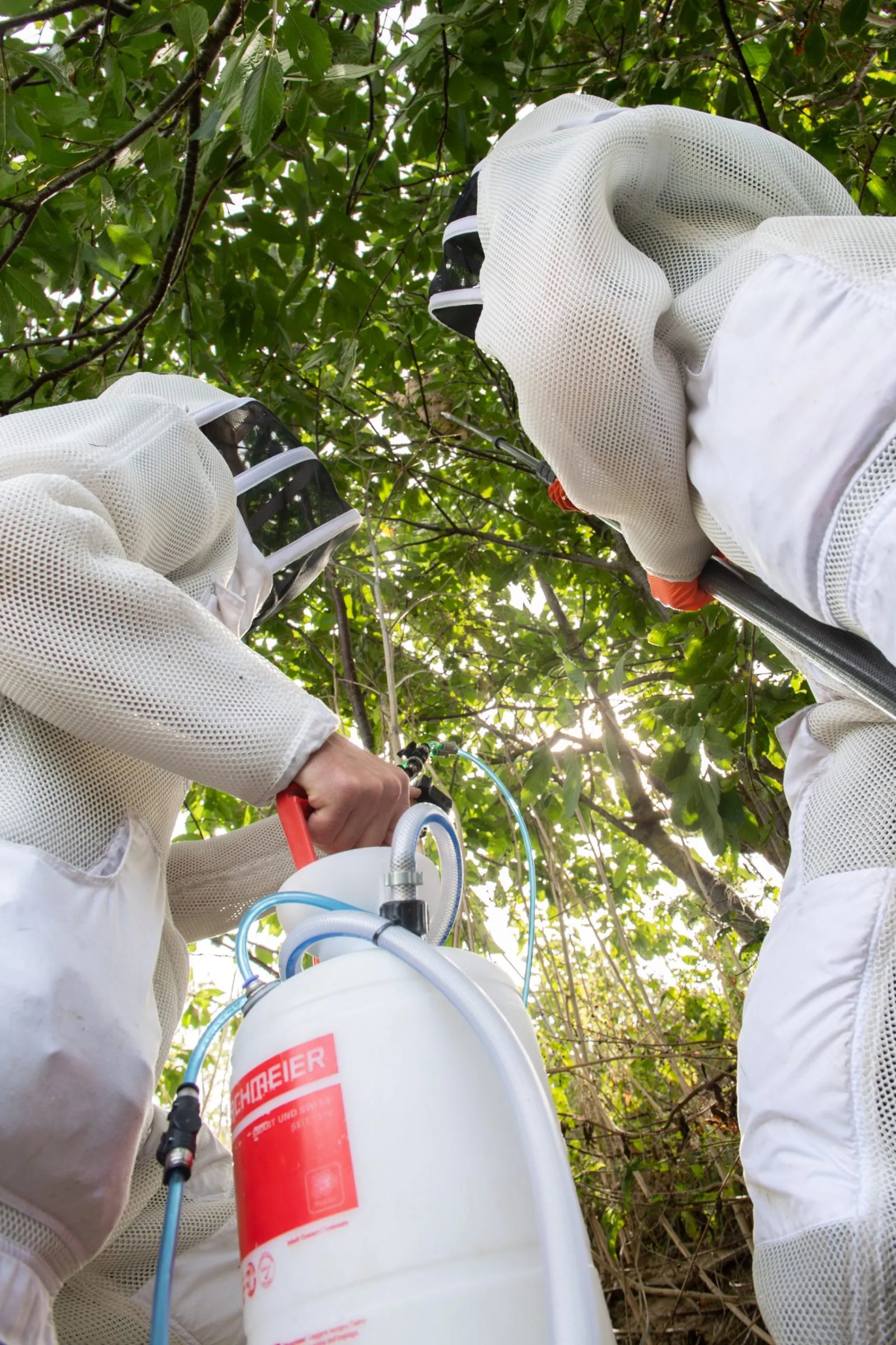
Under this new policy framework, the government will prioritize the destruction of nests that pose the most direct risk to the public and to local biodiversity. This includes targeting nests situated in sensitive areas or near high-traffic locations, as well as those that present a significant threat to honeybee colonies, which are primary targets for the hornets. By concentrating resources where they are most effective, the Department of the Environment hopes to prevent the hornet population from reaching levels that would cause catastrophic harm to native pollinators.
The decision reflects a broader international trend in dealing with invasive species. As global trade and warming climates facilitate the movement of insects into new territories, many jurisdictions have had to abandon the goal of total eradication in favor of “containment and suppression.” In Jersey’s case, the Island’s geography and the proximity of the French coastline—where the hornets are firmly established—have made keeping the species out a near-impossible task.
Local beekeepers have been at the forefront of the battle, often acting as the first line of defense in monitoring for hornet activity. The shift in strategy will require ongoing collaboration between government bodies, conservation groups, and the public. Officials have indicated that the reporting system for hornet sightings will remain active, as data on nest locations remains vital for managing the threat. While the government will move away from searching for every single nest, they will continue to provide advice and support for the public to identify and manage the pests.
Experts emphasize that while the Asian hornet is aggressive when defending its nest, it is not inherently more dangerous to humans than native European hornets, provided that the public maintains a respectful distance. The primary ecological concern remains the impact on biodiversity. With the hornet now considered an established part of the local fauna, the focus for the coming years will be on preserving the resilience of Jersey’s insect populations, particularly the pollinators essential to the Island’s agriculture and horticulture sectors.
As Jersey adjusts to this new environmental reality, the government’s message is clear: while the Asian hornet cannot be removed, its presence can be managed through strategic intervention, public vigilance, and a sustained, practical approach to wildlife conservation. The era of attempted eradication has concluded, replaced by a pragmatic, long-term commitment to living alongside an unwelcome, yet persistent, invasive neighbor.
Disclaimer: This content is auto-generated for informational purposes only.
Source: Read Original News