








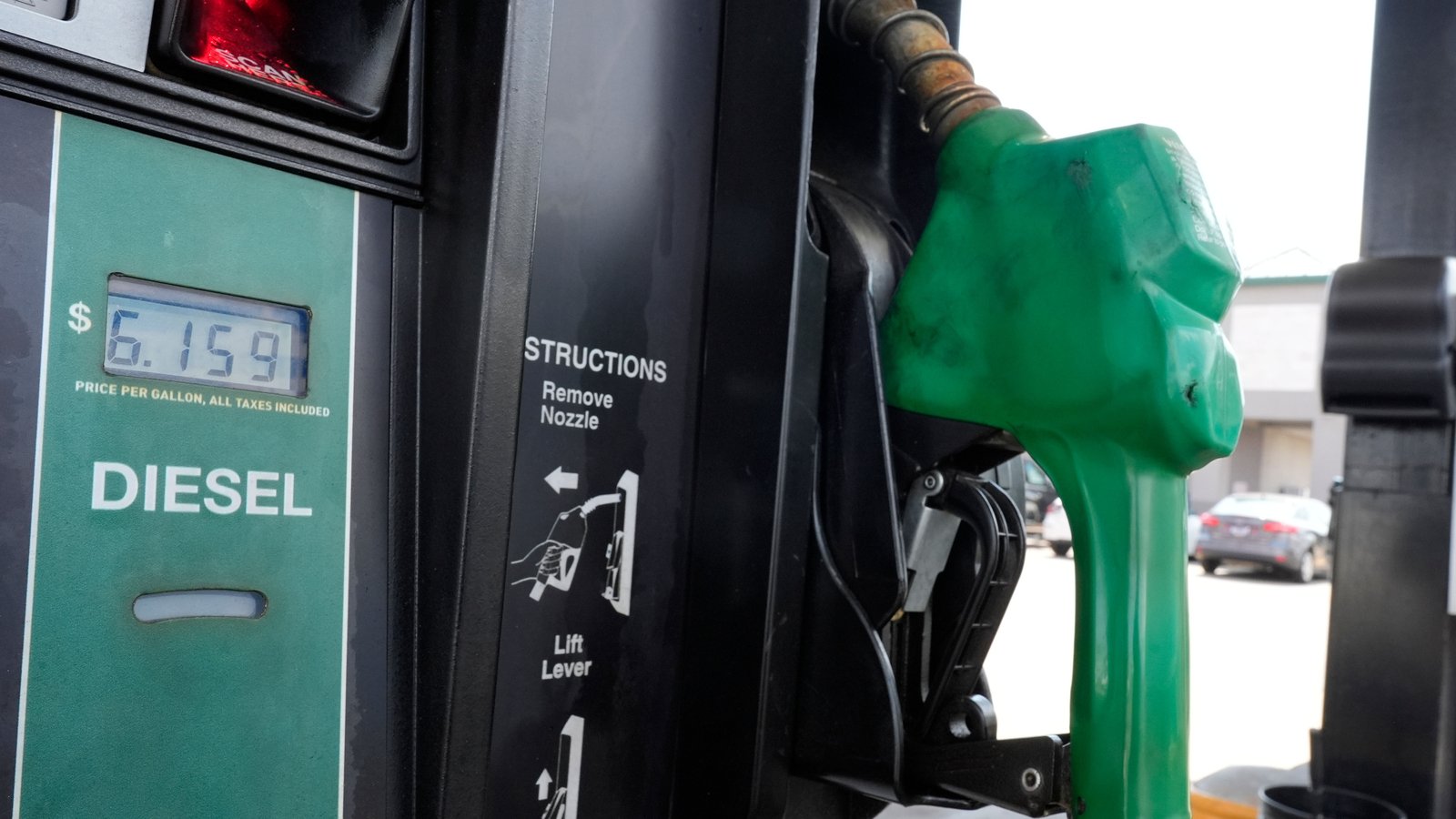
Diesel fuel prices have surged to record highs as the intensifying conflict in the Middle East ripples through the global economy, placing immense pressure on the American heartland and creating a volatile new front in the upcoming elections. With a gallon of diesel now averaging $6.52—a 73% increase since the onset of the war—lawmakers are grappling with calls for extreme intervention, even as experts warn that such moves could backfire.
The price spike, which has seen costs jump by more than 50 cents in just the last two weeks, is hitting small businesses, farmers, and the supply chain hardest. Economists warn that because diesel powers the majority of heavy transport, the cost of moving goods—most notably groceries—is poised to climb, further fueling voter anger.
Republican candidates in key battleground states are increasingly demanding an end to U.S. diesel exports to prioritize domestic supply. In Iowa, Rep. Ashley Hinson and Sen. Chuck Grassley have become vocal proponents of the measure. “IF U CAN EMBARGO CHIPS U CAN EMBARGO DIESEL,” Grassley stated on social media. Former President Donald Trump has signaled support for the idea, though the current administration remains cautious. Energy Secretary Chris Wright confirmed Wednesday that a “blanket ban” is not currently on the table, citing the complex logistical risks.
The crisis stems from a convergence of global shocks. The closure of the Strait of Hormuz has removed roughly 20% of the world’s oil from the market, while Ukrainian attacks on Russian refineries have further tightened the global supply of refined diesel.
Democrats are attempting to harness the mounting frustration to boost their congressional campaigns. In Kansas, Senate challenger Adam Hamilton has highlighted the plight of farmers facing potential bankruptcy, while in Virginia, former Rep. Elaine Luria pointed to the conflict as an “expanding economic crisis” that threatens national stability.
However, industry analysts and economists offer a stark warning: an export ban could worsen the very problem it intends to solve. The American Petroleum Institute and several energy experts caution that because U.S. refineries produce diesel as part of a joint process with other fuels, a halt to exports would lead to storage surpluses and eventual production cuts. Such a move would inadvertently spike the prices of gasoline and jet fuel while potentially triggering a global recession.
Long-time energy economist Phil Verleger noted that while a ban might provide temporary political cover, the long-term consequences could be catastrophic for the U.S. energy sector. He compared the proposal to the 1973 soybean export ban, which permanently drove global buyers toward more reliable markets like Brazil.
“It’s terrible economics, the long-term consequences will be horrible,” Verleger said. “If I were an elected politician, I’d do it.”
Disclaimer: This content is auto-generated for informational purposes only.
Source: Read Original News