







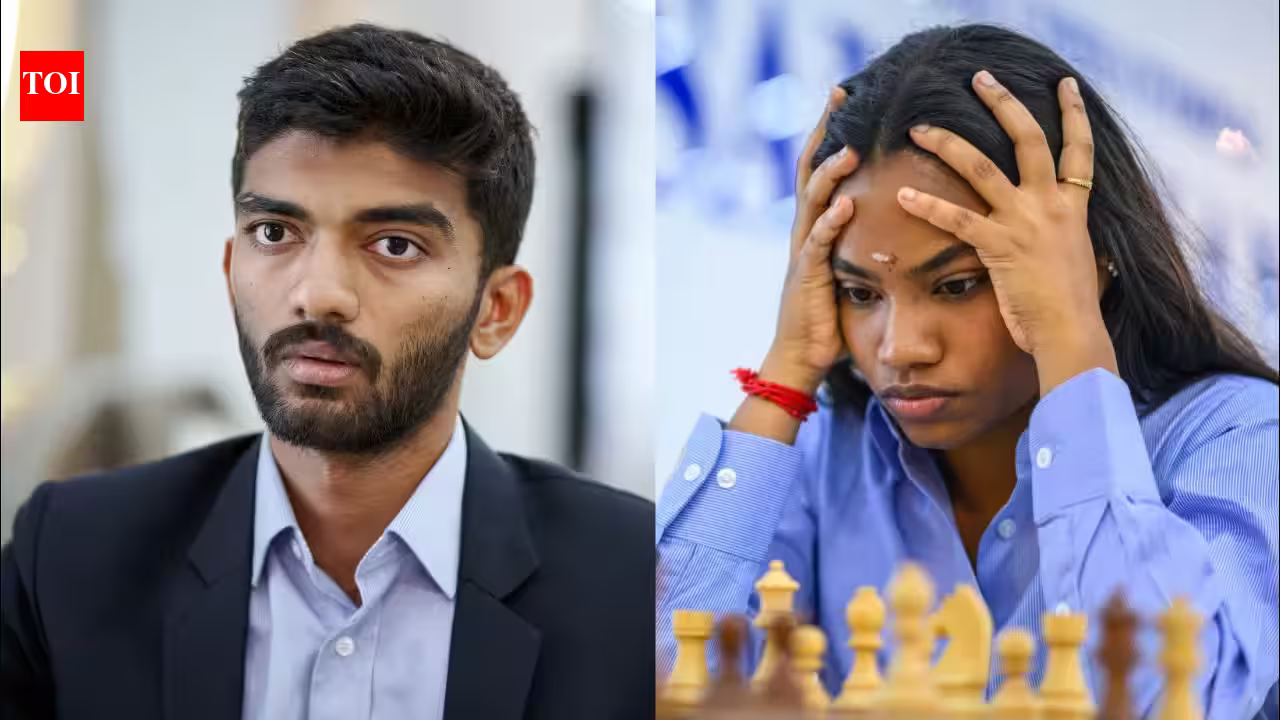
SAMARKAND — The 2026 Chess Olympiad is rapidly devolving into a psychological and strategic war of attrition, and for India, the path to gold has become a high-stakes endurance test. As the tournament winds into its final, decisive stretch, the air in the playing hall is thick with tension. While Germany and Uzbekistan have seized the initiative at the summit of the open section, India finds itself in the heart of a ravenous chasing pack, forced to reconcile with missed opportunities and the necessity of late-game heroics.
The Gukesh Factor: A Draw That Feels Like a Deficit
For the Indian men’s team, the memory of their Round 6 stumble against Uzbekistan remains a ghost in the machine. That match, defined by a crushing late-game blunder by Nihal Sarin against Nodirbek Yakubboev, shifted the tournament’s momentum. Yet, even as external observers questioned whether world champion Dommaraju Gukesh should have taken greater risks in his own contests, the Indian camp remains steadfast.
As Vidit Gujrathi, providing insight from the commentary desk, noted, “Gukesh plays his own game. If he feels there is a chance, he pushes till the very end.”
That resolve was put to the ultimate test in Round 8 against Azerbaijan’s Mahammad Muradli. With the other three boards ending in stalemate, the weight of India’s title defense fell squarely on Gukesh’s shoulders. Playing white in the sharp Najdorf Sicilian, Gukesh opted for an ambitious 7.Qf3 line, looking to manufacture an advantage out of thin air. Muradli, however, displayed defensive brilliance, meeting the world champion’s queen maneuvers with disciplined accuracy.
The contest rapidly devolved into a sterile middlegame after the 16.Bxc4 exchange stripped the board of major pieces. Gukesh, true to form, attempted to create structural imbalances, leveraging his space advantage on the queenside with moves like 27.b4 and 28.b5. Yet, as the clock ticked down toward the dreaded time-control threshold, Muradli locked the center and activated his king to neutralize the threat. By move 35, both players were operating with under two minutes on their clocks, turning the board into a crucible of precision.
Ultimately, the rook-and-bishop endgame proved impenetrable. Muradli’s persistent, precise checking forced a sequence of repetitions, ending any hope for a Gukesh breakthrough. When the handshake came after 56…Rb2+, it confirmed a draw that keeps India at 13 points—one point behind the leaders, Uzbekistan and Germany, and firmly in a crowded pack that includes China, the United States, Armenia, and France.
Savitha Shri: The Savior of the Women’s Section
While the men’s side battles for momentum, the Indian women’s team continues to lean heavily on the sheer willpower of Savitha Shri. In a vital Round 8 matchup against Kazakhstan, the pressure was immense following a loss for Vaishali Rameshbabu on Board 2. With the other two boards finishing in draws, a 2-2 tie was the baseline expectation, but India’s title aspirations demanded a victory.
Savitha, showing veteran composure, became the team’s lifeline for the seventh consecutive round. Her game against Elnaz Kaliakhmet, a complex Italian Game (Giuoco Piano), was a masterclass in strategic patience. Savitha’s deployment of an unconventional 11.Ra4 followed by deliberate rook maneuvers signaled a long-game strategy that eventually paid dividends in the form of a superior pawn structure.
The turning point arrived at move 25, when a well-timed Nf5 maneuver dismantled Black’s defenses. As the queens departed the board, the game transitioned into a technical rook-and-pawn endgame. Under immense pressure and deep in time trouble, Savitha displayed the tactical maturity of a player far beyond her years. Precise check sequences and a clinical simplification at 59.Rxd3 left Kaliakhmet with no recourse, forcing a resignation after move 62.
The Final Stretch: A Tournament in Flux
With three rounds remaining, the 2026 Olympiad has entered its “squeaky-bum time.” In the women’s division, China leads the charge with 15 points, while Kazakhstan and Mongolia follow closely with 14. India’s 13 points keep them within reach, but the margin for error has effectively vanished.
The narrative of this Olympiad has shifted from early-round dominance to late-round resilience. For India, the message is clear: there is no room for complacency. Whether it is Gukesh’s relentless pressure in the open section or Savitha’s heroics on Board 4, the team is being pushed to the absolute limit of their grandmaster pedigree. With the field as condensed as it is, one slip-up by the leaders or one surge by the chasing pack could rewrite the final standings entirely. As the players return to the board for the final rounds, the only certainty is that the gold medals will not be won by those who play it safe, but by those who can survive the mounting pressure of a championship race that is finally hitting its boiling point.
Disclaimer: This content is auto-generated for informational purposes only.
Source: Read Original News