








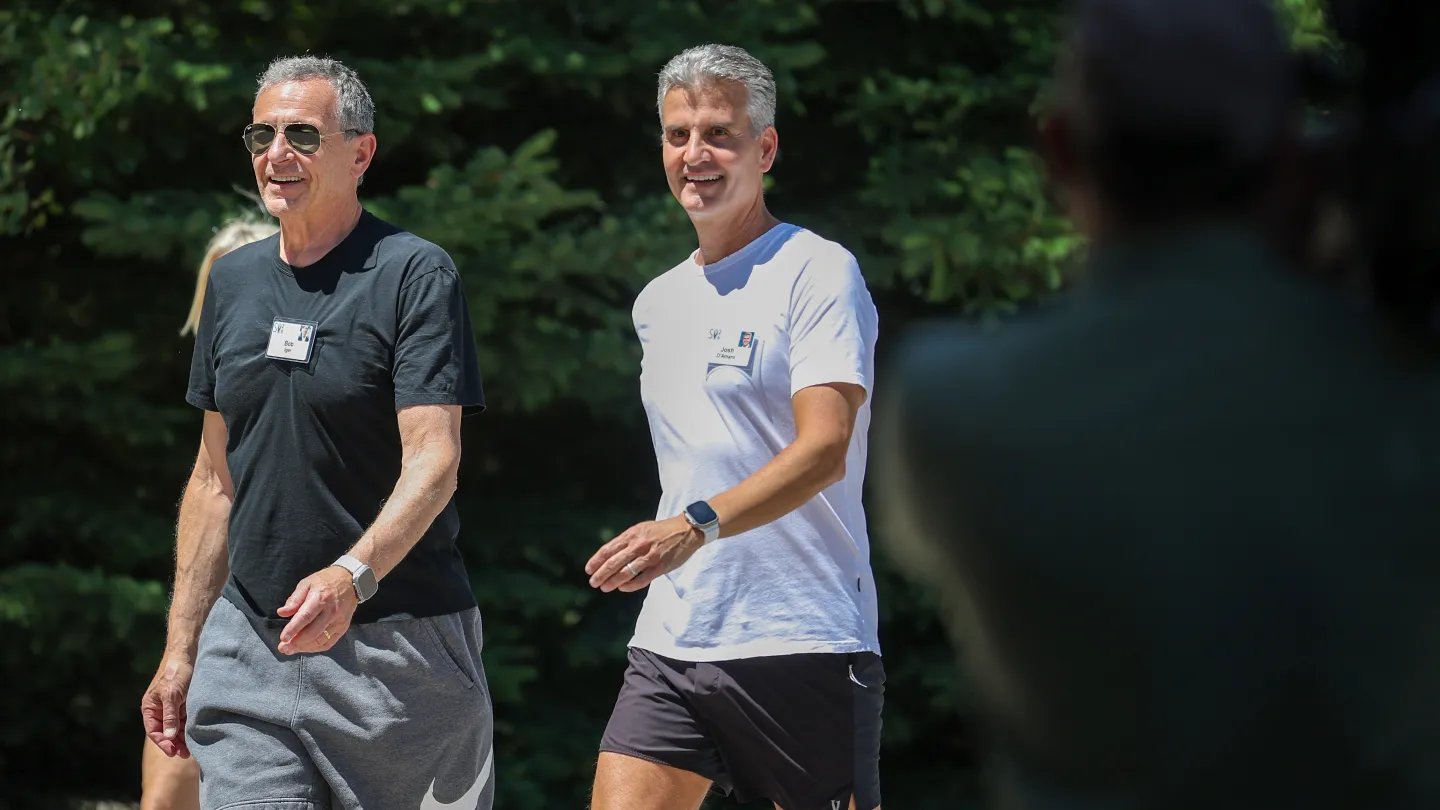
Bob Iger’s second departure from The Walt Disney Company serves as a masterclass in corporate legacy and the evolving nature of leadership in a volatile global economy. As Iger stepped down earlier this year to make way for his successor, Josh D’Amaro, he looked to a tradition more common in the Oval Office than the boardroom: the transition letter. In an extensive interview with the Harvard Business Review published this week, the veteran executive revealed that he left a six-page document on his successor’s desk, offering a stark reminder of the immense, often inadvertent influence a single leader wields over a century-old institution.
The Weight of Influence and the “Perpetual Crisis” Era
Iger’s primary piece of advice to D’Amaro centers on the gravity of the CEO title. He warned his successor that leadership at a company as deeply ingrained as Disney comes with an automatic authority that can shift the course of the organization instantly—sometimes even by accident. By acknowledging this influence, Iger argues, a leader is forced to act with more intentionality and responsibility.
However, Iger also emphasized that the “job description” for modern CEOs has shifted dramatically in the post-pandemic era. He believes we have entered an age of “perpetual crisis,” where the volatility of global markets and consumer behaviors requires a new kind of stamina. In today’s corporate landscape—much like the rapid-fire, AI-driven updates seen in the tech industry—leaders must possess the ability to confront crises with a steady, mature hand while maintaining a balance between hard-nosed realism and persistent optimism.
Reflecting on Succession and Lessons Learned
The exit marks a significant bookend to a complex decade for Disney. Iger’s first retirement in 2020 was famously short-lived, necessitated by the board’s dissatisfaction with his initial successor, Bob Chapek. Addressing that previous failure in the Harvard Business Review conversation, Iger admitted that the process was likely flawed.
While he avoided mentioning Chapek by name, Iger conceded that in his “zeal to check a box” and facilitate a smooth transition, the company likely underestimated certain character flaws or weaknesses. He noted that the board felt they “knew the person extremely well,” which perhaps blinded them to the realities of how that leadership style would actually perform under pressure. This self-reflection serves as a stark lesson for modern corporations, where the pressure to innovate and pivot rapidly—often with the help of predictive AI and data-driven HR analytics—can sometimes obscure the fundamental human traits required for long-term stability.
Tech Industry Parallels and Future Leadership
The challenges Iger describes at Disney resonate deeply within the tech sector. Much like companies navigating the integration of generative AI or sudden shifts in search and cloud computing infrastructure, Disney has had to grapple with massive disruption. The requirement for a leader who can manage “perpetual crisis” is no longer exclusive to media conglomerates; it is now the standard for every C-suite executive in the digital age.
As the company looks toward its future under D’Amaro, the criteria for success have clearly changed. The board’s selection process this time around focused heavily on resilience and the ability to assemble a high-functioning team capable of navigating rapid change. For observers of the tech industry, where the pace of disruption is relentless, Iger’s transition notes serve as a reminder that regardless of how much automation or AI assistance a company employs, the core of leadership remains the same: the stamina to sustain vision while weathering constant, unpredictable storms.
Disclaimer: This content is auto-generated for informational purposes only.
Source: Read Original News