



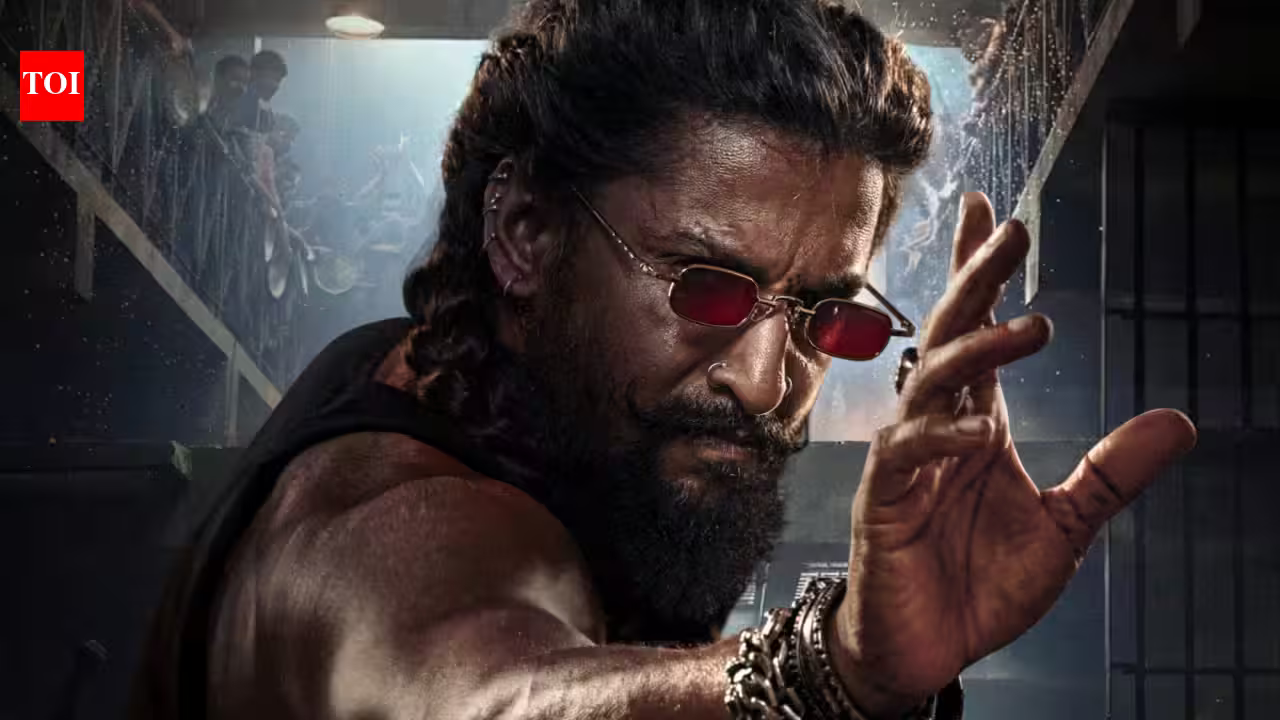
In the high-stakes ecosystem of Telugu cinema, few actors possess the grounded candor of Nani. Known as the “Natural Star,” he has spent over a decade building a rapport with audiences that transcends the typical barrier between idol and fan. However, when his latest collaboration with director Srikanth Odela, The Paradise, hit screens on September 24, the reception was anything but monolithic. In an industry where box office success is often heralded as the only objective truth, Nani’s candid response to the film’s “mixed” trajectory has turned the spotlight onto the evolving maturity of contemporary movie discourse.
The film, which marks a reunion between Nani and his Dasara director, arrived with immense anticipation. It promised a visceral, ambitious deep-dive into the social strata of 1980s Secunderabad—a world of grit, systemic discrimination, and the fight for basic dignity. Yet, as the dust settled after the opening weekend, it became clear that the audience’s reaction was divided. While the technical scale and Nani’s transformative performance were widely praised, the film’s narrative pacing and emotional resonance became the subject of intense, often hilarious, scrutiny on social media.
A Masterclass in Grace: Nani’s Response to Criticism
It is rare to see a leading man embrace his own “trolls,” but in a post shared on X, Nani chose transparency over defensive posturing. Rather than shielding himself behind the film’s impressive opening numbers, he acknowledged the feedback head-on.
“I have seen all your reactions and responses. I’ve received all your love and equally enjoyed your hilarious trolls,” he wrote. “I’m heartwarmed by the way the audience has owned the film, and also learnt from the flaws that critics and reviewers have pointed out.”
This isn’t just PR-speak; it’s a strategic shift. By validating the criticism, Nani effectively disarms his detractors while keeping the focus on the creative journey. He highlighted that the film was crafted with “blood and sweat,” emphasizing that their goal was to provide a “unique experience.” By ceding the “final judgment” to the audience, he maintains his status as a collaborator with his fanbase rather than just a brand ambassador for his own project.
Dissecting the Divide: Why ‘The Paradise’ Split Opinion
The mixed bag of reviews for The Paradise offers a fascinating case study in audience expectations. Srikanth Odela, who earned a reputation for raw storytelling with Dasara, clearly aimed for a grand, sprawling canvas here. He drew heavily from the lived realities and local histories of his hometown in Telangana, hoping to capture the specificity of the 1980s struggle.
However, many early viewers argued that the film’s ambition—specifically its heavy emphasis on stylised action sequences—occasionally overshadowed the character-driven drama. Some critics pointed to editing choices and a screenplay that struggled to balance the film’s epic scale with its intimate, human-centric heart. In an era where viewers are increasingly savvy, “ambition” is no longer a pass for narrative gaps. As one viewer noted on social media, the world-building was immersive, but the emotional “hook” felt elusive in certain segments.
Despite these hurdles, the casting choices were a clear win. The inclusion of Raghav Juyal—making his Telugu debut after a powerhouse performance in the action-thriller Kill—alongside veterans like Mohan Babu and Sonali Kulkarni, added a layer of gravitas that kept the film’s momentum afloat, even when the script stuttered.
The Box Office Reality: Numbers vs. Narrative
While the online debate over the film’s “flaws” continues, the financial reality paints a different picture. For the trade analysts, The Paradise is a triumph of marketing and star power. According to figures from Sacnilk, the film raked in an impressive Rs 34.65 crore net in India on its opening day alone. When factoring in the robust overseas market—a traditional stronghold for Nani’s films—the worldwide gross for Day 1 climbed to a staggering Rs 76.90 crore.
This creates a peculiar dichotomy: the film is a commercial success by almost every measurable metric, yet it lacks the critical consensus that usually accompanies “blockbuster” status. This tension is becoming increasingly common in post-pandemic cinema, where the “event” nature of a film drives the opening day, while the word-of-mouth dictates the longevity of the run. Nani’s openness, therefore, might be his smartest move yet. By acknowledging the flaws, he keeps the conversation alive and honest, likely fostering more goodwill with his audience than a hollow marketing push ever could.
Looking Ahead: The Future of ‘The Paradise’
Set against the backdrop of 1980s Secunderabad, The Paradise remains a significant entry in the careers of both Nani and Odela. It tackles the arduous subject of marginalisation with a sincerity that is hard to ignore, even if the execution doesn’t land perfectly for everyone.
The question now is how the film will perform in the coming weeks. With a strong financial foundation, the team has the luxury of time to let the film settle into the public consciousness. Whether the audience chooses to focus on the technical spectacle or the narrative inconsistencies remains to be seen.
For now, Nani has successfully navigated the choppy waters of a mixed launch. By framing the critique as a learning opportunity, he has demonstrated that even with a film of this size, the actor’s relationship with the audience is the most important element of the cinematic experience. In the world of The Paradise, the story may be about the struggle for rights and dignity, but the real-life story is about a star who knows how to listen—a trait that, in a volatile industry, is arguably as valuable as any hit film.
Disclaimer: This content is auto-generated for informational purposes only.
Source: Read Original News