








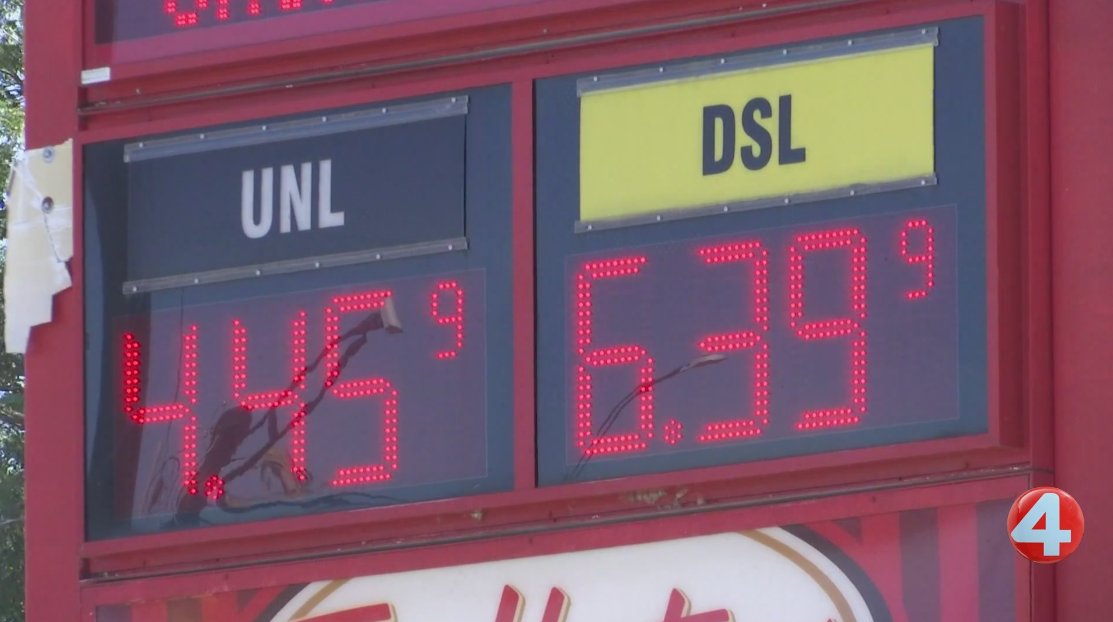
BUFFALO, N.Y. — Western New York motorists and logistics companies are facing a significant economic hurdle this week as the regional average for diesel fuel climbed to an unprecedented $6.36 per gallon. According to data provided by AAA, this record-breaking surge represents a punishing shift in operational costs for the transportation and shipping industries, which serve as the backbone of the local economy.
As inflation concerns persist, the spike in fuel prices is forcing a re-evaluation of how businesses manage their supply chains, with many looking toward emerging technologies to mitigate the financial impact of volatile energy markets.
Leveraging AI to Navigate Fuel Volatility
In response to the escalating cost of diesel, local logistics firms and regional transit providers are increasingly turning to advanced artificial intelligence tools to optimize their operations. Software suites powered by machine learning algorithms—many integrated with enterprise-level Google Cloud services—are being deployed to calculate the most fuel-efficient routes in real-time.
By utilizing Google Maps Platform APIs, dispatchers can now account for instantaneous traffic patterns, elevation changes, and idle times that previously went unoptimized. These AI-driven predictive models allow fleet managers to adjust routes dynamically, effectively shaving off unnecessary mileage and lowering fuel consumption per load. As these prices hit record highs, the adoption of AI-enabled route optimization is transitioning from a competitive advantage to a necessary survival strategy for regional trucking companies.
Data Analytics and Google’s Economic Outlook
The current spike in fuel prices has intensified the reliance on data analytics platforms to project future expenditure. Many regional businesses are now utilizing Google Looker to visualize their fuel procurement data against global oil market trends. By creating comprehensive dashboards that track price fluctuations across various New York zip codes, logistics managers are attempting to predict future price hikes before they hit the pump.
Furthermore, the integration of Google Workspace for collaborative logistics management allows for more seamless communication between drivers and back-office staff. When fuel prices reach these historic levels, the margin for error in logistics evaporates. Companies that can effectively analyze their fuel-burn rates against delivery deadlines are finding that cloud-based analytics provide the transparency needed to justify price adjustments to clients or to identify areas where internal efficiency can be improved through tech-backed monitoring.
The Future of Fleet Management and Sustainability
While the immediate impact of $6.36 diesel is centered on financial strain, it is simultaneously accelerating the conversation around alternative energy and fleet electrification. Tech leaders and sustainability experts are pointing to the integration of electric vehicle (EV) fleet management software as the next frontier for Western New York businesses.
Tools that monitor battery health, charging station availability, and energy grid load—often managed through sophisticated cloud infrastructure—are becoming essential as companies look to pivot away from fossil fuel dependence. The current price spike serves as a stark reminder of the vulnerability of combustion-based logistics. As Google and other tech giants continue to invest in autonomous vehicle research and smart-city traffic management, the intersection of AI and transportation appears to be the most promising path toward creating a buffer against the energy shocks currently buffeting the Western New York region.
For the average resident, the rising cost of diesel at the pump is a localized problem that trickles down into the cost of groceries and consumer goods. However, the reliance on digital transformation offers a silver lining: a more data-informed, tech-reliant, and ultimately efficient supply chain that can better withstand the pressures of a fluctuating global economy. For now, the region waits to see if these record prices will force a structural shift in how goods are moved across the state.
Disclaimer: This content is auto-generated for informational purposes only.
Source: Read Original News