







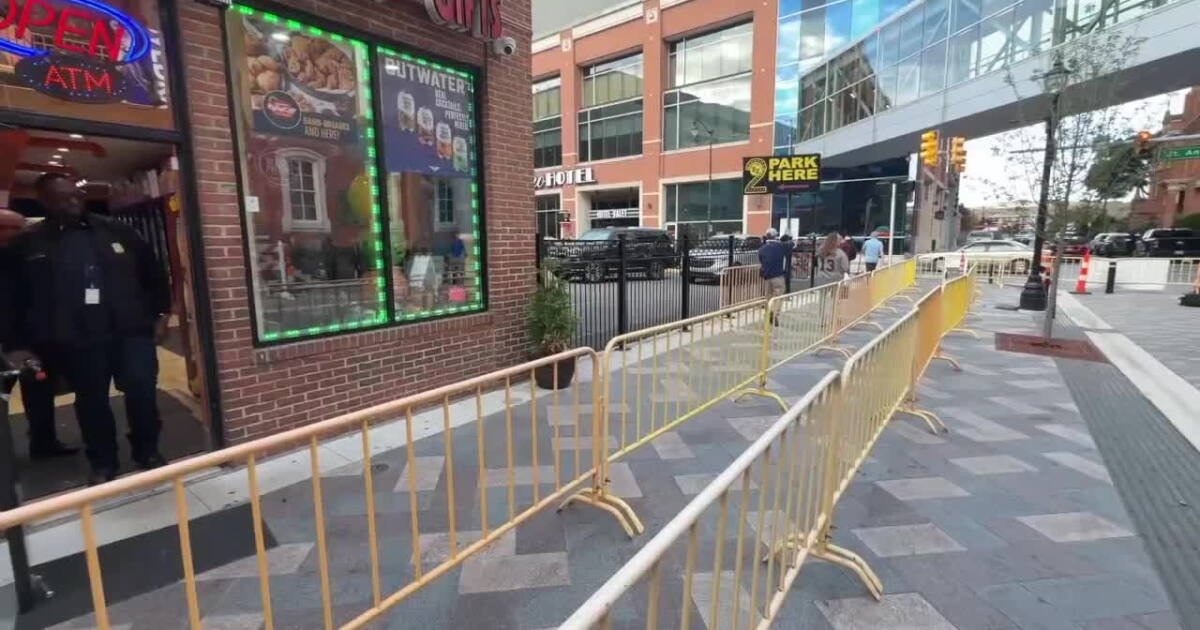
DETROIT — For nearly three decades, Athens Liquor has stood as a fixture of the Greektown business district. However, for owner Ather Butris, the past four months have been a struggle for survival. Since the inception of the Greektown Neighborhood Partnership’s (GNP) weekend streetscape activation, Butris claims that steel barricades placed directly in front of his storefront have effectively choked off his customer base, resulting in a dramatic decline in revenue.
The dispute highlights an increasing friction in urban planning: the tension between pedestrian-centric neighborhood activations and the rights of established small businesses to remain accessible.
The “Secure Perimeter” Controversy
The core of the conflict lies in the strategic placement of movable fencing during weekend events. These barriers create a “secure perimeter” that requires pedestrians within the streetscape to exit the screened area and maneuver around the fencing to reach Athens Liquor. Butris and his legal counsel, Brandon Kastaw, argue that the exclusion appears arbitrary and punitive.
“I try to push this gate, and they threaten to arrest me,” Butris told local reporters, underscoring the frustration of watching potential customers walk past his door, deterred by the physical wall of security.
Kastaw points to a potential conflict of interest, noting that during recent high-profile events like Detroit Lions tailgates, the GNP operated its own temporary bars within the secure zone. “They were profiting from it, and we believe that plays a factor into why they were blocking off this business,” Kastaw alleged. The legal team further claims that the permits granted to the GNP for these events lack detailed diagrams or site plans that would legally necessitate the exclusion of Athens Liquor from the main pedestrian corridor.
Safety vs. Economic Accessibility
Law enforcement officials have defended the current arrangement, citing the need for public order. Detroit Police Commander Matthew Fulgenzi emphasized that the permit-based activations allow for private security to enforce a strict code of conduct. The primary goal, according to the DPD, is to curb the prevalence of “open intoxicants,” a persistent issue in downtown areas.
By creating a contained space, organizers can restrict the entry of outside alcohol, which officials argue has led to a safer, more controlled environment for the district. From the police perspective, the fences are not meant to harm Butris, but rather to mitigate the public safety challenges that have plagued the area in previous years.
A Legal Battle for Future Urban Policy
The disagreement has now escalated into a legal matter, with Butris filing a lawsuit against the Greektown Neighborhood Partnership. The outcome of this case could serve as a litmus test for how cities handle private, permit-driven street activations in the future.
In a statement responding to the allegations, the GNP maintained that the barriers are temporary, strategic measures designed to support the “safety, accessibility, and vitality” of the entire district. The organization insists that its measures are not targeted at any single merchant but are instead part of a broader strategy to manage the influx of crowds during high-activity periods.
As the legal proceedings move forward, the case serves as a stark reminder of the complexities involved in modern city management. While municipal authorities look toward AI-driven traffic patterns and automated crowd management to optimize urban spaces, the human element—the independent business owner—remains a critical variable that requires careful consideration. Whether the city can balance the need for public safety with the economic viability of its legacy storefronts remains a point of contention that will likely be decided in the courtroom.
Disclaimer: This content is auto-generated for informational purposes only.
Source: Read Original News