





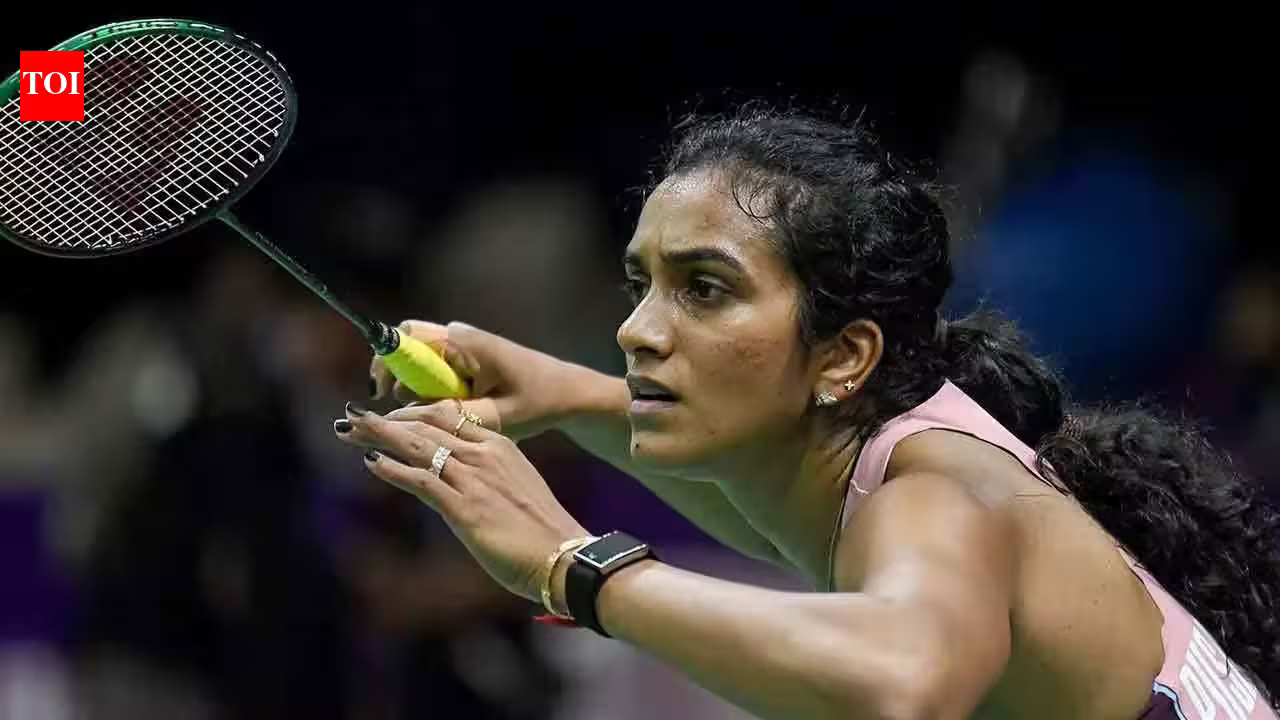
FATIGUE AND frustration have taken center stage at the Asian Games as two-time Olympic medallist PV Sindhu launched a scathing critique of the tournament’s scheduling, following a grueling physical toll that saw her play three singles matches in less than 24 hours.
The Indian badminton star’s campaign at the continental multisport event ended in the quarterfinals, but her departure from the court was marked by concerns regarding athlete welfare and the integrity of the competition. For elite athletes who pride themselves on precision and peak physical condition, the demand to perform under such restrictive conditions proved to be a hurdle too high, even for a player of Sindhu’s caliber.
The Brutality of the Schedule
The core of Sindhu’s grievance lies in the intense accumulation of matches compressed into an unsustainable window. On Saturday, the schedule forced the shuttler onto the court twice, with her third-round clash dragging on until after midnight. Despite the extreme lack of sleep and insufficient recovery time, she was mandated to return to the Ichinomiya Gymnasium on Sunday afternoon for a high-stakes quarterfinal encounter against China’s world-class competitor, Chen Yufei.
Sindhu did not mince words when asked if she had encountered such scheduling density at a major championship before. “Not really, because the scheduling was not really well organised is what I feel,” she stated.
The physical ramifications of back-to-back matches at this level are profound. Beyond the tactical mental game, Sindhu emphasized that the human body requires a baseline of recovery that the current Asian Games timetable simply did not accommodate. “We literally slept really late and then coming back in the morning, playing two matches in a day. Recovery is the most important priority,” she noted, pointing out that when an athlete is pushed past their physiological limits, the signs become undeniable.
The Hidden Cost of Physical Exhaustion
As any professional coach would attest, badminton at the international level is a game of marginal gains—seconds, inches, and bursts of explosive energy. Sindhu explained that the lack of recovery time becomes glaringly obvious during the high-intensity exchanges that define elite competition.
“It’s more than mentally preparing; you need to recover. Even though you think you are doing good, physically you might not be able to go there or you might not be able to play,” Sindhu explained. “When there are long rallies, definitely yes, recovery. When you had a good thing, you would automatically go, but your legs don’t move.”
Sindhu’s sentiments were echoed by compatriot Unnati Hooda, who also faced a premature exit from the tournament. While Hooda remained professional and refused to use the scheduling as an excuse for her own quarterfinal defeat, she conceded that the management of the match calendar left much to be desired. The consensus among the players is clear: while athletes are expected to be resilient, the infrastructure surrounding the sport must facilitate performance rather than hinder it through logistical oversight.
Technological Disparity and the Hawk-Eye Controversy
The frustration did not stop at scheduling. Sindhu further expressed her deep disappointment regarding the inconsistency of officiating technology during the latter stages of the tournament. Specifically, she pointed to the absence of the Hawk-Eye review system on Court 4, where her quarterfinal match took place.
At an event as prestigious as the Asian Games, players expect a uniform standard of officiating support. However, the decision to install the challenge system only on the primary show courts—Court 1 and Court 2—left athletes on other courts at a distinct disadvantage.
“There were no cameras here. That was really sad,” Sindhu said, reflecting on pivotal moments in the match where line calls were contested. “I felt that 2-3 shots were on the line. In the quarter-finals in the Asian Games, there should have been a camera is what I feel. Because these are the crucial matches.”
The absence of a review system creates a psychological and tactical imbalance. Sindhu explained that in the modern game, the ability to challenge a call provides a vital safety net and, occasionally, a momentum-shifting advantage. “If you get that point, it is good. You have the upper hand. You are playing with the cameras, playing with reviews,” she added. “Sometimes an opponent is not able to move and the shuttle falls there and the line judge gives it ‘out.’ You challenge, you get a point. So, it’s an advantage in a way.”
As the dust settles on the badminton courts at these Games, Sindhu’s comments serve as a poignant reminder to governing bodies that the demands placed on athletes must be balanced with fair, professional, and consistent standards. For the sport to continue growing, the “field of play” must be as level as the technology—and the scheduling—allows it to be.
While Sindhu’s Asian Games run has ended, her demand for a more structured, athlete-friendly approach to tournament logistics is likely to resonate with fellow competitors as the tour continues. For now, the focus shifts to recovery and preparation, but the questions raised by the Indian star remain a point of contention that organizers will find difficult to ignore moving forward.
Disclaimer: This content is auto-generated for informational purposes only.
Source: Read Original News