









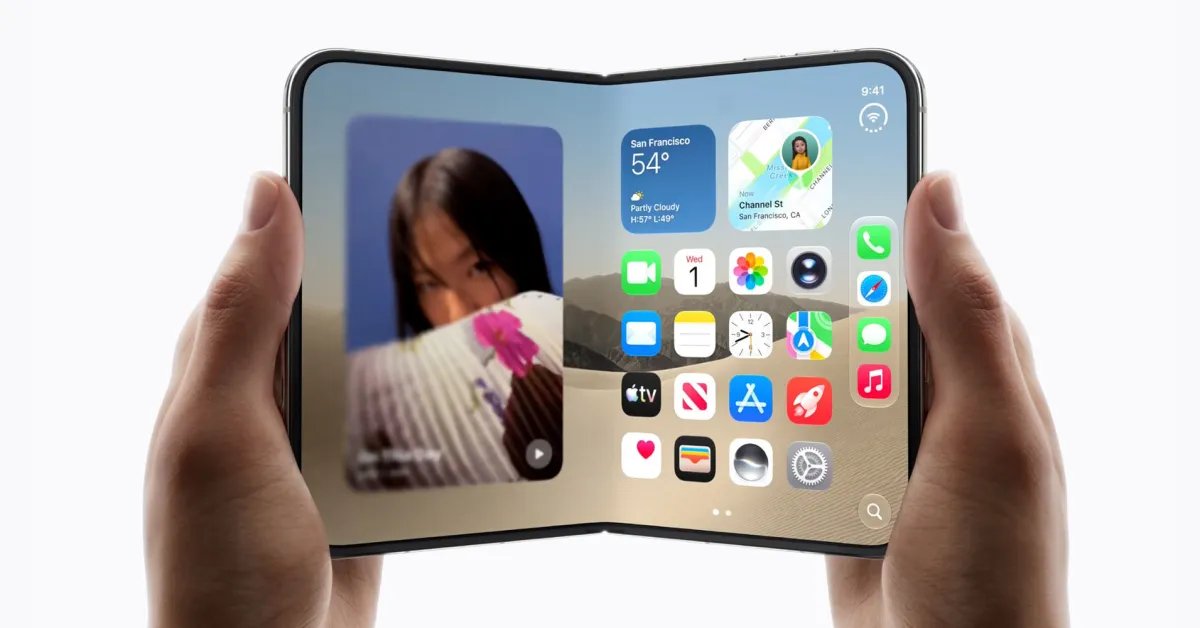
The impending arrival of the iPhone Duo on October 23 represents a significant shift in mobile hardware design for Apple. As the company’s first foray into the foldable smartphone market, the device leverages a unique dual-display architecture that allows for both folded and unfolded use cases. Beyond the physical construction, recent technical analysis of the latest iOS code reveals a suite of advanced StandBy mode features designed specifically to maximize the utility of the Duo’s dual-panel system.
Expanding the StandBy Ecosystem
StandBy mode, originally introduced to turn an idle iPhone into a bedside smart display, has been substantially upgraded for the iPhone Duo. While the feature traditionally required a power source to remain active, the Duo supports persistent StandBy usage regardless of charging status. This modification transforms the device into a versatile desktop hub, particularly when utilized in its “standing” or tented configuration.
Recent discoveries within the iOS 27.1 simulator indicate that Apple has developed several specialized views to take advantage of the increased screen real estate and flexible orientation. These additions move beyond static clocks and photo frames, signaling a shift toward proactive information management and interactive data visualization.
Technical Breakdown of New StandBy Views
Evidence extracted from internal localization strings and renderer data highlights five primary additions to the StandBy interface. These views are engineered to integrate with the broader Apple hardware ecosystem, particularly smart home and content-focused applications:
The Home Camera and Home Modular views represent a focus on utility. Home Camera provides users with the ability to monitor single or multiple smart home camera feeds directly on the device display. Home Modular offers a high-degree of customizability, allowing users to arrange smart home controls—such as lighting toggles, thermostat adjustments, and lock status—in a grid format.
For dynamic display elements, Apple has introduced Flow and Fade. Early findings suggest that Flow utilizes responsive animation logic to create visual art that shifts based on input or environmental triggers. While details regarding Fade remain sparse, it is anticipated to provide a minimalist interface, potentially focusing on low-distraction notification summaries or ambient transitions. Finally, the inclusion of a Snoopy face mirrors recent aesthetic updates seen in tvOS, bringing character-driven, animated screensavers to the mobile form factor.
Optimization for Foldable Hardware
The functionality of these new views is intrinsically linked to the physical versatility of the iPhone Duo. Because the device can be oriented in seated or standing configurations, the operating system employs a responsive layout engine that adjusts content placement based on the hinge angle. When the device is placed in a tent-like configuration, the StandBy mode engages, effectively turning one half of the screen into a dedicated information dashboard while the other may remain dark or serve a secondary utility function, such as playback control.
This integration is handled at the firmware level, ensuring that transitions between standard handheld use and tabletop StandBy mode occur without stuttering. By decoupling StandBy mode from the requirement of a power cable, Apple is positioning the Duo as a portable companion device, similar to a localized smart screen that can move from a nightstand to a kitchen counter or office desk with ease.
Customization and User Control
Deep-level code analysis suggests that Apple is implementing a more granular customization system for these StandBy views. Users will be able to dictate which information density is present on the screen, allowing for a balance between high-utility grids like Home Modular and passive, aesthetically focused views like Flow.
This level of control appears to be managed through a centralized configuration screen that mirrors the complexity of Apple Watch face management. Users can set specific “states” for their iPhone Duo, where the device automatically triggers different StandBy presets based on time of day, location, or even proximity to other connected devices. For instance, the device could default to a clock-centric view at night and switch to the Home Camera grid during work hours if placed on a stand.
Impact on the Mobile Productivity Landscape
The move to integrate these advanced features into the iPhone Duo underscores a strategic focus on multifunctionality. By treating the smartphone as a hub for both personal and home data, Apple is attempting to solve the problem of screen idleness. With the Duo, the transition from a traditional phone to a collaborative workstation or a smart home controller is seamless.
As the October release date approaches, the software environment for the iPhone Duo appears robust. By providing users with distinct visual modes, Apple is not just launching a foldable piece of hardware, but a comprehensive interface experience. These StandBy enhancements suggest that the company intends for the device to remain productive even when it is not being held in the user’s hand, effectively broadening the scope of what a high-end smartphone can achieve in a modern domestic or office environment.
Disclaimer: This content is auto-generated for informational purposes only.
Source: Read Original News