







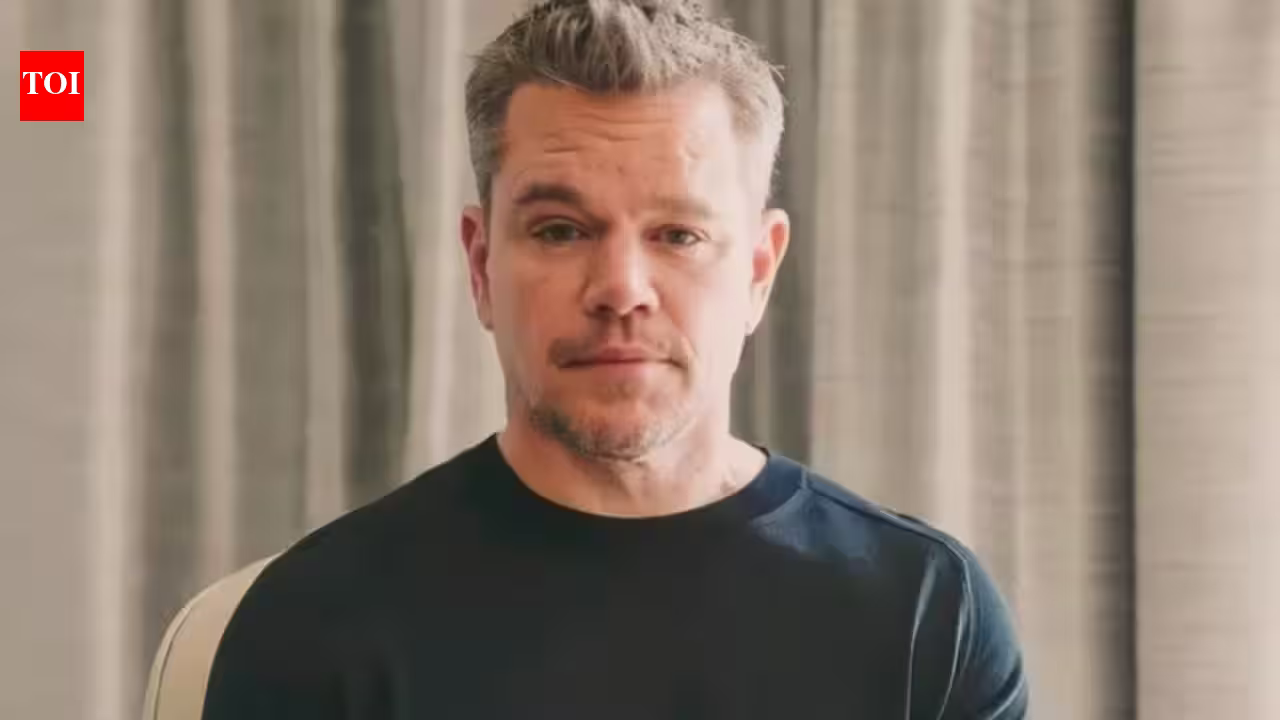
In an era where the default response to adversity is often digital distraction or passive detachment, there is something bracingly old-school about the advice Matt Damon offered the MIT graduating class of 2016. The Good Will Hunting star, channeling wisdom he’d received from former President Bill Clinton, urged the next generation of innovators to “turn toward the problems you see.”
It sounds like a simple sentiment, but in practice, it is a radical act of defiance. We are hardwired to look away from discomfort, to scroll past tragedy, and to hope that if we ignore a systemic or personal issue long enough, it might just dissolve. Damon’s philosophy—a mantra he has carried throughout his own career—demands the exact opposite. It requires the courage to walk right up to the fire, look it in the eye, and, more importantly, look yourself in the eye to decide exactly what you’re going to do about it.
The Anatomy of Confrontation
When Damon speaks about looking a problem in the eye, he isn’t just talking about a vague sense of civic duty. He is describing a process of reclaiming agency. Most people live in a state of background anxiety, letting the magnitude of global or personal obstacles turn into a sort of paralyzed apathy. By closing the distance between ourselves and the source of our stress, we effectively demystify it.
The fear inherent in a problem is often a product of its distance. When we ignore an issue, our imagination fills in the gaps, inflating its power until it feels insurmountable. “Walking right up” to the problem is the only way to shrink it down to its actual size. Once you are standing face-to-face with the reality of a situation, you strip it of its abstract terror. At that point, you aren’t just a victim of circumstance; you are an architect of a solution. As Damon noted in that MIT address, the ultimate goal isn’t to be a professional “worrier.” It’s to move from feeling to acting—even if the action is small. A minor victory against a major problem is still a victory.
From Cambridge to the Global Stage
To understand why Damon values this grit, you have to look at the landscape of his early life. Long before he was a household name, he was a kid in Cambridge, Massachusetts, balancing the intellectual weight of his mother’s academic world with the grit of a teenager trying to make a mark in the arts.
The narrative of “the overnight success” is a persistent myth in Hollywood, but Damon’s path was anything but linear. He was a student at Harvard who walked away from his degree, missing by just a dozen credits, to pursue a gamble that looked, to the outside observer, like professional suicide. Alongside his lifelong collaborator Ben Affleck, Damon spent years hearing the word “no.” They didn’t just write a script; they wrote a script that they insisted on starring in—a demand that frequently slammed doors in their faces.
They weren’t looking for a handout; they were looking for an opportunity to prove their own worth. That period of struggle, of refining the draft of Good Will Hunting in dingy apartments while making the rounds in New York, instilled in him the understanding that success isn’t given; it is extracted from the resistance of the world.
Defining the “Self-Check”
Perhaps the most crucial part of Damon’s quote is the internal component: “Look yourself in the eye and decide what you’re going to do.” This is the part that most people skip. We are very good at pointing fingers at problems in the world, but we are rarely honest with ourselves about our own capacity to change them.
“Looking yourself in the eye” implies a level of brutal self-inventory. It forces you to ask: Am I part of the problem, or am I part of the solution? Do I have the skills to help, or am I just complaining? When you finally stare yourself down, the ego falls away. You stop performing moral outrage and start performing actual labor. It’s a sobering exercise, and one that is rarely comfortable. But it is the only way to reach a place of genuine, authentic contribution.
Lessons from the Grit of Hollywood
It’s easy to dismiss life advice from an A-list celebrity as fluff, but Damon’s career has consistently mirrored this philosophy of engagement. Whether it’s his advocacy work for global water access or his willingness to take on complex, non-glamorous roles that explore the fragility of the human condition, he has consistently turned toward the things that matter rather than the things that are merely popular.
His early days in the industry—relying on the bond of a childhood friendship to create their own leverage—taught him that your environment is what you make of it. If the doors are locked, you don’t walk away; you write a script that forces them to open. That tenacity, that refusal to be a passive bystander in his own life, is the “Martian” spirit we see in his performances. He excels at playing the person who is trapped, out of options, and staring down a hopeless situation—only to realize that the only way out is through the application of logic, sweat, and sheer, stubborn willpower.
The Legacy of Engagement
As we look at the world today, defined by rapid change and a surplus of complex, intractable challenges, Damon’s 2016 advice feels more relevant than ever. We are drowning in information, which often leaves us feeling more helpless than informed.
The antidote to that feeling isn’t more information; it’s the transition to action. Damon’s life serves as a testament to the idea that you don’t need to be the “chosen one” to fix a problem. You just need to be the person who stops looking away. By facing the issues head-on, he transitioned from a college dropout to one of the most respected figures in modern cinema. It wasn’t magic, and it wasn’t just luck. It was the decision, time and time again, to look the problem in the eye and hold its gaze until he found a way forward. That is a lesson that serves not just a graduating class at MIT, but anyone standing in front of a closed door, wondering what to do next.
Disclaimer: This content is auto-generated for informational purposes only.
Source: Read Original News