









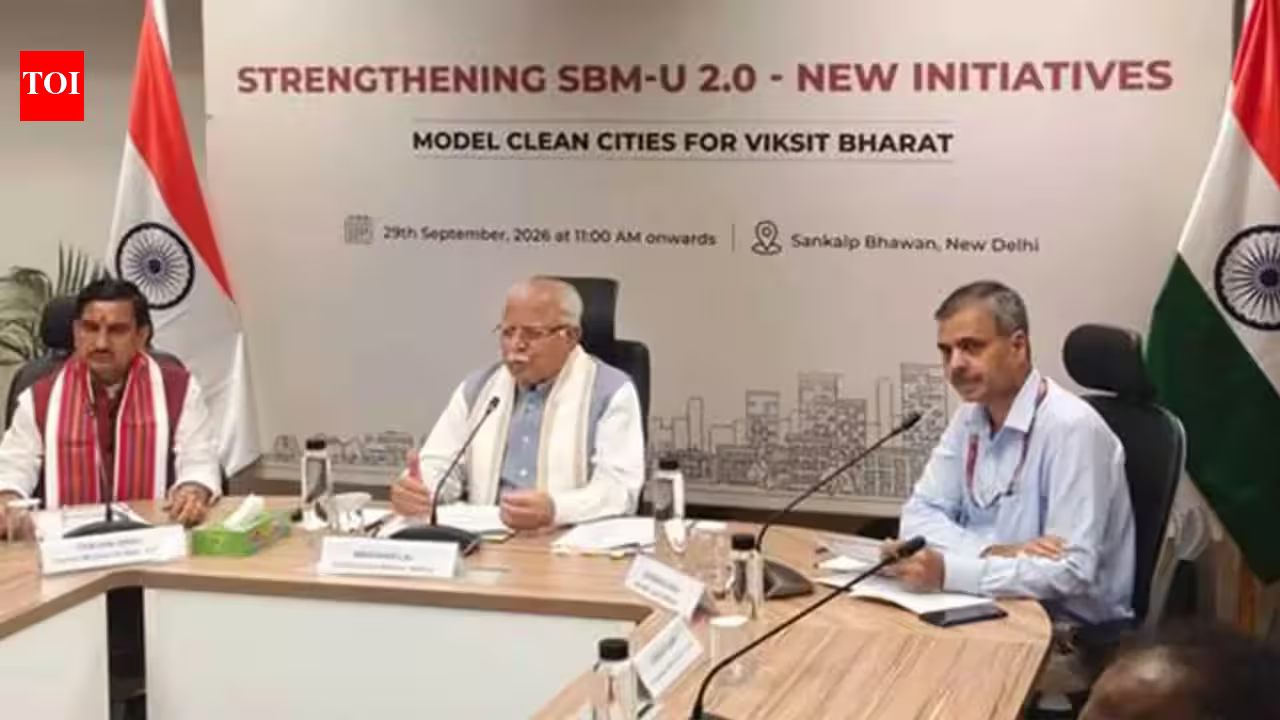
The Strategic Mandate of PRAGATI-50: A New Frontier in Urban Sanitation
The launch of the PRAGATI-50 initiative marks a decisive shift in India’s urban governance strategy. While the Swachh Bharat Mission (Urban) 2.0 laid the foundational framework for national cleanliness, PRAGATI-50 transitions the focus from broad-based infrastructure development to high-precision performance benchmarks. By selecting 50 cities across 24 states and Union Territories, the Ministry of Housing and Urban Affairs is effectively creating a cluster of “model urban centers.” These cities—ranging from major metropolitan hubs like Delhi, Mumbai, and Bengaluru to centers of profound cultural significance such as Ayodhya, Varanasi, and Puri—are now tasked with achieving 100% cleanliness across all waste management streams.
This initiative is not merely about improved municipal janitorial services. It is a structural mandate designed to integrate advanced solid waste processing, total liquid waste management, and sustainable urban sanitation into the daily operational matrix of these municipalities. For India, a nation witnessing rapid urbanization and an increasing burden on urban infrastructure, the success of PRAGATI-50 will serve as a definitive litmus test for whether state-led, goal-oriented cleanliness models can be scaled successfully to address the complexities of modern Indian city life.
Economic and Infrastructural Implications for Urban Centers
The selection of 76 municipal areas—encompassing large financial hubs and historic tourist destinations—highlights a critical link between cleanliness and economic productivity. In the Indian context, the “City Beautiful” concept is increasingly tied to “City Profitable.” Tourism and pilgrimages represent a significant portion of the GDP for cities like Tirupati, Gaya, and Udaipur. By elevating the hygiene standards in these locations to international levels, the PRAGATI-50 initiative serves as a direct investment in the hospitality and service sectors.
From an infrastructural standpoint, the initiative necessitates a transition toward capital-intensive waste management systems. Municipal corporations are now required to move beyond simple collection and disposal, shifting toward integrated waste-to-energy plants, mechanized sweeping, and advanced effluent treatment protocols. This creates a substantial demand for private sector involvement, particularly for companies specializing in environmental engineering, smart sensors for waste monitoring, and automated sanitary infrastructure. The government’s push for tech-enabled monitoring suggests that these 50 cities will become the testing grounds for AI-driven municipal oversight, creating a burgeoning market for GovTech and smart city solutions within the Indian subcontinent.
Operational Frameworks and Performance Monitoring
Central to the PRAGATI-50 initiative is the implementation of a rigorous, outcome-based assessment framework. Unlike previous programs that relied on periodic annual surveys, this initiative mandates a continuous feedback loop. Minister Manohar Lal’s commitment to chairing review meetings on a bimonthly basis indicates an unprecedented level of central oversight. This high-frequency monitoring is expected to eliminate the “lag” that often characterizes administrative policy implementation in India.
The structured framework requires cities to report data on real-time waste processing levels, the efficiency of liquid waste treatment, and, crucially, citizen participation metrics. This signifies a shift in governance; it is no longer sufficient to show effort. Municipalities must produce demonstrable results in visible cleanliness. For municipal commissioners and city administrators, the mandate implies a need for a professionalized workforce capable of managing sophisticated data streams and technical audits. The performance of these cities will likely be measured against global urban sanitation standards, forcing local bodies to adopt corporate-style key performance indicators (KPIs) to ensure they remain within the “role-model” bracket.
Challenges in Scaling Sustainability and Waste Processing
While the goals of PRAGATI-50 are ambitious, the structural challenges remain significant. Achieving “100% cleanliness” in high-density urban areas like Mumbai or Kolkata requires solving the problem of legacy waste and ensuring that decentralized liquid waste management systems are functional. In many Indian cities, the bottleneck is not the lack of desire for cleanliness but the lack of integrated land-use planning that allows for effective waste processing facilities.
Furthermore, public cooperation remains the most volatile variable. The initiative emphasizes citizen participation, which in the Indian context requires a combination of behavioral change campaigns and stringent enforcement of waste segregation at the source. If the 50 selected cities fail to achieve high levels of household-level segregation, the downstream processing plants—no matter how technologically advanced—will struggle to operate at peak efficiency. Therefore, the success of this initiative will rely heavily on the ability of local governments to communicate the value proposition of clean cities to the citizenry, effectively turning waste management into a collaborative civic duty rather than a top-down administrative burden.
The Future of Indian Urbanization and Policy Export
The PRAGATI-50 initiative represents a critical evolutionary step in the “Brand India” narrative. By creating 50 “demonstration cities,” the government is essentially building a template that can be replicated across the remaining tiers of Indian urban landscape. If cities like Nashik or Ranchi can prove that a sustainable, 100% clean model is viable, the blueprint for that success can be exported to smaller towns and satellite cities, eventually creating a standard of living that attracts foreign investment and boosts domestic quality of life.
Moreover, the tech-enabled nature of the program offers a roadmap for the future of Indian municipal governance. By leveraging satellite imagery, sensor-based waste tracking, and public-facing grievance redressal portals, these 50 cities are moving toward a data-driven administration. This sets a precedent for transparency. In an era where urban growth is the primary driver of India’s economic trajectory, the PRAGATI-50 initiative serves as a pivotal bridge between current realities and the vision of a developed, sustainable urban India. The next few years will demonstrate whether this top-down push can stimulate bottom-up transformation, ultimately redefining the relationship between the Indian citizen and their urban environment.
Disclaimer: This content is auto-generated for informational purposes only.
Source: Read Original News