






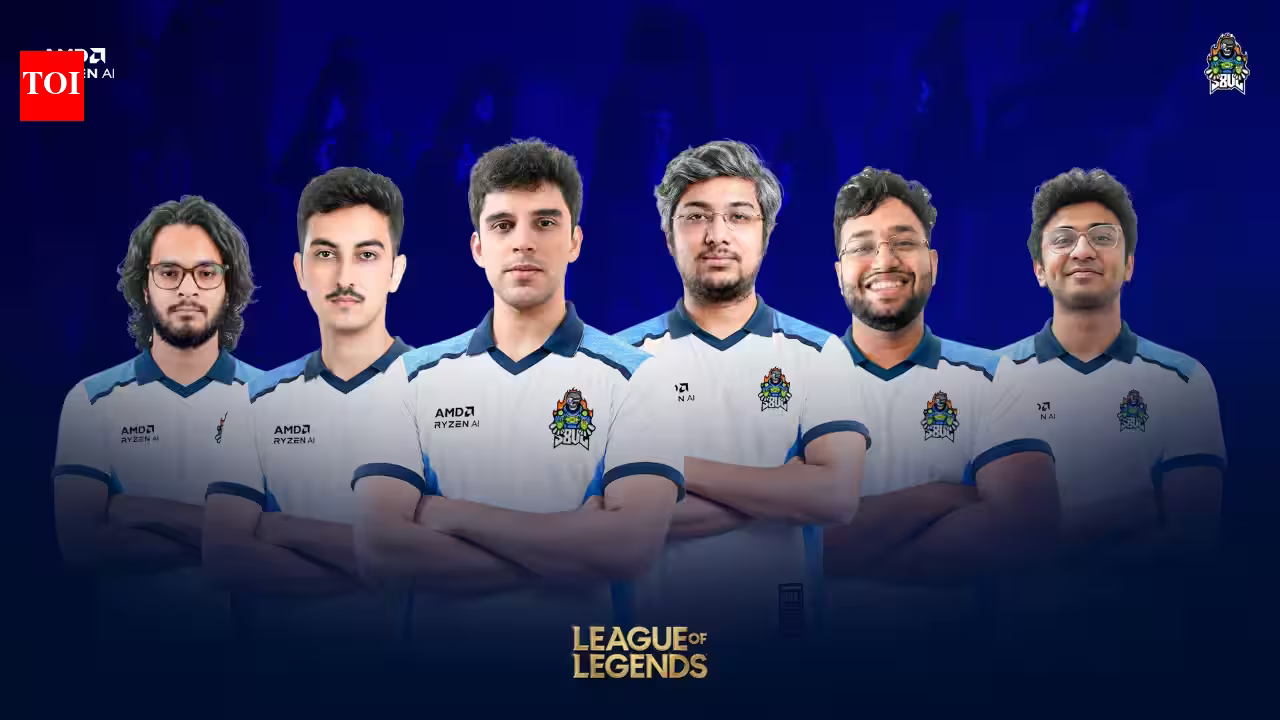
At 24, Akshaj Shenoy is preparing to step onto the international stage once again as the captain of India’s League of Legends squad for the 2026 Asian Games. However, for a player who navigated the delicate balancing act of academic rigor and professional gaming, the journey from casual hobbyist to national team captain remains a testament to discipline, strategic evolution, and the burgeoning potential of India’s esports landscape.
Three years after India’s fifth-place finish at the Hangzhou Asian Games, the team is returning to the continental stage in Aichi-Nagoya with a renewed sense of purpose. While the roster has evolved—welcoming newcomers Ahmed Shahid and Rahul Bisht—the core remains familiar, anchored by four veterans who are intimately acquainted with the high-stakes pressure of representing their country.
A game that demands five players to think as one
League of Legends is far more than a digital pastime; it is a high-speed, 5v5 tactical chess match that demands absolute synchronicity. Players control unique “champions,” each tasked with distinct roles—Top, Jungle, Mid, ADC, or Support. Success hinges on a delicate interplay of individual mechanical skill and collective communication.
“You’re constantly thinking about where the opponents could be, what they might do next, and how you should respond,” Shenoy explained. “At the same time, you’re managing your own resources, positioning, timing, and trying to make decisions based on what your teammates are doing.” For the Indian team, the challenge lies in translating this intense mental synchronization into the high-pressure environment of professional tournaments.
The group that stayed together
One of the most significant advantages for this iteration of Team India is continuity. Following the Hangzhou games, the core group continued to compete in regional and domestic tournaments, refining their synergy in the furnace of actual competition. This persistence caught the attention of S8UL, which signed the roster in 2025.
For S8UL co-founder and CEO Animesh Agarwal, this long-standing chemistry is the team’s secret weapon. “They have spent years playing together, adapting to different competitive environments and developing a strong understanding of each other’s game,” Agarwal noted. This professional backing culminated in a victory at the 2025 Legends Ascend South Asia and a top-tier showing in the LCP Promotion Wild Card Playoffs, providing the team with the global perspective necessary to compete with the best.
Six players, six different routes
The composition of the Indian team highlights a unique reality for domestic esports: the athletes are, for the most part, dual-career professionals. Shenoy, based in Kochi, balances an MBA program and his father’s business with a grueling training schedule that often runs from 8 p.m. to 1 a.m. to accommodate his teammates’ work and study commitments.
His teammates are equally diverse in their professional pursuits. Mihir Ranjan brings the analytical mind of an IIM Ahmedabad graduate to the squad, while Aakash Shandilya balances the role of a cloud engineering intern. The squad also features Sanindhya Malik, working in Mauritius; Ahmed Shahid, a chemical engineering graduate; and 29-year-old entrepreneur Rahul Bisht. For these six men, esports is not a replacement for their civilian lives but a passion integrated into them, necessitating a level of time management and dedication that would challenge even the most disciplined professional athlete.
What Hangzhou left behind
The 2022 Asian Games provided more than just a ranking; it provided a blueprint for what is required at the top level. “What I remember most is walking out there and realizing that we were representing India on such a huge stage,” Shenoy reflected. “There was a lot of pride, but also a sense of responsibility that came with wearing the India jersey.”
That responsibility is now tempered by the experience of their predecessors. While the newcomers are settling in, the returning members are acting as cultural stewards of the team’s philosophy. “My job is to make sure everyone feels comfortable enough to play their own game when the pressure is at its highest,” Shenoy added, emphasizing the psychological component of the sport.
The gap India is still trying to close
Despite significant improvements in India’s esports infrastructure—bolstered by more tournaments and better organizational support—Shenoy remains a realist. The gap between India and the established powerhouses like South Korea, China, and Vietnam remains substantial.
“The biggest difference is probably the amount of regular high-level competition and the depth of the player pool,” Shenoy observed. While domestic players must be proactive in seeking international experience, their counterparts in East Asia are immersed in a deeply saturated ecosystem of professional play. Shenoy believes the next step for India is not just individual talent, but a sustainable infrastructure that can foster long-term growth.
South Korea, Chinese Taipei, and Hong Kong await
The road ahead is daunting. India has been drawn into Group B at Aichi-Nagoya, placing them in direct conflict with South Korea—the 2022 gold medalists—as well as the formidable squads from Chinese Taipei and Hong Kong.
Rather than viewing these fixtures as a mere educational experience, the team is approaching them with a competitive edge. “We don’t want to go in thinking we’re simply there to learn,” Shenoy asserted. “We’ve prepared seriously and we want to compete.”
As the team prepares to depart, the narrative remains one of immense pride. Behind every move on the screen lies a story of sacrifice—the missed sleep, the overlapping demands of education, and the tireless pursuit of a craft that is only now beginning to gain the recognition it deserves in India. For Akshaj Shenoy and his squad, the upcoming tournament is the culmination of years of hard work, representing not just a game, but a dream realized on the grandest stage of all.
Disclaimer: This content is auto-generated for informational purposes only.
Source: Read Original News