








Paris – Climate change is fundamentally reshaping the Earth’s polar oceans, with rapidly rising temperatures, vanishing sea ice, and cascading threats to marine biodiversity reaching a critical tipping point. These findings, detailed in the 10th annual Copernicus Ocean State Report released Wednesday, paint a stark picture of a global marine environment under unprecedented stress.
“The message is very clear. The ocean is changing rapidly,” said Pierre Bahurel, director general of Mercator Ocean International, which operates the European Union’s Copernicus Marine Service. The report highlights that the impacts of global warming are no longer distant projections but current, observable phenomena affecting ecosystems from the Mediterranean and Black seas to the furthest reaches of the poles.
While the world’s oceans as a whole have seen surface temperatures increase by an average of 0.12 C per decade, the poles—which account for roughly 20% of the global ocean surface—are experiencing warming at a much more aggressive pace. According to the report, the Arctic’s combined sea surface and sea-ice surface temperature has climbed by 4.2 C between 1982 and 2024, an average of 1 C per decade. In the Kara Sea, located north of Siberia, the warming is even more intense, with temperatures surging by 6.7 C over the same period—a rate of 1.68 C per decade.
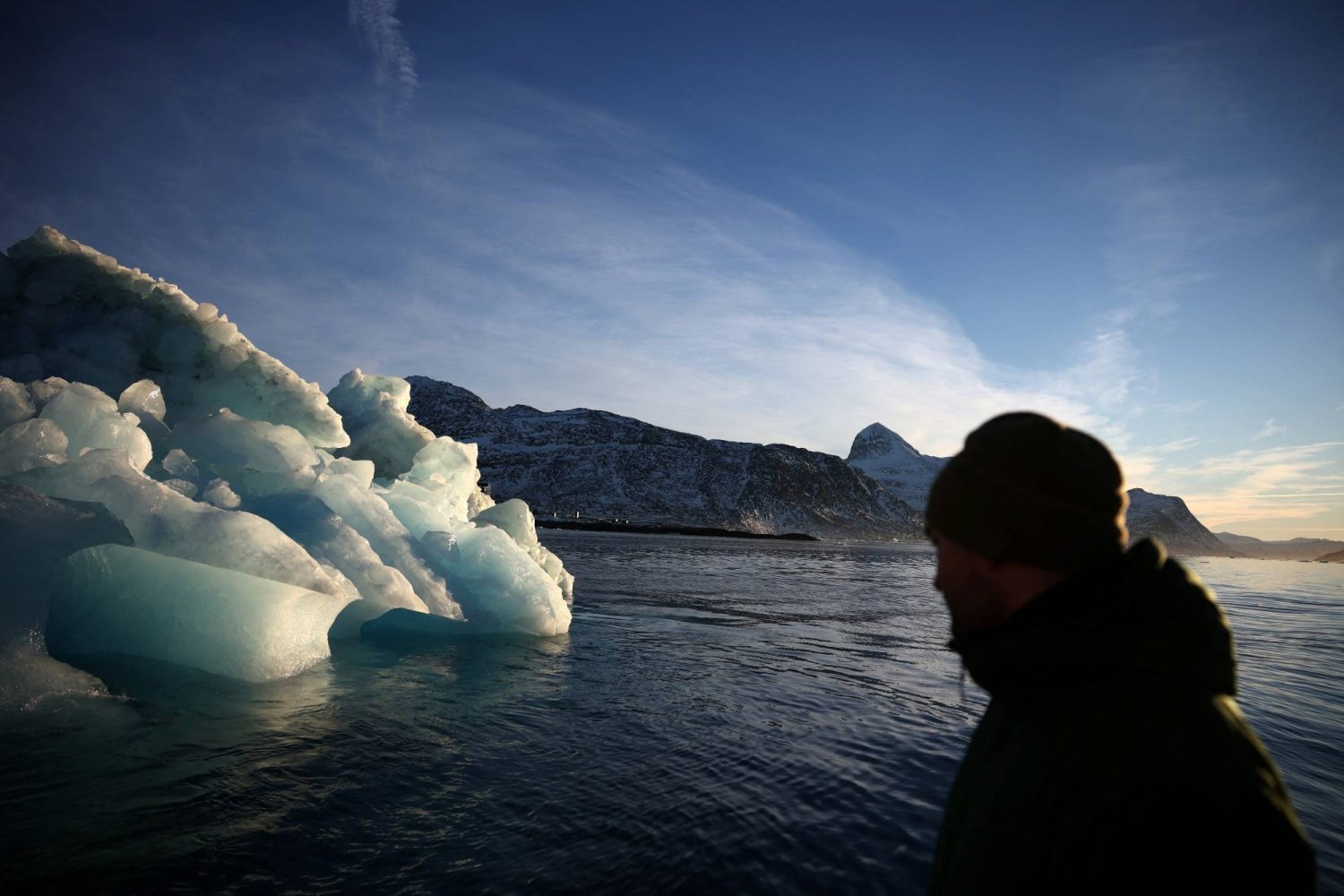
This rapid thermal shift is driving a dramatic loss of physical habitat. Since 1979, Arctic sea ice has been shrinking by nearly half a million square kilometers every ten years, an area equivalent to the size of Spain. This decline is not merely a loss of frozen landscape; it is a structural change to the environment that leaves Arctic coastlines increasingly exposed to the force of waves. The report warns that this retreat exacerbates coastal erosion, placing approximately 60% of northern coastal infrastructure and communities at significant risk.
“The Arctic sea ice has been declining since the early ’80s, leaving coastal infrastructure vulnerable to erosion and sea level rise,” explained Karina von Schuckmann, director of the oceans report. As the protective barrier of ice disappears, the mechanical impact of the ocean on the shore intensifies, threatening the stability of human settlements in the region.
The crisis is equally profound at the southern end of the planet. In Antarctica, the loss of sea ice has created an existential threat for the emperor penguin. The report points to record-low Antarctic sea ice levels in 2022, which coincided with the first-ever large-scale breeding failure of the species.
Emperor penguins are uniquely dependent on stable, long-lasting sea ice to hunt, raise their young, and complete their life cycles. Because penguin chicks cannot survive in freezing waters until they develop waterproof feathers, the premature breakup of ice floes often leads to mass mortality. Following these trends, the International Union for Conservation of Nature (IUCN) upgraded the status of emperor penguins from “near threatened” to “endangered” in April. Projections from the Copernicus data suggest that if current rates of ice loss continue, more than 90% of emperor penguin colonies could face near-extinction by the year 2100.
Beyond the polar regions, the report documents a global marine system struggling with rising acidity and frequent, record-breaking heatwaves. By cataloging these shifts, the Copernicus Ocean State Report underscores that the health of the polar oceans is intrinsically linked to the stability of the entire planet. As these fragile ecosystems move toward their breaking points, the scientific community emphasizes the urgent need for systemic change to mitigate the warming trends that are driving these profound environmental losses.
Disclaimer: This content is auto-generated for informational purposes only.
Source: Read Original News