







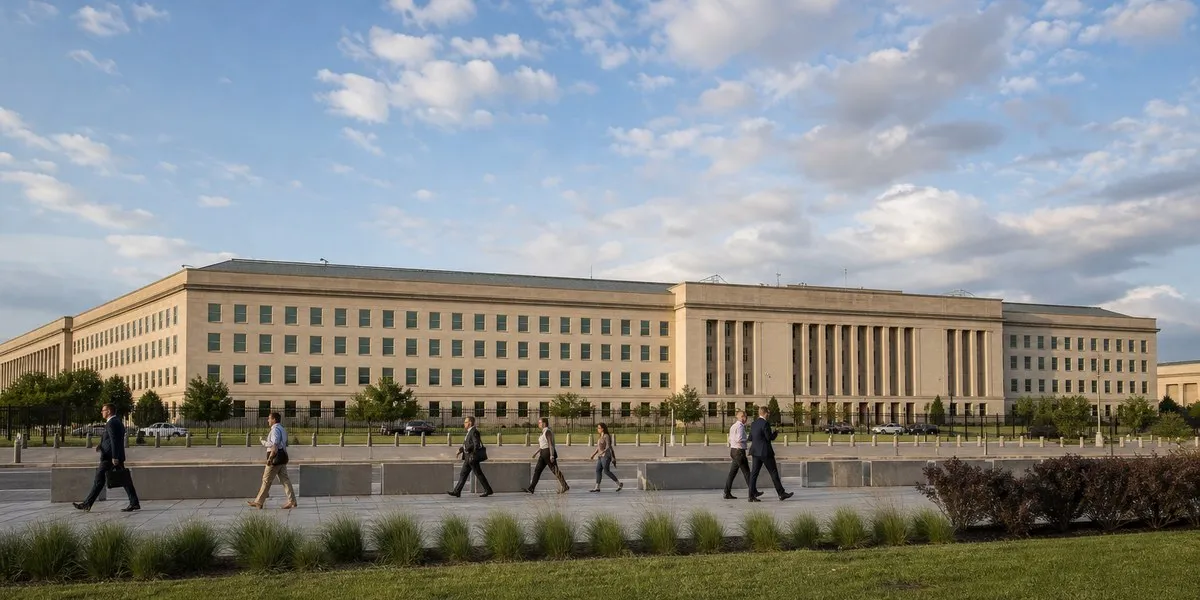
As the clock struck midnight on October 1, the U.S. Department of Defense reached a significant fiscal milestone, having successfully obligated $142 billion of the $152 billion allocated under last year’s landmark reconciliation bill. While officials have largely praised the rapid expenditure of funds, the remaining $10 billion will now face a mandatory 8.3% sequestration, resulting in a loss of roughly $830 million in defense purchasing power.
The reconciliation bill, championed by Republicans last year, was designed as a massive infusion of capital to revitalize critical defense sectors. The legislation earmarked funds for an array of high-priority modernization projects, including the “Golden Dome” air defense system, the acquisition of two Arleigh Burke-class destroyers, and the procurement of advanced munitions and fighter jets.
The final obligation rate of 93% reflects a massive, late-stage push by the Pentagon to move money into contract status. Earlier this year, the department’s progress had been characterized by slow movement, a trend that sparked concern among federal lawmakers. As of late April, Secretary of Defense Pete Hegseth reported that only $26 billion had been directed into contracts. By July, that number had climbed to roughly $77 billion in unobligated funds, prompting the Pentagon to issue urgent directives to program offices to accelerate spending before the fiscal year deadline.
While the department did not specify which particular programs were left with unobligated balances, the looming 8.3% cut is a direct consequence of the statutory requirements embedded in the original reconciliation law. These provisions were intended to act as a fiscal guardrail, ensuring that funds were not left sitting idle in federal accounts.
Despite the $830 million shortfall caused by the sequestration, the mood in Washington remains largely positive. During a session on Wednesday, Senator Roger Wicker, Chairman of the U.S. Senate Armed Services Committee, indicated that lawmakers were satisfied with the overall scale and efficiency of the program’s implementation. The successful obligation of 93% of the massive budget represents a notable administrative success for the Pentagon, which faced significant pressure to avoid leaving larger portions of the historic funding package on the table.
Defense analysts note that while the lost $830 million is a non-trivial sum, the rapid deployment of the other $142 billion will likely have a long-term impact on U.S. military readiness and industrial capacity. The department now pivots to the execution phase, where the focus will shift from contract obligation to the actual delivery of the hardware and systems promised to the military. For now, the Pentagon’s ability to move billions into the hands of industry contractors before the fiscal deadline stands as one of the most significant logistical achievements for the agency in recent years.
Disclaimer: This content is auto-generated for informational purposes only.
Source: Read Original News