






A New Era of Leadership for India’s Private Banking Giants
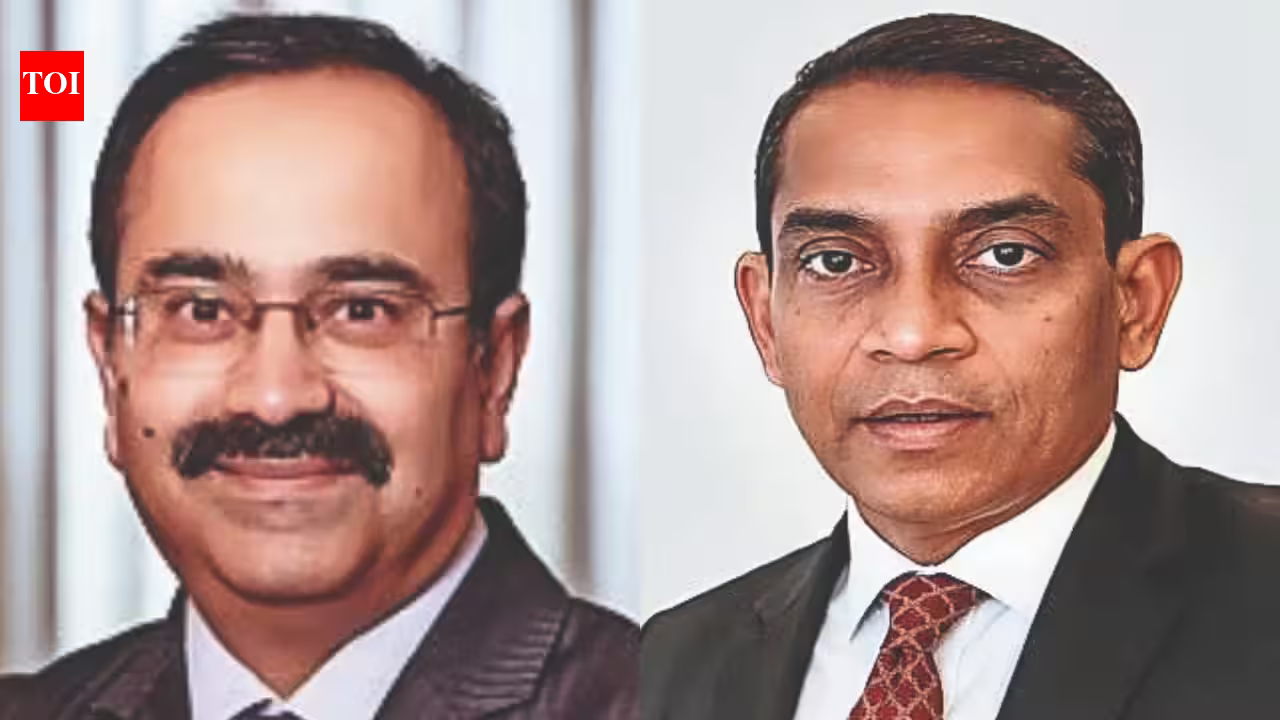
The recent leadership transitions at HDFC Bank and Kotak Mahindra Bank represent a pivotal moment in the history of Indian private banking. By appointing new managing directors and chief executive officers, both institutions have effectively addressed the uncertainty surrounding their future direction. The appointments of Anup Bagchi at HDFC Bank and Anup Kumar Saha at Kotak Mahindra Bank are particularly noteworthy, not only for the synchronicity of the selection but for what they reveal about the evolving talent pool within the Indian financial sector.
These transitions mark a departure from long-standing internal succession models, signaling a broader industry trend where experience, pedigree, and proven operational expertise take precedence over institutional tenure. The selection of two executives who share similar academic backgrounds—both are IIT and IIM alumni—and professional origins at ICICI Bank highlights the deep influence of the “ICICI ecosystem” in shaping the current leadership landscape across the broader Indian banking and financial services sector.
The Strategic Imperative Behind External Leadership
For HDFC Bank, the appointment of Anup Bagchi is historic. As the first outsider to lead the lender since its inception in 1994, Bagchi carries the responsibility of steering the nation’s largest private bank through a complex post-merger landscape. Following the tenure of Sashidhar Jagdishan, who managed the bank through the challenges of the pandemic and the intricate integration of the HDFC Ltd housing finance entity, the bank now faces the pressing task of optimizing its balance sheet and credit-deposit ratio.
In an environment characterized by fluctuating interest rates and intensifying competition for household savings, Bagchi’s mandate is clear: maintain growth while navigating the structural shifts necessitated by the merger. His successful track record at ICICI Prudential Life Insurance, where he oversaw significant growth in premium equivalents and a substantial rise in profitability, provides the board with confidence that he can effectively manage the scale and complexity of HDFC Bank. His deep familiarity with both retail and wholesale banking sectors makes him well-equipped to balance the bank’s diverse portfolio.
Consistency and Stability at Kotak Mahindra Bank
In contrast to the total external shift at HDFC, Kotak Mahindra Bank’s selection of Anup Kumar Saha reflects a commitment to managed leadership continuity. As the successor to Ashok Vaswani, who will step down upon the completion of his term, Saha brings a wealth of experience from his previous roles at Bajaj Finance and his extensive tenure at ICICI Bank. By naming a successor well in advance, the board at Kotak Mahindra Bank has sent a strong message of stability to investors and stakeholders.
Saha’s background in retail banking, data analytics, and marketing is highly relevant to the contemporary needs of a banking group managing over 5,900 branches and a balance sheet exceeding Rs 10 lakh crore. His tenure at ICICI Bank, where he led critical portfolios such as retail secured assets and credit cards, provided him with a comprehensive understanding of the consumer credit lifecycle. This expertise will be instrumental as Kotak Mahindra Bank continues its focus on digital transformation and expanding its market presence in an increasingly digitized economy.
Institutional Pedigree and the ICICI Influence
The prevalence of former ICICI Bank executives in top leadership roles across India’s private banking sector is a testament to the rigorous training and professional development culture established at the group over several decades. Both Bagchi and Saha are products of this professional lineage, having navigated diverse roles in a high-pressure environment that demands efficiency, innovation, and strategic foresight.
The fact that both new leaders are alumni of the Indian Institutes of Technology (IITs) and the Indian Institutes of Management (IIMs) underscores the rising requirement for quantitative and analytical sophistication in banking. Modern banking is no longer solely about traditional lending; it is a technology-driven discipline centered on data management, predictive modeling, and risk mitigation. These academic credentials, combined with over three decades of professional experience, ensure that both CEOs possess the analytical rigor required to navigate the complexities of global financial standards and evolving domestic regulations.
Challenges and Expectations for the New Leadership
As these leaders prepare to assume their respective roles, they face a banking sector that is more competitive than ever. The primary challenge for both HDFC Bank and Kotak Mahindra Bank is the mobilization of core deposits. As retail customers shift their preference toward alternative investment products, banks are finding it harder to maintain cost-effective deposit bases to support their loan books.
Furthermore, the banking sector in India is currently grappling with heightened scrutiny from the Reserve Bank of India (RBI) regarding operational resilience, digital infrastructure, and compliance. Both Bagchi and Saha will need to demonstrate that their banks can achieve aggressive growth targets without compromising on governance or regulatory requirements. For Bagchi, the integration synergies remain a work in progress, and the task of simplifying a sprawling financial services behemoth will require tactical patience. For Saha, maintaining the “Kotak culture” while injecting fresh perspectives from his time at Bajaj Finance will be a defining aspect of his three-year tenure.
Market Outlook and Long-term Vision
The simultaneous confirmation of these two leaders provides the financial markets with much-needed clarity. Investors generally favor predictability, and the announcement resolves questions about management succession that had been circulating for some time. The focus for both banks will now shift back to fundamental operational metrics: net interest margins (NIMs), asset quality, and the expansion of the digital footprint.
The selection of these two veterans signifies that the Indian banking industry is maturing, with a heightened focus on professional management and strategic agility. While the challenges of high-interest rates and credit quality remain, the leadership transition appears calculated to ensure that these institutions remain robust, scalable, and responsive to the needs of the modern Indian economy. As HDFC Bank and Kotak Mahindra Bank enter these new chapters, the success of their new CEOs will be measured by their ability to harmonize long-term institutional heritage with the urgent demands of a rapidly digitizing and volatile market environment. The “Age of the Anups” marks not just a change in personnel, but a continuation of the high-performance culture that defines the modern Indian private banking sector.
Disclaimer: This content is auto-generated for informational purposes only.
Source: Read Original News