








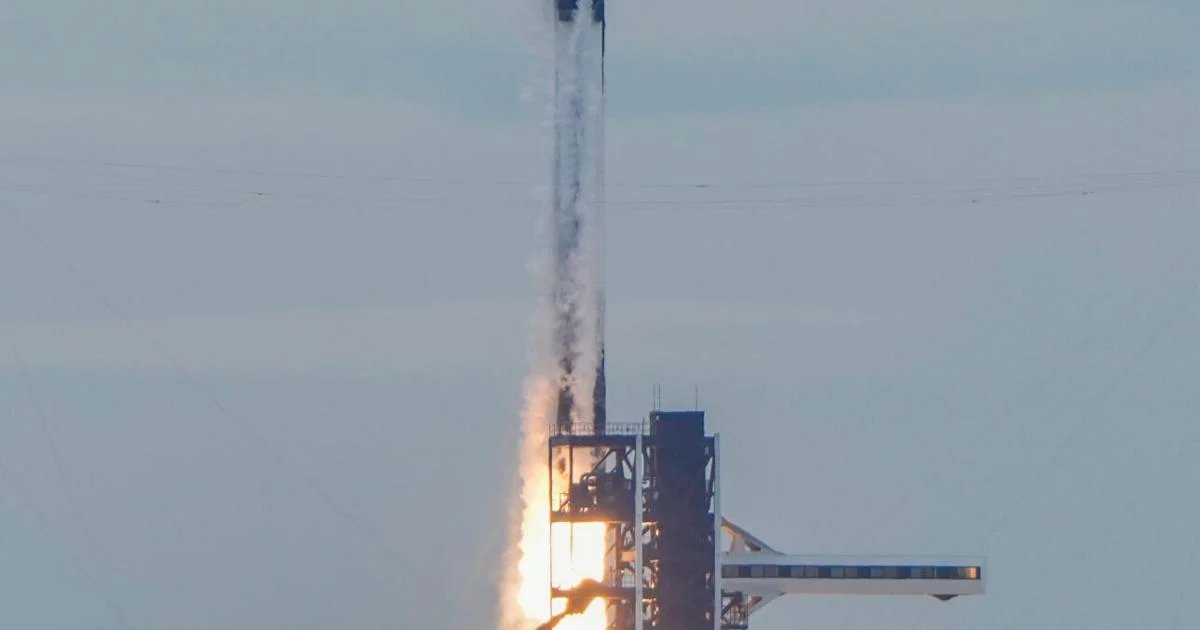
CAPE CANAVERAL, Fla. — A SpaceX Falcon 9 rocket roared into the Florida sky early Thursday, carrying a crew of four on a mission that highlights the accelerating intersection of private spaceflight and the rapidly evolving field of artificial intelligence. As the rocket cleared the launchpad at the Cape Canaveral Space Force Station, it marked yet another milestone for the commercial space sector, which is increasingly relying on sophisticated computational models to streamline complex orbital logistics.
The launch, conducted on October 1, 2026, serves as a reminder of how Silicon Valley giants and aerospace firms are integrating autonomous systems into the fabric of space exploration. From real-time trajectory adjustments to advanced image processing, the software underpinning these missions is becoming as critical as the hardware itself.
The AI Frontier in Aerospace Operations
Modern rocket launches are no longer just feats of mechanical engineering; they are massive data-processing operations. SpaceX, alongside partners like Google Cloud, has been leveraging high-performance computing to simulate launch environments and predict atmospheric variables with unprecedented accuracy.
AI-driven diagnostics now monitor the Falcon 9’s systems in real-time, scanning for anomalies that would be impossible for human flight controllers to identify in the split-second windows required during ascent. By utilizing machine learning algorithms that digest petabytes of telemetry data from previous flights, SpaceX engineers are able to optimize fuel consumption and structural integrity, lowering the barrier to entry for orbit. This integration reflects a broader tech industry shift where predictive analytics are being applied to everything from autonomous vehicles to global supply chain management.
Google’s Expanding Role in the New Space Race
While SpaceX provides the launch infrastructure, Google remains a silent partner in the broader ecosystem of space-based data. Through the Google Earth Engine and the company’s specialized aerospace partnerships, data harvested from satellites launched by commercial crews is being processed to assist in climate monitoring, disaster response, and urban planning.
The tech giant has made significant strides in providing the cloud architecture necessary to store and analyze the vast amounts of imagery captured from low-Earth orbit. As more private crews reach space, the demand for edge computing—processing data directly on satellites rather than sending it back to terrestrial servers—is creating a new market for AI-capable hardware. Google’s ongoing work with Tensor Processing Units (TPUs) is beginning to find its way into the ruggedized systems designed for space, allowing for faster on-board decision-making during deep-space transit.
Autonomous Systems and the Future of Human Flight
The crew aboard Thursday’s mission is the primary beneficiary of these digital advancements. As automated systems handle the complex navigation and life-support management, astronauts are increasingly free to focus on scientific research rather than manual pilot duties. This transition toward “hands-off” flight is a critical precursor for longer-duration missions to the Moon and Mars, where communications latency makes real-time control from Earth impossible.
Looking ahead, the collaboration between private spaceflight companies and the tech industry is poised to reshape how we interface with the cosmos. As AI models become more adept at navigating the unpredictable conditions of orbital mechanics, the frequency of these missions is expected to surge. For the four crew members currently orbiting the planet, the Falcon 9 is more than just a rocket; it is a complex, AI-supported bridge to a new era of exploration where human intuition and machine intelligence work in lockstep to push the boundaries of what is possible.
As the mission progresses, ground teams will continue to monitor the performance of both the crew and the onboard software, gathering the data that will inevitably inform the design of the next generation of spaceflight technologies.
Disclaimer: This content is auto-generated for informational purposes only.
Source: Read Original News