







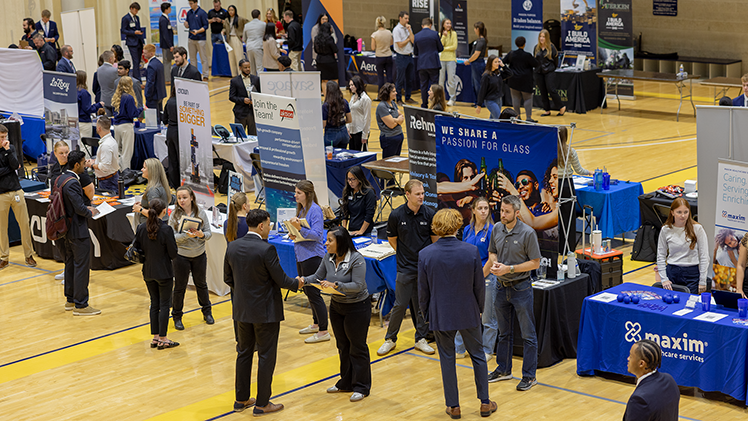
The University of Toledo’s John B. and Lillian E. Neff College of Business and Innovation recently transformed its Student Recreation Center into a high-powered hub of career development. By hosting over 75 leading companies, the university provided hundreds of students with a vital gateway to internships and permanent employment, underscoring the institution’s commitment to bridging the gap between academic theory and real-world professional success.
Leveraging Technology and Human Networking
In an era where the professional landscape is increasingly shaped by artificial intelligence and automated recruitment tools, the UToledo Fall Job Fair highlighted the enduring value of in-person networking. While digital platforms and AI-driven resume screening have become standard in the human resources sector, the event demonstrated that personal interaction remains the cornerstone of the hiring process.
For many students, the event served as a practical application of the university’s new ASCEND initiative—a program focused on Applied Skills for Career Experience, Networking and Development. By engaging directly with recruiters, students practiced the soft skills that AI cannot replicate: articulation, professional etiquette, and the ability to build immediate rapport. These experiences are critical as business students prepare to enter a market where they will work alongside, and compete with, sophisticated automated systems.
The Role of Industry-Integrated Learning
The success of the job fair is rooted in the Neff College’s long-standing reputation, consistently recognized by The Princeton Review and U.S. News & World Report. By maintaining strong ties with a diverse array of over 75 companies—ranging from specialized finance firms to global industrial distributors—the college ensures that its curriculum remains relevant to current industry demands.
This alignment is particularly important as the tech industry pivots toward a hybrid model of talent acquisition. Employers are no longer looking just for candidates with high GPAs; they are scouting for individuals who have mastered the digital tools and data analytics platforms that define modern corporate efficiency. Programs like those at UToledo are increasingly focusing on these technical proficiencies, ensuring graduates are not only “job-ready” but also capable of adapting to the rapid evolution of workplace software and AI integration.
Future-Proofing the Student Workforce
The atmosphere at the Student Recreation Center reflected a sense of urgency as students across various disciplines, from economics to finance, sought to secure their futures. For instance, students like junior Grant Poeppelman and graduate student Ansaam Lateefuddin Khaja exemplified the proactive nature of the current student body, engaging in deep-dive conversations with representatives from firms like Fastenal and Welltower.
As higher education institutions continue to grapple with the transformative impact of AI on the future of work, initiatives like the Neff College’s Fall Job Fair remain essential. By prioritizing experiential learning, the University of Toledo is effectively equipping students to navigate the complexities of a tech-forward economy. This proactive approach ensures that when these students graduate, they are equipped with both the foundational knowledge and the human-centric skills necessary to thrive in an increasingly automated world. The event served as a clear indicator that while technology powers the backend of the global economy, it is the face-to-face connection that continues to open the doors to opportunity.
Disclaimer: This content is auto-generated for informational purposes only.
Source: Read Original News