







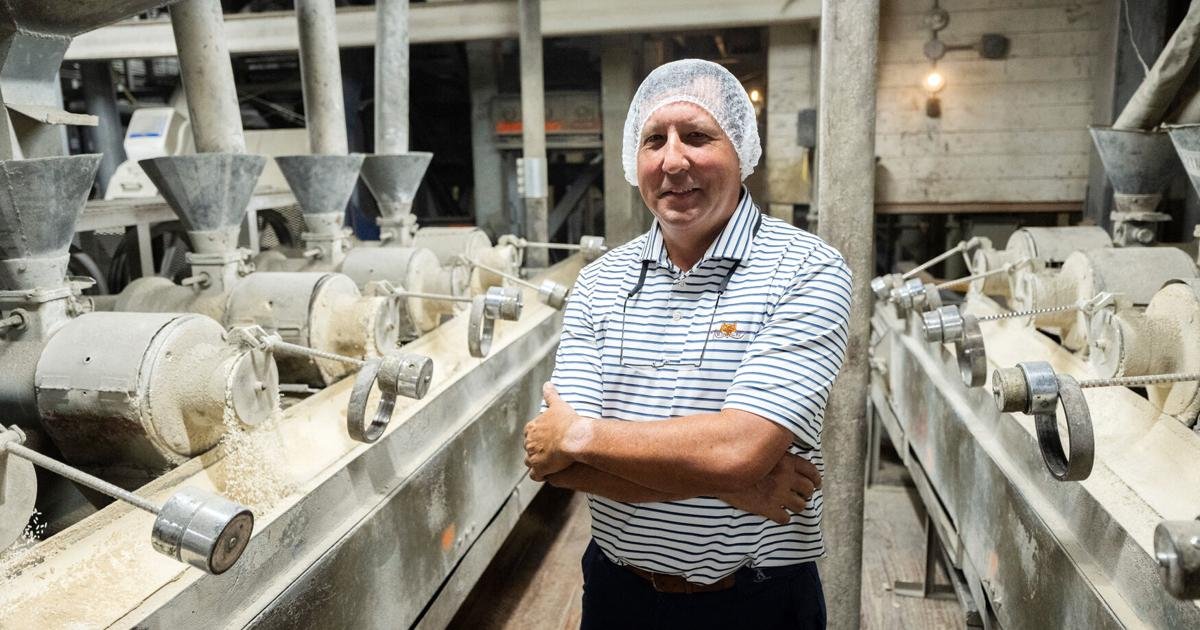
The Digital Transformation of a Legacy Industry: How Falcon Rice Mill Balances Tradition and Tech
Along Mill Street in Crowley, Louisiana, the landscape of the rice industry has undergone a seismic shift. Once a bustling hub defined by 13 independent mills, the street now holds just two. Among them is Falcon Rice Mill, a family-owned operation dating back to 1942. For Robby Trahan, the current co-owner, running the mill was never the original career path; he spent years in Texas working as a certified public accountant. However, a 2011 homecoming led Trahan and his sister, Christine, to take the reins from their father, marking the beginning of a modern chapter for the historic brand.
Transitioning from the analytical world of accounting to the unpredictable, high-stakes environment of agricultural processing required a change in mindset. Trahan admits that treating the mill like a rigid financial spreadsheet is impossible. Instead, he views the business as a critical conduit in a supply chain—a “water hose” that must keep flowing to sustain both the farmers who provide the harvest and the consumers who rely on the final product.
Navigating Modern Market Headwinds
While the mill remains deeply rooted in Louisiana culture, the business is currently grappling with global economic pressures. Trahan notes that the domestic rice crop has hit historic lows, with some regions seeing production drops of up to 40%. Beyond the volatility of weather, the industry is struggling with the dual pressures of rising fertilizer costs and surging diesel prices.
These economic frictions are compounded by international trade disputes. The export market, which typically accounts for half of U.S. rice production, has been squeezed by cheaper competitors like India. Trahan points to a shrinking U.S. market share in Mexico—dropping from 80% to nearly 25%—as a direct consequence of trade tariffs and shifting global partnerships. Even for a mill investing $6 million into expansion, these political and economic currents create tangible challenges, such as unexpected tariff costs on imported machinery that take months of bureaucratic maneuvering to recover.
Technology and the Future of Processing
Despite these hurdles, Falcon Rice Mill is betting on the future. The $6 million expansion represents a critical move to improve output efficiency and milling yields. Technology plays an increasing role in these upgrades, as mills look for better ways to maximize “head rice”—the premium, unbroken grains that dictate market value.
In an era where agriculture is increasingly being reshaped by AI, satellite imagery, and data-driven supply chain management, traditional mills are finding that digital integration is no longer optional. While Trahan didn’t speak to specific AI deployments, the modern milling industry is rapidly adopting automated sorting systems and real-time inventory tracking, tools essential for surviving in a global market that is increasingly connected by digital logistics.
Sustaining a Cultural Legacy
For Trahan, the motivation to keep the mill running goes beyond simple economics. It is about maintaining a sense of place. “Nobody wants to move away if you don’t have to,” Trahan reflected during a recent business interview. He views the mill as a cornerstone of the local community, preserving a unique cultural identity that is becoming rare in an age of corporate consolidation.
As the industry faces high grocery prices and shifting consumer habits, Falcon Rice Mill is attempting to thread the needle: maintaining the traditional quality of their “Cajun Country Rice” while adopting the logistical sophistication required to compete with global, high-volume players. By balancing the cold math of his accounting background with the community-centric needs of Louisiana farmers, Trahan is attempting to ensure that even as the number of mills on Mill Street dwindles, the legacy of his family’s operation continues to feed the country.
Disclaimer: This content is auto-generated for informational purposes only.
Source: Read Original News