





In the high-stakes game of Bollywood red-carpet appearances, the goal is rarely to blend into the wallpaper. For an actor like Vijay Varma—a performer celebrated for his gritty, grounded portrayals in projects like Darlings, Dahaad, and Mirzapur—the red carpet usually serves as a sleek, understated extension of his “method actor” persona. However, his latest outing in Mumbai has shattered that mold, trading his usual sharp-tailored suits for an experimental, avant-garde ensemble that has sent the internet into a absolute tailspin.
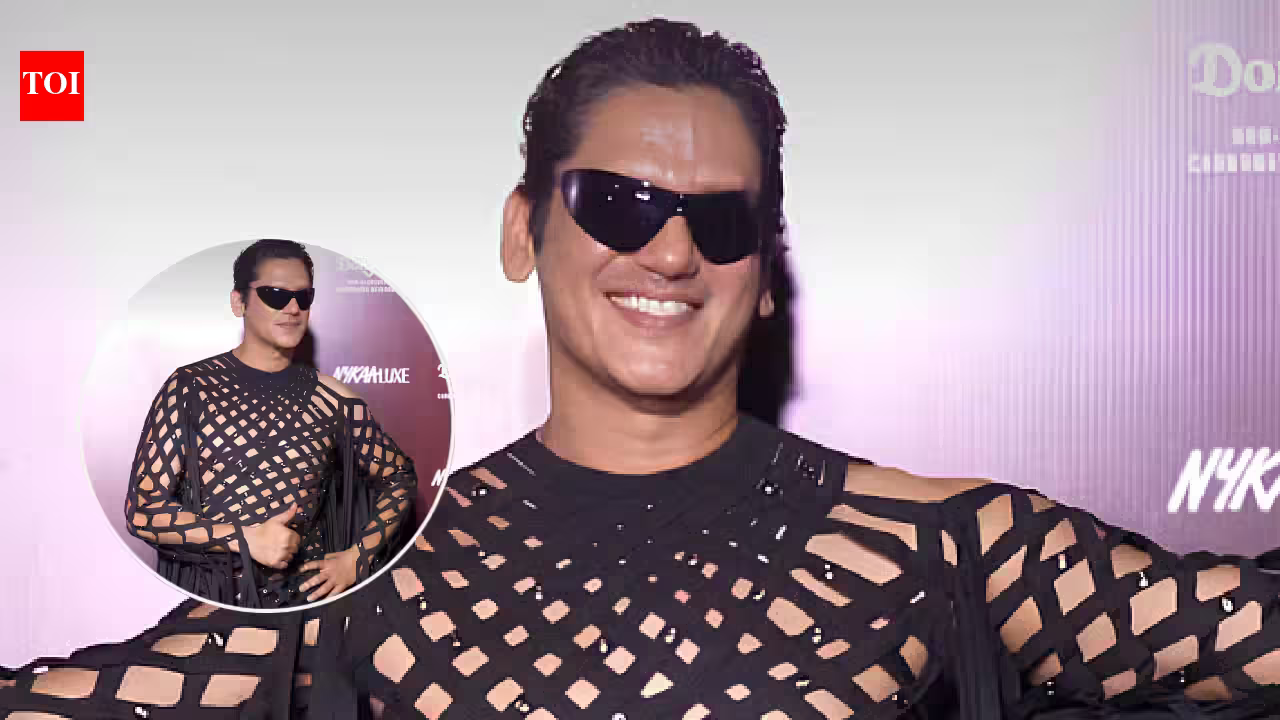
When the shutterbugs caught Varma arriving at a high-profile industry event, the collective reaction wasn’t just surprise—it was confusion, amusement, and a heavy dose of digital snark. Varma stepped out in an all-black creation that defied traditional sartorial norms, opting for a lattice-work top featuring aggressive cut-outs and dangling fabric strips that seemed to oscillate between high-fashion editorial and a deliberate provocation.
Deconstructing the Look: A Study in Avant-Garde
The centerpiece of the controversy was a fitted black top defined by a criss-cross, web-like lattice design. It was a piece that dared the wearer to be comfortable, featuring sheer, skin-baring panels that exposed the torso in ways rarely seen on male stars in India. If the geometric cut-outs weren’t enough to grab eyeballs, the garment was adorned with long, thin strips of hanging fabric that created a kinetic effect as the actor moved—a look that felt more at home on a Parisian runway than a standard Mumbai party.
To ground the chaotic geometry of the top, Varma paired it with high-waisted black leather trousers. The glossy, structured nature of the pants provided a sharp, industrial contrast to the flimsy, skin-revealing nature of the top. He topped off the look with a pair of oversized black sunglasses—the universal shorthand for “don’t ask me about this outfit”—and a clean, minimalist grooming aesthetic. From a stylist’s perspective, the look was an attempt at “goth-glam,” but in the court of public opinion, it was anything but a success.
The “Male Uorfi” Label and the Internet’s Verdict
It didn’t take long for the comments section to turn into a gladiator arena. Once the videos went viral, the internet did what it does best: it found a cultural touchstone for the absurdity of the moment. The name Uorfi Javed—the undisputed queen of experimental, DIY, and often baffling red-carpet fashion in India—was invoked almost immediately.
“Male version of Uorfi Javed,” became the rallying cry of the comment section. For the uninitiated, being compared to Uorfi isn’t exactly a compliment in the traditional fashion world; it implies a look that prioritizes shock value over aesthetic cohesion. Other users were less diplomatic, opting for blunt dismissals like “Cartoon,” or the disparaging “Perfect chapri look.”
The cruelty of the internet was on full display. One user quipped, “Crime Master Gogo,” while another, clearly unimpressed by the dangling fabric, remarked, “Makhhi lag rahe ho” (You look like a fly). It was a swift, brutal reminder that while the international fashion circuit celebrates boundary-pushing, the domestic social media audience often demands a level of “normality” that experimental pieces simply cannot provide.
The Orry Factor: When Style Becomes a Meme
The discourse surrounding Varma’s outfit soon spilled over into the wider conversation about the state of celebrity styling in India. In a landscape where “viral” is the only currency that matters, names like Orry (Orhan Awatramani) often become shorthand for a specific kind of attention-seeking fashion.
“Ye dekho dusre Orry mamu aagaye” (Look, the other Uncle Orry has arrived), one comment read, effectively grouping Varma into the niche category of celebrities who seem to dress specifically to generate memes. For Varma, who has built a career on being a serious, formidable actor, this is a dangerous intersection. When your personal style starts to overshadow your craft, the “meme-ification” of your persona becomes a trap. Is Varma’s choice a genuine interest in pushing the boundaries of masculinity in Indian fashion, or is it a symptom of the “Orry-fication” of Bollywood, where the primary objective of any public appearance is to generate clicks, regardless of the quality of the engagement?
The Bigger Picture: Men’s Fashion in India
Beyond the jokes and the stinging insults, there is a legitimate question to be asked: why are we so uncomfortable with men experimenting? The lattice top, the leather, and the exposed skin represent a shift toward fluid, daring fashion that has been normalized in global fashion capitals. However, in the Indian context, the reaction remains visceral.
The biggest talking points of the night—the lattice design, the dangling strips, and the monochromatic leather—were clearly calculated to make a statement. But the failure of the look might lie in its lack of context. It felt disconnected from Varma’s established brand. When a performer known for playing intense, grounded characters suddenly appears looking like a high-fashion experiment gone wrong, the disconnect leaves the audience feeling alienated rather than impressed.
Whether this was a bold creative choice that simply missed the mark or a calculated move to capture social media’s fleeting attention, one thing is certain: Vijay Varma has learned the hard way that in the age of the algorithm, you can wear the most expensive, avant-garde design in the world, but if the internet decides you’re a “cartoon,” there’s very little you can do to change the narrative. The clothes, as it turns out, really do make the man—or, at the very least, they make the meme.
Disclaimer: This content is auto-generated for informational purposes only.
Source: Read Original News