









The Mechanics of India’s Dual-Pricing Fuel Market
The recent escalation in fuel prices by private retailers and the sharp upward revision in bulk diesel costs underscore the inherent vulnerabilities within India’s energy sector. When global crude oil benchmarks fluctuate due to geopolitical instability, the strain on domestic profit margins becomes immediate. For private players like Nayara Energy, which must balance commercial viability with market competition, rising input costs necessitate swift adjustments. Conversely, state-run oil marketing companies (OMCs) remain tethered to government-influenced retail price structures, creating a fragmented market where two distinct pricing regimes coexist.
At the heart of this issue is the divergence between retail fuel prices—governed by political and social considerations—and bulk diesel prices, which are intended to reflect actual international product benchmarks. When the spread between these two segments widens significantly, it triggers unintended market consequences. Commercial and industrial consumers, seeking to optimize operational expenses, naturally pivot toward retail outlets where prices are artificially suppressed. This migration places an unsustainable burden on the retail distribution network, potentially leading to supply chain disruptions and inventory management crises.
Geopolitical Volatility and the Crude Oil Benchmark
The pricing pressure currently felt by Indian energy firms is directly linked to global crude oil volatility. With benchmarks such as Brent trading at elevated levels, the landing cost of crude for Indian refineries increases substantially. Because India imports a vast majority of its oil requirements, the domestic economy remains a price taker in the global market. Geopolitical tensions in West Asia act as a force multiplier, creating uncertainty in supply lines and forcing a premium on energy products.
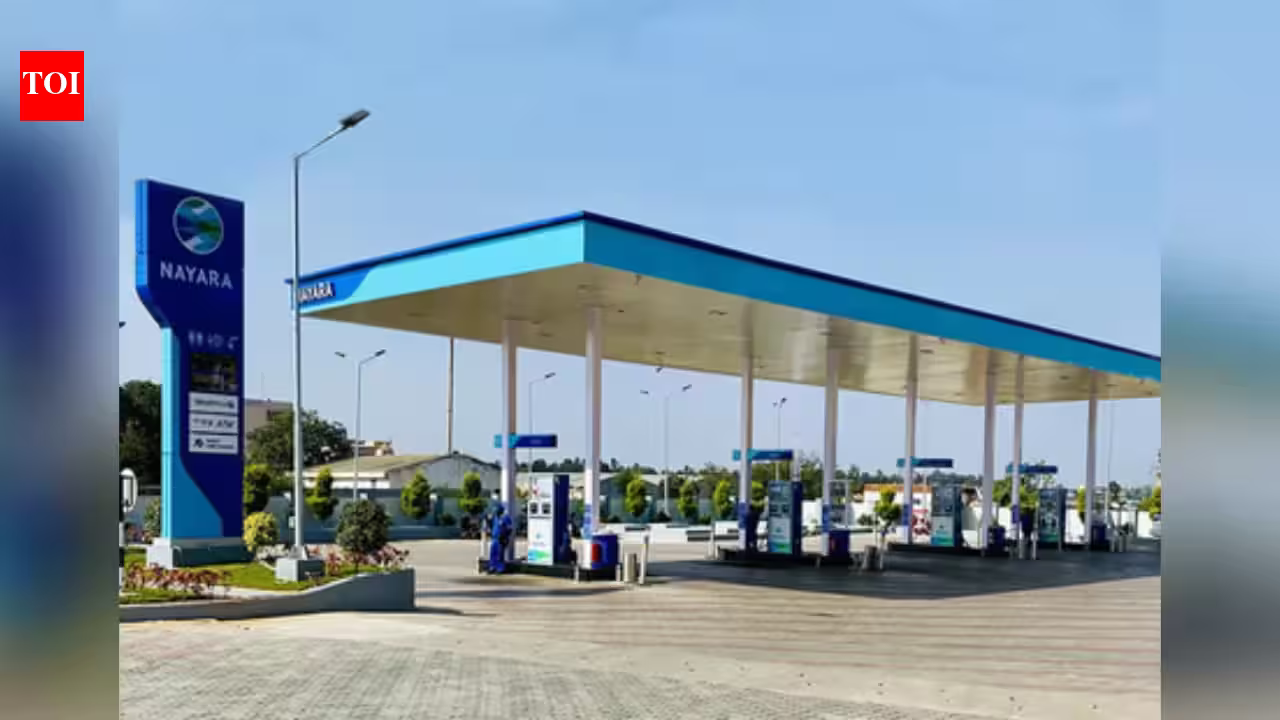
For private oil retailers, this reality is unforgiving. Unlike public sector entities that may benefit from government subsidies or state-supported balance sheets, private players operate under stricter profit-and-loss discipline. When the cost of refining and distributing fuel exceeds the revenue generated from retail sales, the company must either raise prices or face operational losses. The recent decision by Nayara Energy to increase pump prices for petrol and diesel is a direct response to these macroeconomic headwinds. It serves as a necessary, albeit painful, recalibration intended to protect the company’s margins against the backdrop of persistent, high-cost crude.
The Arbitrage Dilemma in the Retail Sector
A significant consequence of the current pricing disparity is the phenomenon of price arbitrage. When the gap between retail diesel and bulk diesel reaches the double digits, industrial and commercial entities—such as logistics firms, manufacturing plants, and fleet operators—frequently shift their procurement from wholesale channels to retail petrol pumps. This behavior is rational from an economic standpoint but causes profound logistical challenges for the domestic fuel distribution network.
Retail outlets are designed to serve individual motorists with smaller, high-frequency transactions. When commercial consumers, who typically require large volumes, start queuing at retail pumps, the throughput capacity of these stations is overwhelmed. This leads to longer wait times for regular customers and puts significant strain on the inventory reserves of the retail dealer. Furthermore, dealers are often unable to distinguish between commercial and personal buyers, making it difficult to control the volume of diesel dispensed. As pointed out by industry representatives, this surge in retail sales is inherently loss-making for the OMCs, as the retail price does not cover the current market cost of the fuel being dispensed.
Operational Challenges for Petroleum Dealers
For the thousands of petroleum dealers across India, the current market environment is fraught with uncertainty. Dealers operate on commission structures that are often tied to sales volume; however, they also face the risk of supply rationing and inventory shortages. If the supply chain from the oil companies becomes bottlenecked, dealers bear the brunt of customer dissatisfaction.
Moreover, the regulatory burden on dealers is considerable. In previous instances of severe market imbalance, government directives have mandated volume caps at retail stations to prevent mass hoarding by commercial players. While such measures are intended to maintain order, they complicate the daily operations of a fuel pump. Dealers are forced into the uncomfortable position of enforcing these quotas, which requires additional administrative effort and often leads to confrontations with customers. The lack of a unified, automated system to verify the nature of the buyer (commercial versus retail) leaves the dealer as the frontline entity managing the fallout of a national pricing mismatch.
The Sustainability of Price Controls
The divergence in pricing highlights the long-term sustainability debate regarding fuel price regulation in India. While freezing retail prices serves as a hedge against inflation and protects the purchasing power of the average consumer, it obscures the reality of market-driven energy costs. Over time, prolonged price freezes in the retail sector can lead to under-recoveries for oil marketing companies. These under-recoveries must eventually be accounted for, either through future price hikes, government fiscal intervention, or cross-subsidization strategies.
The current strategy—where bulk consumers pay a market-linked price and retail consumers pay a subsidized, government-aligned price—is effective only as long as the price gap remains narrow. As that gap widens, the market faces structural distortions. Private players, by raising their retail prices, acknowledge that they cannot indefinitely subsidize the market. This creates a two-tiered system where those who can access cheaper, government-regulated fuel at public sector pumps do so, while others must bear the brunt of the market-adjusted prices at private outlets.
Future Outlook and Strategic Implications
Looking ahead, the Indian energy sector is likely to remain in a state of high sensitivity until global crude supply chains stabilize. The ability of private players to capture market share will remain tied to their efficiency in procurement and their willingness to adjust pricing in real-time. For the Indian government, the priority will remain the containment of retail inflation, which necessitates a careful balancing act between the fiscal burden of energy subsidies and the health of the oil marketing industry.
Market participants should anticipate continued volatility in fuel prices as long as the global geopolitical environment remains uncertain. Furthermore, the role of digitalization in the fuel sector may become critical. If retailers can implement more sophisticated tracking and procurement mechanisms, they might better manage the flow of diesel to commercial users, potentially mitigating some of the chaos observed at the pump. Ultimately, the industry requires a move toward more transparent, market-responsive pricing mechanisms that minimize the incentives for arbitrage, ensuring that the supply chain remains resilient enough to handle both routine demand and extreme global supply shocks. For businesses reliant on energy, this environment necessitates a proactive approach to cost management and a realistic expectation of higher operational expenses in the near to medium term.
Disclaimer: This content is auto-generated for informational purposes only.
Source: Read Original News