





Beyond the Scoreline: India’s Measured Defiance Against Brazil
The final 4-0 scoreline will undoubtedly occupy the record books, standing as a testament to Brazil’s undeniable footballing pedigree. When the final whistle blew on Saturday night, the disparity between the two sides was evident, yet the numbers failed to capture the nuanced reality of the encounter. For India, the night was not merely an exercise in damage limitation, but a rare glimpse into a version of the team that could transcend its current standing on the global stage.
A Promising Opening Chapter
For the first half-hour, India refused to be intimidated by the gold-clad giants. Under the lights, the hosts were tactically disciplined, maintaining a compact defensive shape without retreating into a shell. The midfield pairing of Apuia and Anirudh Thapa displayed a composure that has often been missing against elite opponents, providing the backbone required to stem the flow of Brazilian attacks.
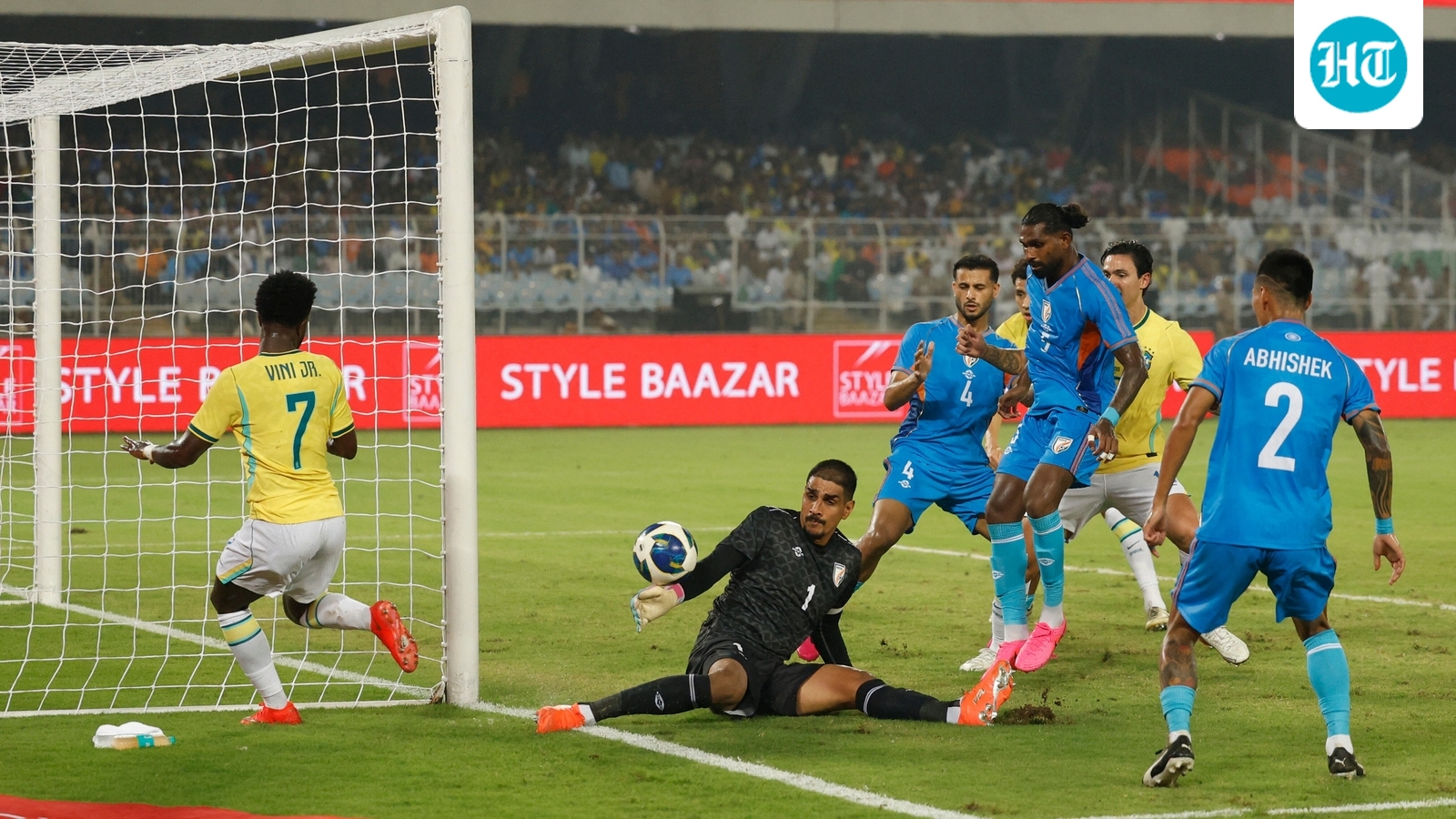
Manvir Singh’s tireless running and Ryan Williams’ direct threat added a layer of intent that forced the visitors to stay alert. Indeed, there were flashes of genuine danger—most notably when Williams forced a desperate goal-line clearance from Mauro Junior and later sent a strike whistling just past the upright. These were more than just isolated chances; they were proof that India was capable of challenging the established order.
The Price of Concentration
However, the inevitability of class eventually took hold. Following the first goal by Estevão in the 28th minute, the tactical complexion of the match shifted. Indian head coach Khalid Jamil was candid about the transition, noting that the defensive lapses that followed the opening goal proved costly.
“Everything was working as planned until that first goal,” Jamil admitted post-match. “We lost our concentration, and in a game of this magnitude, against opponents of this caliber, small errors are magnified into goals.”
Opposing manager Carlo Ancelotti echoed the sentiment, noting the difficulty his side faced in breaking the initial deadlock. Once the seal was broken, Brazil’s ability to control the tempo became clinical, turning a competitive contest into a comfortable victory.
Leadership and Psychological Hurdles
The evening proved particularly difficult for veteran goalkeeper and captain Gurpreet Singh Sandhu. After a challenging first half that saw him involved in two of the conceded goals, he was substituted at the break. While critics were quick to point fingers, Jamil stood firmly behind his skipper. He attributed the breakdown to collective defensive miscommunication rather than individual error, reiterating that Sandhu remains a vital figure for the squad’s future fixtures.
More than the technical aspect, the evening was a test of the collective psyche. For an Indian side haunted by the weight of recent history and the crushing expectation of a home crowd, the pressure was immense. Dealing with world-class talent is not merely a physical task, but a mental one. Jamil acknowledged the gulf in experience, noting that his players were facing professionals who navigate the highest tiers of global club football every week.
Looking Beyond the Romance
The danger for Indian football now lies in allowing this performance to fade into the realm of “glorious defeats”—a collection of memories that provide emotional warmth but little tangible progress.
The true metric of Saturday’s outing will be its impact on future performances against opponents of similar stature. As Jamil aptly summarized, the goal is not to dwell on a singular night of spirited resistance, but to sustain that level of play. “We have to play more matches like this,” he said. For India, Saturday was a reference point, providing evidence that while the current ranking reflects their standing, it does not have to dictate the limits of their ambition.
Disclaimer: This content is auto-generated for informational purposes only.
Source: Read Original News