








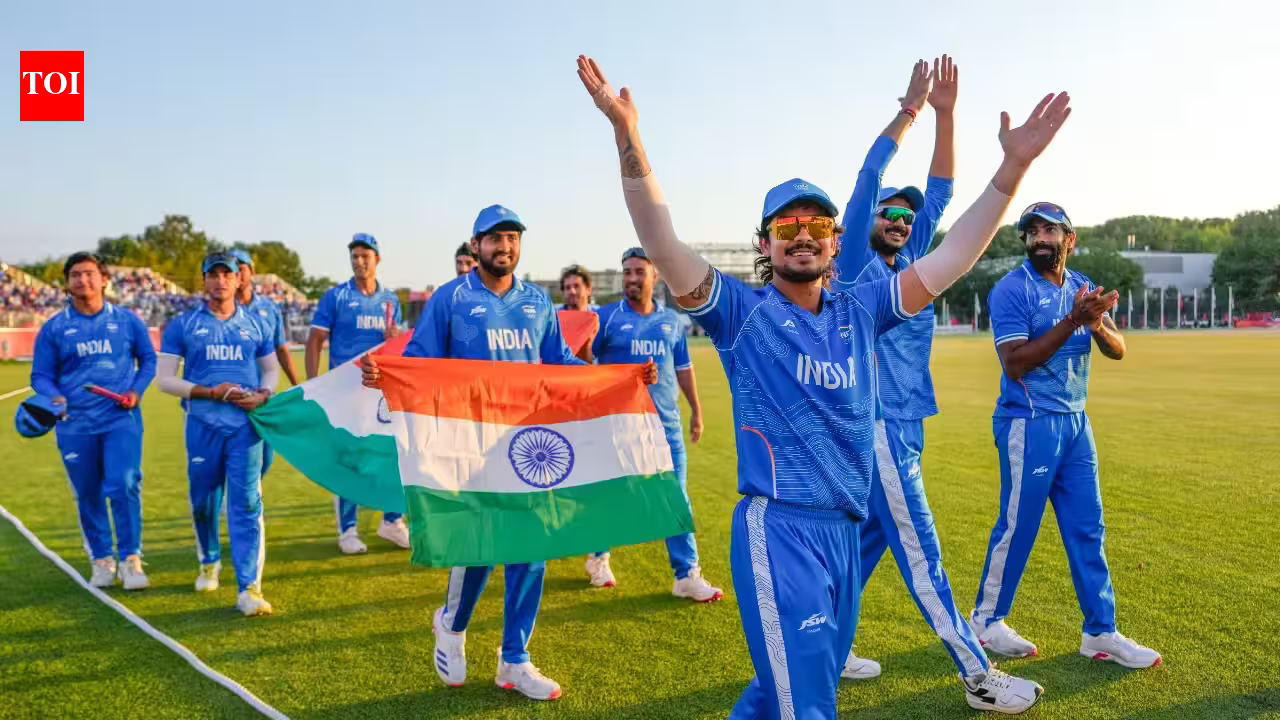
Gold-medal glory returned to Indian shores this past weekend as the Men in Blue solidified their dominance on the continental stage, successfully defending their Asian Games cricket title in a pulsating final at the Korakuen Stadium in Nisshin, Japan. While the 19-run victory over arch-rivals Pakistan on Saturday, October 3, was celebrated as a masterclass in composure, the aftermath has been marked by a pointed assessment from the top brass of Indian cricket.
BCCI President Mithun Manhas, while effusive in his praise for the grit displayed by his squad under the searing pressure of a high-stakes final, did not mince words regarding the current state of the historic rivalry. In a candid post-match assessment, Manhas suggested that the aura surrounding India-Pakistan encounters is increasingly mismatched, citing a perceived decline in the competitive edge Pakistan brings to the table.
## A “Decline” in the Rivalry
“They defeated arch-rivals Pakistan, who I feel don’t offer much competition anymore,” Manhas stated, adding that the psychological fortitude displayed by the Indian contingent remains unrivaled globally. “The way our team handled pressure situations… no other team in the world can do that.”
The BCCI President’s remarks strike at the heart of a shifting narrative in international cricket. Once defined by razor-thin margins and unpredictable outcomes, the India-Pakistan fixture has, in recent years, seen India assert a level of tactical and technical superiority that has frequently left the Men in Green scrambling to keep pace. Manhas’s comments represent a significant departure from the usual diplomatic platitudes, signaling that the Indian cricket establishment no longer views the fixture as the primary benchmark for their own success.
Instead, Manhas framed India’s victory as a testament to the internal depth and professional infrastructure of the current national setup, asserting that the gold medal was the natural conclusion for a squad that performed as the “best team of the tournament by far.”
## Explosive Starts and Middle-Order Resilience
The tactical blueprint for the final was clear from the onset: aggression at the top and calculated recovery in the middle. India’s imposing total of 211—the first time any team had breached the 200-run threshold throughout the duration of the tournament—provided the foundation for their victory.
Abhishek Sharma was the architect of the early onslaught, dismantling the Pakistani bowling attack with an explosive 61 off just 28 deliveries. His approach served a dual purpose: it unsettled the opposition bowlers early and provided the middle order with a buffer to anchor the innings.
“This is a team sport,” Manhas noted during his post-match analysis. “Tilak Varma batted brilliantly, and Abhishek Sharma set the tone for the game. The job of openers is to build the innings, and the middle order finishes it. So, the openers basically set the tone.”
The middle phase of the innings saw a brief wobble, but the partnership between Tilak Varma—who cruised to a 22-ball 51—and Shivam Dube ensured that India kept their foot on the accelerator. Their 62-run alliance off just 30 balls was the turning point, ensuring that even when wickets fell, the momentum never shifted into the hands of the Pakistani bowlers.
## Bowlers Deliver in the Crucible
While the batting pyrotechnics captured the headlines, the defense of 211 was a tactical chess match. Pakistan’s Hasan Nawaz provided a genuine scare, launching a blistering counter-attack that saw him reach 96 off 51 balls. With the game teetering on the edge, India’s bowling unit showcased the exact “pressure management” Manhas lauded earlier.
Axar Patel and Washington Sundar emerged as the clinical figures, claiming two wickets each to stifle the run flow when it mattered most. Perhaps most telling was the role of premier pacer Jasprit Bumrah. While he went wicketless on the day, his ability to execute pinpoint yorkers and variations during the death overs forced the Pakistani batters into difficult shots, preventing the late-innings surge required to chase down the mammoth total. By the time the final ball was bowled, Pakistan was restricted to 182/6.
## A Legacy of Excellence
The victory cements India’s status as a juggernaut in the Asian Games format, marking back-to-back gold medal wins. For Manhas, the tournament was not merely about beating a specific opponent but about validating the sheer consistency of the current generation of Indian cricketers.
As the team returned to the pavilion, draped in the national flag, the atmosphere in Nisshin was one of professional satisfaction rather than relief. The BCCI President’s sharp comments regarding the state of the rivalry may stir debate in the weeks to come, but the scoreboard at the Korakuen Stadium offered the only validation that truly matters to the Indian camp. With a deep talent pool and a clear, aggressive philosophy, India has once again proven that while rivals may come and go, their pursuit of dominance remains unwavering.
Disclaimer: This content is auto-generated for informational purposes only.
Source: Read Original News