







Digital Crackdown: India Blocks Jack Dorsey-Linked ‘Bitchat’ Under Section 69A
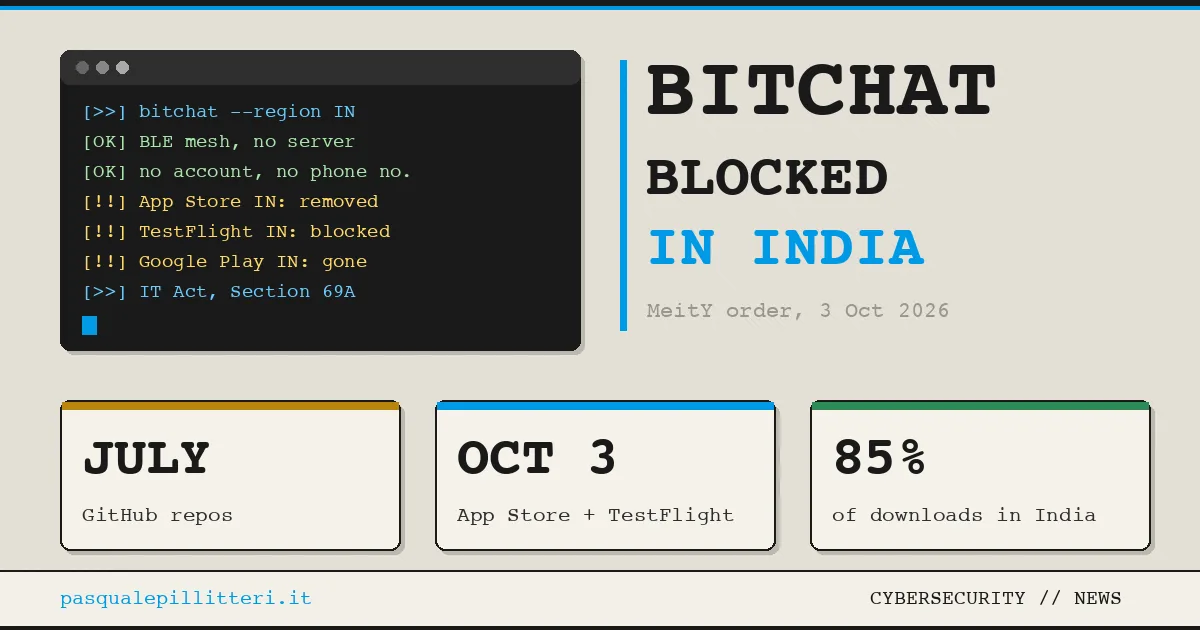
In a decisive move to regulate the nation’s digital landscape, the Ministry of Electronics and Information Technology (MeitY) has ordered the removal of the messaging application “Bitchat” from both the Apple App Store and the Google Play Store. The application, which gained attention due to its association with former Twitter CEO Jack Dorsey, has been pulled from circulation following a directive issued under Section 69A of the Information Technology Act.
The Legal Basis for the Ban
Section 69A of the Information Technology Act grants the Indian government the authority to issue directions for blocking public access to any information generated, transmitted, received, or hosted in any computer resource. The government invokes this power when it deems such action necessary in the interest of the sovereignty and integrity of India, the security of the state, friendly relations with foreign states, or public order.
While MeitY has remained relatively tight-lipped regarding the specific inflammatory content or security lapses identified within Bitchat, sources indicate that the ministry flagged the platform for failing to comply with India’s stringent intermediary guidelines. The government has increasingly demanded that social media and messaging platforms establish local grievance redressal mechanisms and cooperate with law enforcement agencies during investigations.
Apple’s Notification to Developers
Following the government directive, Apple issued a formal notice to the developers of Bitchat, confirming the removal. The communication, standard in instances of government-ordered geofencing, informed the developers that their application was no longer available on the Indian storefront because it violated local laws.
Apple’s notice underscored that the application had been flagged by the Indian government as being in breach of national regulations. Consequently, the app is now inaccessible to users within Indian territory. For those who had already installed the app, functionality may remain limited, as platforms frequently disable server-side access to applications that are officially delisted under government orders.
Implications for Users and Tech Platforms
The blocking of Bitchat serves as a reminder of the tightening regulatory environment for tech companies operating within India. Over the past few years, New Delhi has ramped up its efforts to ensure that digital platforms adhere to domestic laws, particularly those concerning data sovereignty and the prevention of misinformation.
For the average user, this means that Bitchat will no longer appear in search results on the App Store or Google Play within India. Furthermore, new downloads are effectively halted. This development follows a broader trend of the Indian government cracking down on various communication platforms—ranging from VPNs to gaming apps—that are perceived to pose potential risks to national security or fail to align with the country’s updated digital policy frameworks.
The Road Ahead
As of now, representatives for the application have not issued a detailed public statement regarding a potential appeal or plans to bring the app into compliance with MeitY’s requirements. Legal experts suggest that if Bitchat intends to resume operations in India, it must engage in direct dialogue with the Ministry to address the specific security or policy violations that triggered the Section 69A order.
Until such a resolution is reached, the platform remains part of a growing list of digital services restricted in India, highlighting the significant power wielded by the government in shaping the digital ecosystem of the world’s most populous nation. For Jack Dorsey’s initiatives, this represents a significant regulatory hurdle, reflecting the complexities global tech leaders face while attempting to maintain operations in markets with evolving and rigorous digital surveillance policies.
Disclaimer: This content is auto-generated for informational purposes only.
Source: Read Original News