





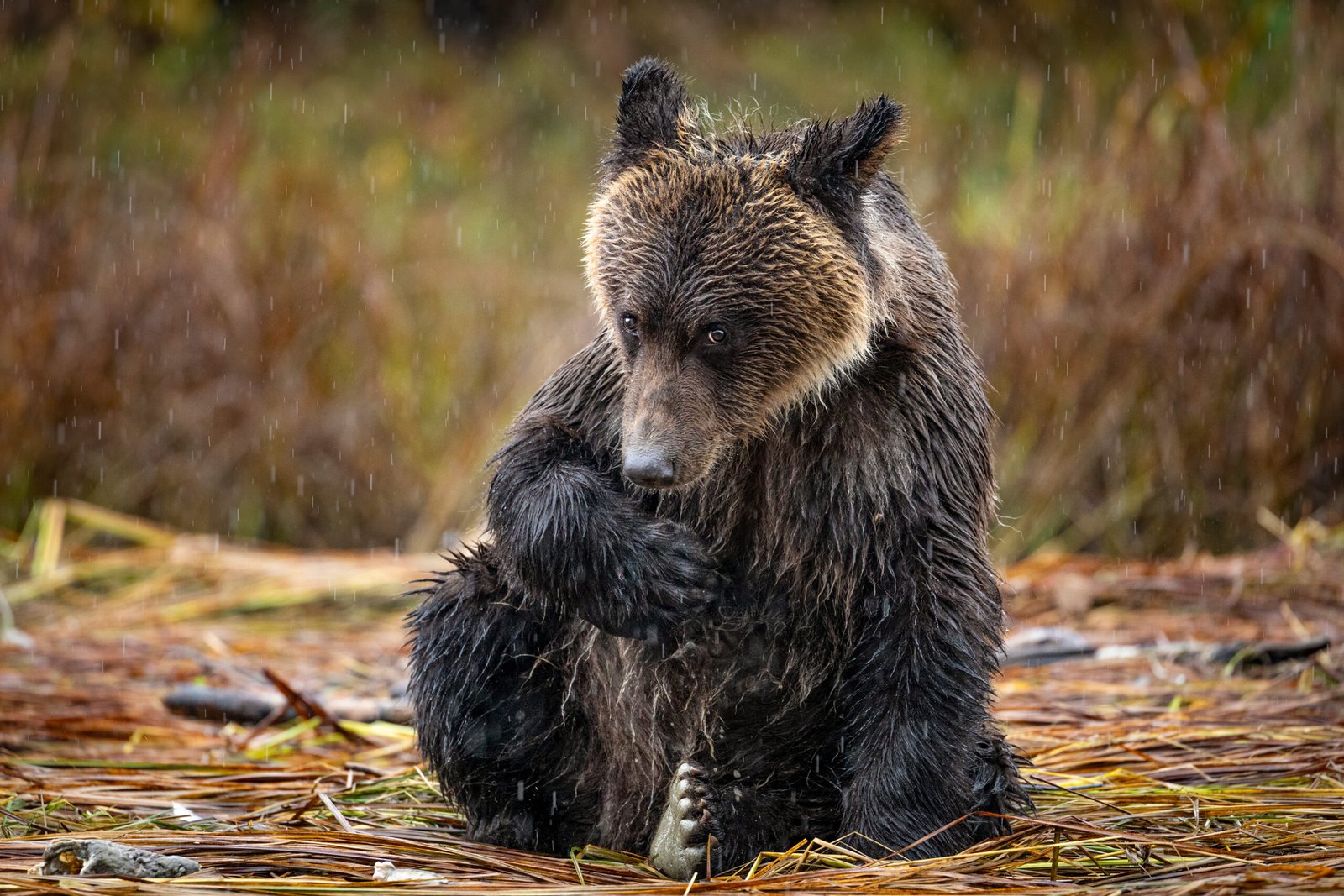
The Great Bear Rainforest, a 64,000-square-kilometre expanse of ancient timber, mist-shrouded fjords, and rugged islands along British Columbia’s coast, remains one of the most elusive wildernesses on Earth. For British wildlife photographer Jack Plant, the region is more than just a backdrop for his work; it is a complex, living ecosystem that demands patience, profound respect, and an understanding of the stewardship provided by the First Nations people who have called it home for generations.
Plant, who spent a decade working in the region—eventually serving as an assistant manager at the Spirit Bear Lodge in Klemtu—has documented the landscape’s unique inhabitants, most notably the Kermode bear. Known as the “spirit bear,” these rare creatures are not albinos, but rather a distinct white-coated variant of the black bear caused by a recessive genetic mutation. With fewer than 100 estimated to exist, the bears are notoriously difficult to track across such a vast and unforgiving landscape.
“You can spend days waiting in the rain and see absolutely nothing,” Plant notes. His ability to capture them stems from years of immersion, learning the habits of individual bears—tracking their movements from cubhood to adulthood—and absorbing the traditional knowledge shared by the Kitasoo/Xai’xais people.
This deep-rooted connection to the land is the subject of his new book, Spirit of the Great Bear. The collection features 90 images that extend beyond the namesake bears to highlight the region’s broader biodiversity, including grizzlies, wolves, humpback whales, and orcas. Through his lens, Plant seeks to capture not just the animals themselves, but the raw, unpredictable essence of being present in their environment.
Plant’s tenure in the forest was marked by both professional dedication and poignant personal encounters. He recalls one mission to assist a man named Chris, who was suffering from Amyotrophic lateral sclerosis (ALS). Despite the physical exhaustion of trekking through the forest with medical supplies, their patience was rewarded when a spirit bear appeared in the dense foliage, offering the ailing man a moment of profound, singular beauty. It is moments like these, Plant explains, that define his work. “The challenge became less about finding wildlife and more about creating an image that actually conveyed what it felt like to be there,” he says.
While his experiences include humorous, sometimes perilous encounters—such as a curious grizzly attempting to “fish” for his dinghy with a rope, or a territorial sea lion expressing displeasure with a flurry of salmon debris—Plant maintains a sober view of the environment. He emphasizes that the wilderness of the Great Bear Rainforest is not an accident of nature, but a result of deliberate, ongoing conservation efforts, primarily led by the First Nations communities who hold the land’s original tenure.
As the region faces the ongoing pressures of climate change and environmental encroachment, Plant hopes his photography serves as a reminder of the fragility of such habitats. By documenting the interconnectedness of the forest, the water, and the wildlife, he invites the public to move beyond a tourist’s curiosity and toward a deeper appreciation for the work required to keep these landscapes wild.
“I feel I have a way of connecting with wildlife and nature that could only have come from years of immersion in their culture and their land,” says Plant. “They taught me to listen to, learn from, and live alongside the ancient natural world.” As Spirit of the Great Bear reaches a wider audience, the message is clear: the majesty of the coastal temperate rainforest is a privilege that must be actively, and collectively, defended.
Disclaimer: This content is auto-generated for informational purposes only.
Source: Read Original News