







In the lexicon of 1990s Bollywood, few signatures are as indelible as Govinda’s. While his contemporaries were busy curating a brooding, leather-jacketed aesthetic or refining the sophisticated urban gentleman look, “Chi Chi” was busy turning the cinematic screen into a kaleidoscope. From neon-drenched shirts that dared the eye to look away, to pants that defied the laws of traditional tailoring, Govinda wasn’t just wearing clothes—he was wearing a mood.
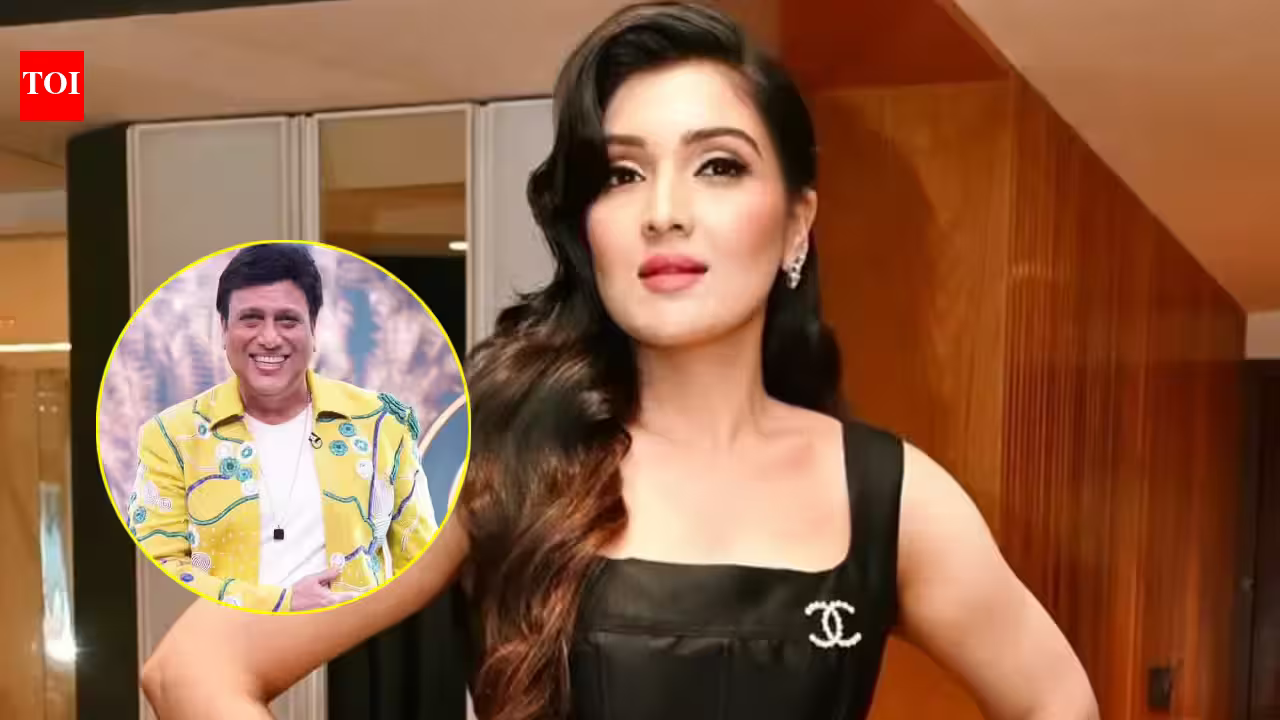
Now, as the nostalgia cycle for the 90s hits a fever pitch, his daughter, Tina Ahuja, is stepping up to defend the sartorial choices that defined her father’s legendary career. Speaking at a recent fashion event, Tina didn’t just offer a diplomatic daughterly response; she offered a masterclass in why authenticity will always outlast the fleeting trends of the industry.
The unapologetic brilliance of the ’90s icon
When asked by the media whether she ever wished her father had traded his flamboyant aesthetics for the more muted, masculine archetypes favored by his peers, Tina was quick to shut down the notion. For those who grew up in the era of Coolie No. 1 and Hero No. 1, Govinda’s aesthetic was an extension of his performance—manic, joyful, and completely unhinged in the best way possible.
Tina’s perspective is rooted in the most honest critique of all: that of a fan. “Personally, it worked for him, and he enjoyed it,” she remarked. “So as far as he was enjoying it, I was enjoying looking at him, and people enjoyed looking at him. So that’s what matters.” It’s a profound point often lost in the age of calculated celebrity branding. In a time where stars are meticulously styled by armies of consultants to maintain a “cool” image, Govinda’s 90s run reminds us of an era where personality dictated the wardrobe, not the other way around. He wasn’t following a trend; he was the trend.
More than a daughter: Tina the fan
There is a refreshing lack of pretense in the way Tina discusses her father’s legacy. Often, celebrity children are coached to speak in vague platitudes about their parents’ careers. Tina, however, leans into her status as a genuine admirer of his work. She speaks with a warmth that suggests her childhood wasn’t just spent on film sets, but in front of the television, soaking in the sheer kinetic energy of her father’s dance sequences and his impeccable, lightning-fast comic timing.
“No, I didn’t feel that at all [that he should have changed his style],” she insisted, “because I myself am a Govinda fan.” This admission acts as a bridge between the superstar of yesterday and the cultural icon he remains today. To her, the flamboyant shirts and the rhythmic, high-octane song sequences weren’t relics of a “tacky” era—they were the fabric of a golden age of entertainment that she, like millions of others, was genuinely proud to consume.
The private vs. public divide
While the conversation at the fashion event focused on the lighthearted nostalgia of the 90s, the public discourse surrounding the Ahuja family has recently taken a more tabloid-friendly turn. The marriage of Govinda and Ssunita Ahuja, a staple of the industry for decades since their union in 1987, has found itself under the microscope due to the entry of new professional dynamics.
The chatter stems from reports concerning Komal Rani Swarnkar, Govinda’s co-star in the upcoming project Roopa. The speculation reached a fever pitch following sightings of the duo at the Lalbaugcha Raja pandal, which sent the rumor mill into overdrive regarding the nature of their relationship and the subsequent friction it may have caused within the household. It is the classic Bollywood storm: the intersection of professional promotion and personal gossip.
Navigating the paparazzi storm
If there is one thing Tina Ahuja has mastered, it is the art of the deflection. When cornered by paparazzi regarding the alleged friction between her mother, Ssunita, and Komal Rani, Tina displayed the kind of poise that is rare in the high-stress environment of celebrity press junkets.
When a photographer brazenly brought up the allegations, Tina didn’t retreat into a shell, nor did she snap. Instead, she offered a firm, boundary-setting response: “Yeh wali jagah par please hum isi ke baare mein baat karte hain (Please, let’s talk about this at the appropriate place).” It was a masterclass in maintaining professional decorum while keeping the vultures at bay. By refusing to engage in the mud-slinging, she effectively shielded her family’s private life while ensuring the event she was there to support remained the focal point.
The road to ‘Roopa’
Despite the swirling rumors, the machinery of the film industry keeps churning. Komal Rani Swarnkar continues to emphasize that her public outings with the veteran star are strictly business, tied to the promotional lead-up for Roopa. As the film inches toward a 2027 release date—a project already billed as a significant debut for the newcomer—the industry waits to see if the chemistry that has sparked so much off-screen controversy will actually translate into the kind of magic that defined Govinda’s heyday.
Whether Roopa manages to capture the same lightning in a bottle that Govinda did in the 90s remains to be seen. But in the meantime, the conversation ignited by his daughter is a welcome reminder of his indelible influence. Fashion in the 90s was a daring, colorful, and sometimes questionable experiment, but in the hands of Govinda, it became art. And as Tina Ahuja aptly notes, if the man behind the clothes is having fun, the audience is destined to follow suit.
Disclaimer: This content is auto-generated for informational purposes only.
Source: Read Original News