









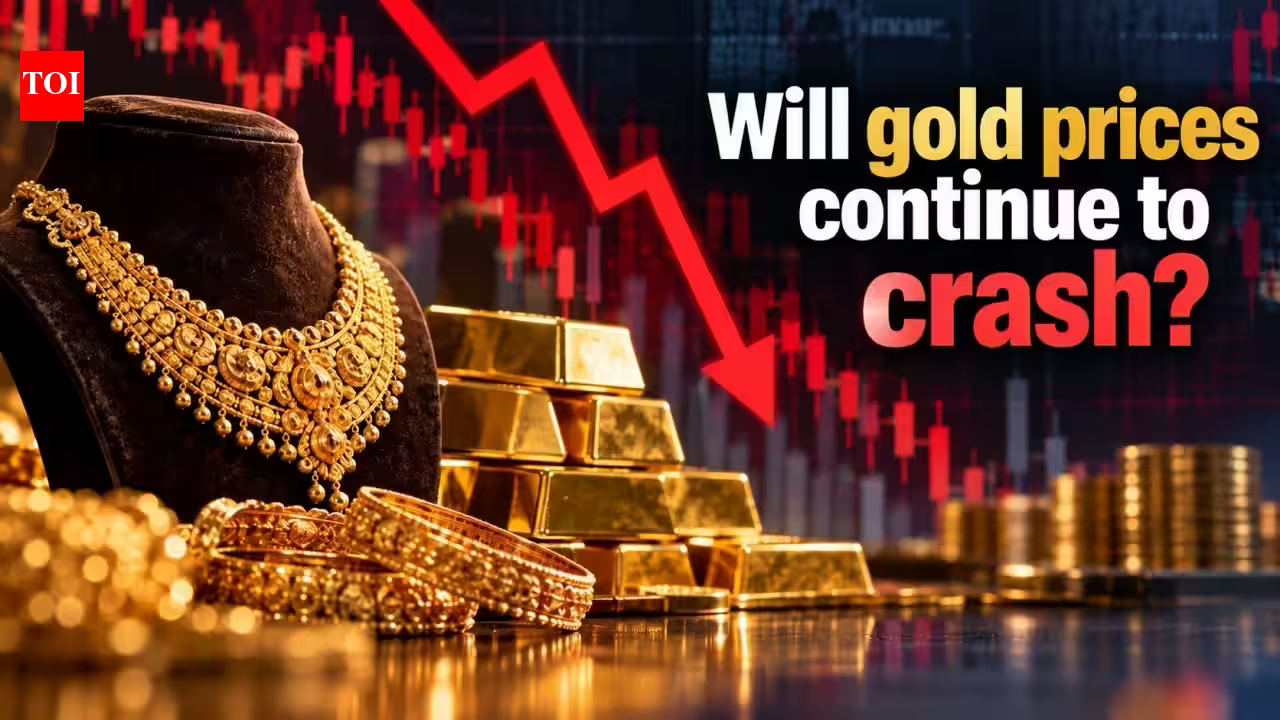
The global gold market is currently navigating a period of significant recalibration. After a historic rally throughout 2025 and into the early months of 2026—a period marked by aggressive price escalation—the yellow metal has entered a corrective phase. Investors who viewed gold as an infallible safe haven during times of volatility are now witnessing a downward spiral, prompting critical questions regarding the asset’s trajectory. With international gold prices retreating approximately 26% from their record January peaks, market participants are weighing whether this dip is a temporary consolidation or the beginning of a deeper, long-term slide toward more conservative valuation levels.
The Mechanics of the Current Market Correction
The retreat in gold prices is not an isolated event but rather the result of a convergence of macroeconomic pressures. The primary catalyst for the decline is the policy shift by the United States Federal Reserve. Following the decision to resume interest rate hikes, the environment for non-yielding assets has become increasingly challenging. As real yields have climbed to 24-year highs, the opportunity cost of holding gold has surged, driving capital toward US government bonds, which currently offer more competitive returns.
Furthermore, the strength of the US Dollar Index, which has appreciated significantly year-to-date, has exerted consistent downward pressure on gold. When the dollar gains strength, gold becomes more expensive for holders of other currencies, which naturally dampens demand. Additionally, the market has had to digest the impact of heavy profit-taking by institutional investors who entered positions at lower price points and are now liquidating to lock in gains. The geopolitical backdrop, specifically the volatility in oil markets due to the US-Iran situation, has created an inflationary environment that typically benefits gold, yet the current focus on high interest rates has overridden these traditional triggers, leaving gold vulnerable.
The Reality Check: Evaluating Price Floors
A central debate among market analysts is whether gold is headed for a dramatic drop toward the Rs 1.25 lakh per 10 grams mark in India. Current technical analysis indicates that spot gold has established critical support zones between $3,930 and $4,000 per ounce. Given that market volatility remains elevated, there is a distinct possibility that these support levels will be tested in the coming weeks.
Praveen Singh, Head of Commodities at Mirae Asset Sharekhan, notes that while a decline toward Rs 134,000 in domestic terms is mathematically possible, a drop to the Rs 100,000 level is highly improbable. Structural factors—such as central bank accumulation, de-dollarization efforts among emerging economies, and persistent geopolitical tensions—provide a robust floor for the metal. For gold to drop to the Rs 1.25 lakh level, one would require a specific set of circumstances: a stabilization in Middle East tensions, a sharp decline in global oil prices, and the potential for a reduction in India’s import duty on gold. However, even if such a price point were reached, it would likely be fleeting, as lower prices would immediately stimulate pent-up physical demand, thereby driving international prices back upward.
Domestic Dynamics and the Indian Market Context
The Indian market remains a unique case study in the gold trade. Despite global trends, domestic prices are insulated by high import duties, currently holding steady at 15%. This fiscal barrier effectively creates a price buffer that prevents domestic rates from mirroring the full extent of international crashes. Furthermore, the Indian rupee’s performance plays a dual role; a weak rupee often acts as a cushion for domestic gold holders. As the local currency depreciates against the dollar, the landing cost of gold in India remains elevated even when global dollar-denominated prices falter.
Consumer behavior in India is also shifting. While the festive and wedding season is traditionally a time of heavy gold consumption, the current high price environment has forced a change in buying patterns. Consumers are increasingly pivoting toward lighter-weight jewelry or digital alternatives like gold Exchange Traded Funds (ETFs). This shift from heavy physical adornment to financialized gold assets suggests that while the affinity for gold remains strong, the nature of investment is becoming more analytical and less sentiment-driven.
Structural Support and the Long-Term Outlook
Looking ahead, the fundamental case for gold remains largely intact despite the immediate price correction. The long-term trajectory is supported by factors that are unlikely to dissipate quickly: high global public debt, concerns over fiscal deficits in major economies, and the strategic diversification efforts of central banks worldwide. These entities have been consistent buyers, signaling that sovereign wealth managers still view gold as an essential hedge against currency debasement and long-term economic instability.
In the near term, investors should anticipate a period of healthy consolidation. Experts suggest that the current market churn is necessary to shake out weak hands before a more sustainable upward trend can resume later in the quarter or early next year. While short-term fluctuations will be dictated by US economic data—particularly CPI inflation prints and further Fed communications—the long-term horizon remains constructive.
Strategic Considerations for Investors
For those looking at gold as part of a diversified portfolio, the current volatility should be analyzed through a disciplined lens. The narrative of gold losing its “safe haven” status is largely overstated; rather, it is currently reacting to an unprecedented cycle of high-interest rates that have temporarily superseded its role as a hedge. The market is witnessing a transition from a speculative peak to a more stable, fundamental-driven range.
Investors should monitor key indicators such as the US 10-year Treasury yields and domestic policy updates regarding import tariffs. If the US economy shows signs of cooling, the case for a pause or reversal in interest rate hikes will grow, potentially acting as the next major catalyst for a gold rebound. In the interim, the domestic festive demand, combined with the strategic appetite of central banks, provides enough demand-side strength to prevent a catastrophic collapse. As the market progresses through the final quarter of the year, the focus will likely shift from the recent crash to the underlying reality that global financial uncertainty is far from resolved, ultimately reinstating gold’s relevance in a balanced investment strategy.
Disclaimer: This content is auto-generated for informational purposes only.
Source: Read Original News