








Rethinking Campus Safety: Beyond Reactive Policies
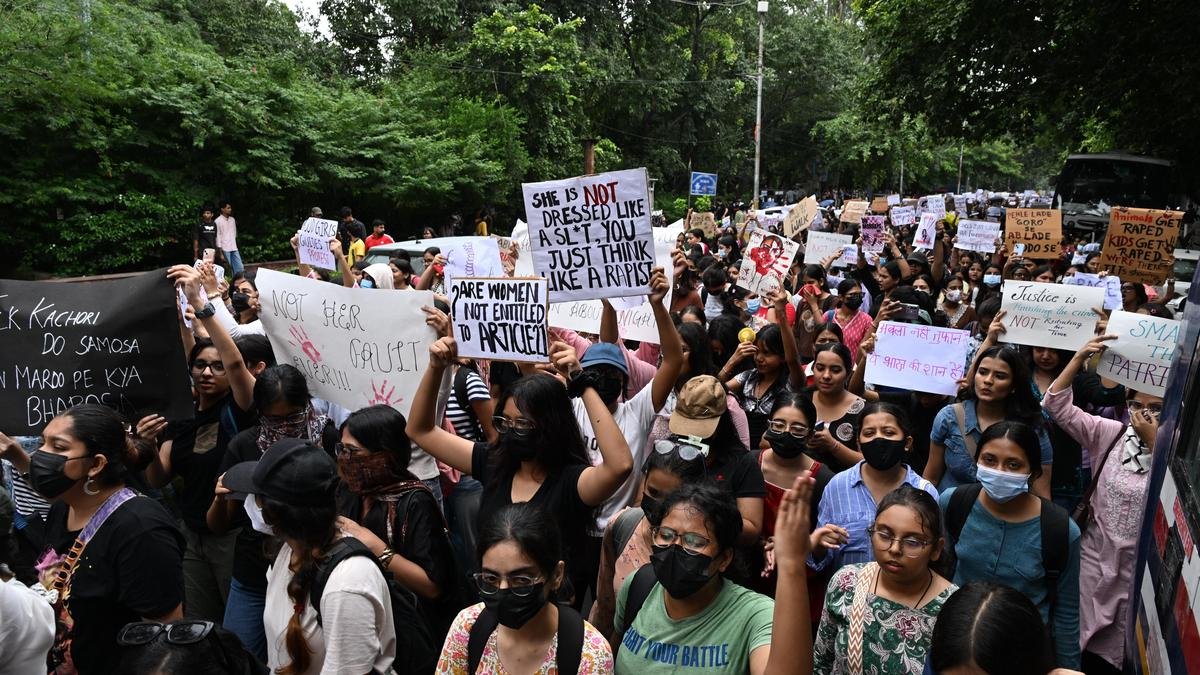
For students across Delhi, the pursuit of education is often shadowed by a persistent, background anxiety. The recent gang rape of a 17-year-old girl at Aastha Kunj Park has once again ignited intense protests, with students from Lady Shri Ram College (LSR) and other institutions marching for “Azaadi”—not just from academic pressures, but from the systemic fear that governs their daily commute. As universities and policymakers respond to the crisis, the focus must shift from reactive, temporary measures to a sustained, integrated approach to campus and urban safety.
The Infrastructure of Fear
The current crisis has highlighted a significant gap between institutional policy and the lived reality of students. For many, the path to the lecture hall is fraught with hazards: broken streetlights, deserted routes, and the constant threat of catcalling or stalking.
Data regarding urban infrastructure in Delhi confirms that these are not merely personal anxieties but systemic failures. Reports indicate that a significant percentage of streetlights in high-traffic areas remain non-functional. When students are forced to change routes, pay for expensive transit, or leave campus prematurely to avoid the dark, their academic freedom is curtailed. As gender studies expert Nitika Kakkar notes, macro-level crime statistics often fail to capture this “hidden tax” on female students—the daily, exhausting mental math required to navigate the city safely.
Institutional Responsibility and the ICC
A central pillar of educational governance is the Internal Complaints Committee (ICC). Under University Grants Commission (UGC) guidelines, these committees are designed to provide a formal channel for reporting harassment. However, efficacy remains a concern. Recent data suggests that while many colleges claim to have functional ICCs, a significant portion fail to conduct mandatory awareness programs.
Furthermore, students and experts alike point to a structural conflict of interest: when ICC members are appointed by the same administration that manages the institution, the objectivity of the reporting process is often compromised. For a student body to feel empowered to report incidents, institutional transparency must be prioritized over procedural compliance. Without proper sensitization and truly autonomous reporting structures, the mere existence of an ICC is insufficient to guarantee protection.
From Surveillance to Security
In the wake of recent violence, authorities have ramped up police presence and ordered safety audits of public parks. While these interventions provide temporary reassurance, students remain critical of their timing. The trend of acting only in response to a “heinous crime” creates a cycle of crisis management that leaves long-term vulnerabilities unaddressed.
Experts argue that true safety cannot be achieved through policing alone. Rather, it requires a holistic strategy:
- Infrastructure Integration: Universities must advocate for their surrounding neighborhoods, ensuring that transit routes and public spaces are adequately lit and maintained.
- Routine Sensitization: Gender sensitization should not be a one-time workshop but an ongoing curriculum for staff and students to dismantle the culture of harassment.
- Empowered Mobility: Safety measures should never result in “trapping” students—such as closing main gates or restricting late-night library access. Instead, the objective should be to enable students to move freely through public spaces at any hour.
Moving Toward a Holistic Learning Environment
The demands of students in Delhi are clear: they are not asking for more restrictions or early curfews. They are demanding functional public infrastructure that respects their autonomy as learners.
For educational administrators, the challenge is to expand the definition of a “campus” to include the roads, metro stations, and parks that connect students to their education. A truly safe institution is one where a student’s academic potential is not limited by their ability to navigate the city. As policymakers move forward, the focus must shift from reacting to tragedies to cultivating an environment where safety is a foundational, non-negotiable component of the academic experience.
Disclaimer: This content is auto-generated for informational purposes only.
Source: Read Original News