








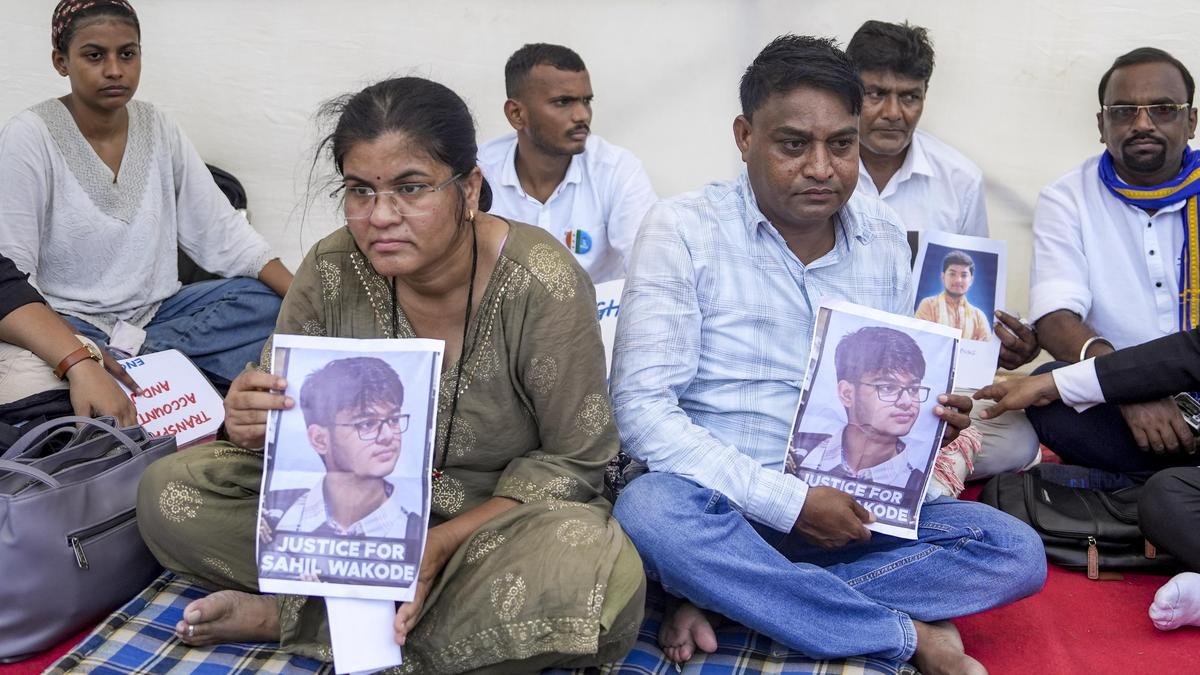
The tragic death of Sahil Wakode, a second-year B.Tech student at the Indian Institute of Technology (IIT) Bombay, has once again thrust the conversation surrounding campus equity, institutional accountability, and mental health reform into the national spotlight. As his parents, Ravindra and Sonali Wakode, begin an indefinite hunger strike at Mumbai’s Azad Maidan, the academic community is forced to confront the structural challenges that students from marginalized backgrounds face within premier institutions.
The Intersection of Merit and Social Inclusion
For decades, India’s IITs have been viewed as the pinnacle of academic meritocracy. However, the recurring reports of institutional distress among students from Scheduled Caste (SC) and Scheduled Tribe (ST) communities suggest that “merit” cannot be effectively realized in an environment where structural biases persist.
The case of Sahil Wakode—who faced allegations of caste-based harassment involving a senior faculty member—highlights a systemic failure to provide a safe learning environment. When faculty members, who are expected to be mentors and evaluators, are accused of violating the Scheduled Castes and Scheduled Tribes (Prevention of Atrocities) Act, it disrupts the foundational trust required for learning. Educational policy experts argue that if the “power dynamic” between professors and students remains unchecked by robust grievance redressal mechanisms, the academic progress of marginalized students will always be subject to unfair external pressures.
The Pressure of Examination Systems
In the high-stakes world of B.Tech programs, internal assessments, invigilation, and grading criteria are intense. When these academic procedures are perceived as vehicles for discrimination, the psychological toll on students is immense. For a student like Sahil, the hostel room—which should be a sanctuary for study and rest—became the site of a tragic final act.
Educational institutions must re-evaluate how they conduct examinations and handle student feedback. If an instructor is also the primary gatekeeper for a student’s degree progression, there must be independent, transparent oversight. The suspension of Professor Suryanarayana Doolla from his role as Dean of Administrative Affairs is a reactive measure, but proactive policy change is needed. Institutions must move toward “blind grading” and anonymous grievance reporting to decouple academic performance from personal bias.
Institutional Policy and Accountability
The “structural biases” identified by activists and former students point to a lack of representation and institutional apathy. Simply providing admission seats under reservation quotas is not sufficient if the campus climate is hostile.
Educational experts suggest three key pillars for institutional reform:
- Sensitization Mandates: Implementing mandatory, periodic training for faculty and staff on the nuances of the SC/ST (Prevention of Atrocities) Act and the sociological realities of caste.
- Independent Oversight Committees: Moving away from internal, committee-led inquiries that are often influenced by the power structures they are meant to police. Instead, cases involving discrimination must be referred to external ombudspersons with legal authority.
- Inclusive Student Support: Reimagining student support services to include specialized counseling that understands the specific socio-cultural pressures faced by Dalit and Adivasi students.
A Call for Systemic Change
The agitation by the Wakode family is not merely a call for justice for their son; it is a plea for the democratization of higher education. Institutions like IITs receive significant public funding, and with that comes the ethical responsibility to ensure that no student’s learning experience is curtailed by the prejudices of the past.
As the academic community reflects on the events of September 2026, the challenge lies in shifting from a culture of “institutional defense”—where colleges protect their reputations at all costs—to a culture of “institutional responsibility.” Learning is a social process; if the institution fails to foster an environment of equality, it fails in its primary objective as an educational center. True academic excellence, after all, cannot exist without the assurance of dignity for every student, regardless of their social background.
Disclaimer: This content is auto-generated for informational purposes only.
Source: Read Original News