








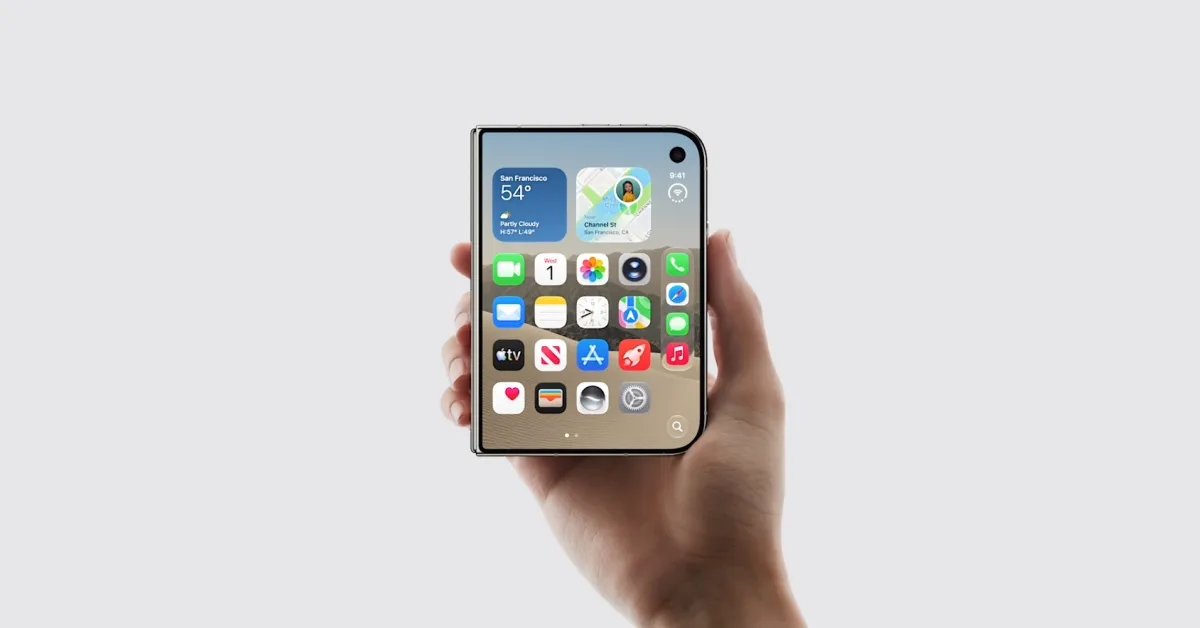
Reinventing Smartphone Ergonomics with the iPhone Duo
The mobile industry has spent the last decade chasing the ideal screen-to-body ratio, resulting in devices that have become increasingly tall and thin. While these advancements have allowed for immersive media consumption, they have fundamentally broken the ergonomic standards set during the era of smaller, one-handed devices. The arrival of the Apple iPhone Duo marks a significant departure from this trend, introducing a foldable form factor that prioritizes hardware-software synergy over raw screen real estate.
The core innovation of the iPhone Duo lies in its dual-display management. Rather than treating the outer display as a secondary or simplified notification ticker, Apple has architected a navigation system that keeps all primary interface elements within the physical reach of the user’s thumb. By splitting the interface into a primary content window on the left and a dedicated navigation dock on the right, the device addresses the “reachability” crisis that has plagued flagship smartphones. This design acknowledges that while users want large canvases, they do not necessarily want to engage in gymnastic finger movements to trigger basic UI commands.
The Architecture of the Duo Interface
The software implementation on the iPhone Duo is not merely a downscaled version of standard iOS. Instead, it features a distinct spatial layout that respects the constraints of the outer display’s aspect ratio. This is a critical distinction in mobile computing; often, manufacturers force standard operating systems onto unconventional screens, resulting in awkward cropping or unusable touch targets.
Apple’s solution creates a balanced user experience by anchoring the navigation dock. By keeping essential buttons—such as back, home, and context-specific action menus—consistently in the lower-right sector of the screen, the system reduces the cognitive and physical load on the user. This shift moves the smartphone away from the “tall window” design philosophy and back toward a “utility-first” approach where the hardware frame dictates the optimal placement of interactive components.
Evaluating the Potential of the iPhone Solo
Following the introduction of the Duo, industry analysts and hardware enthusiasts have begun proposing the “iPhone Solo.” This hypothetical device would replicate the unique form factor of the Duo’s outer display but in a static, non-foldable chassis. The appeal of such a device is rooted in the current dissatisfaction with 19.5:9 or 21:9 aspect ratios, which make the top status bar and upper navigation elements nearly impossible to reach without shifting the phone in one’s palm.
An iPhone Solo would effectively serve as a modern interpretation of the “small phone” movement, optimized for current application demands. By adopting the squarer, more manageable footprint of the Duo’s outer screen, Apple could provide a device that feels substantial in terms of performance and screen surface, without the ergonomic drawbacks of extreme height. Whether this remains a conceptual desire or becomes a viable product trajectory depends entirely on consumer adoption rates of the Duo and how developers optimize their software for these non-traditional display dimensions.
Technological Impact on App Development
The shift toward the iPhone Duo form factor requires a broader adjustment in mobile application development. Traditionally, app designers have optimized for vertical scrolling, assuming the user’s thumb has access to the full length of the display. With the Duo, developers must move toward responsive grid layouts that adapt to both the primary navigation dock on the outer screen and the unified, expansive canvas of the unfolded display.
This is a significant shift in mobile UI logic. Applications must now be aware of the “state” of the display, transitioning seamlessly from an ergonomic, right-side-anchored layout to an immersive, full-screen experience. If successful, this architectural shift could force a long-overdue standardization of responsive mobile design, ensuring that apps function with equal efficiency regardless of whether the user is utilizing a compact, one-handed display or a high-definition foldable surface.
Future Outlook and User Interaction
The iPhone Duo serves as a stress test for the limits of current smartphone hardware. If the market continues to favor large screens, the industry must find ways to make those screens usable without relying on software-based reachability hacks that often feel like temporary fixes rather than native solutions. By hard-coding the navigation into the physical form factor, Apple is attempting to solve a fundamental user interface problem that has been ignored by most manufacturers since the death of the physical home button.
As the industry observes the success of this new design, the conversation surrounding form factors is likely to evolve. We are seeing a move away from the “bigger is better” mantra toward a more nuanced appreciation of human-centric engineering. If the Duo performs as expected, it will signal a pivot back to ergonomics as a primary selling point for premium hardware. Ultimately, the future of the smartphone may not be in how large the screen can get, but in how effectively the software can adapt to the limitations of the human hand.
Disclaimer: This content is auto-generated for informational purposes only.
Source: Read Original News