






Supercars are traditionally defined by an excess of cylinders. Whether it is a snarling V8, a melodic V10, or a majestic V12, the common expectation is that the more pistons an engine has, the more “super” the car will be. However, history is replete with engineering marvels that prove extreme performance does not strictly require a large displacement or a high cylinder count. Through a combination of lightweight architecture, forced induction, and race-bred chassis design, a unique lineage of four-cylinder supercars has emerged, challenging the industry’s status quo.
The Genesis of Compact Power
The narrative of the high-performance four-cylinder begins in the 1960s with the ASA 1000 GT. While obscure today, this vehicle represents a fascinating “what if” moment in automotive history. Penned by the legendary designer Giorgetto Giugiaro, the 1000 GT was effectively the production fruition of Enzo Ferrari’s abandoned project to create an entry-level sports car powered by a scaled-down version of his famous Colombo V12 engine.
The vehicle featured a sophisticated spaceframe chassis draped in aluminum and steel. Its 1,032-cc inline-four engine, fed by dual Weber carburetors, produced approximately 95 horsepower. While those figures seem modest by modern standards, the 1000 GT offered the soul and aesthetics of a top-tier Ferrari in a condensed, agile package. It featured a high-quality interior with Jaeger instrumentation and a Nardi steering wheel, proving that luxury and performance could coexist in a sub-liter displacement category.
The Wedge Era and Forced Induction
As the industry moved toward the late 1970s and 80s, the Lotus Esprit became the defining icon of the four-cylinder supercar movement. Its raked, wedge-shaped silhouette was unmistakably exotic, even if its early naturally aspirated engines were initially criticized for lacking sufficient punch. The turning point arrived with the integration of turbocharging.
By adopting a boosted powertrain, Lotus transformed the Esprit from a sharp-looking sports car into a genuine supercar contender. Later iterations, particularly the S4 S, squeezed 300 horsepower from the four-cylinder block, allowing for a 0–60 mph time of 4.6 seconds and a top speed of nearly 170 mph. This performance bracket placed the Esprit directly in the company of V8-powered competitors from Ferrari and Porsche, demonstrating that chassis dynamics and forced induction could easily bridge the gap left by missing cylinders.
Homologation Specials: Porsche’s Four-Cylinder Gems
Porsche frequently utilized its four-cylinder platforms as a testing ground for advanced engineering, specifically for Le Mans homologation requirements. The 924 Carrera GT and the later 968 Turbo S are quintessential examples. While the standard 924 was often dismissed for its humble origins, the Carrera GT variant was a focused racing machine. With an intercooled, high-compression engine, it pushed output well beyond the capabilities of the base model, providing a race-grade experience in a street-legal chassis.
The 968 Turbo S took this philosophy even further. By utilizing a 3.0-liter turbocharged inline-four, Porsche achieved 305 horsepower and a top speed of 174 mph. Its rarity is staggering—only 14 road-going examples were ever produced. Because of this exclusivity and the technical proficiency of the boosted 3.0-liter engine, the 968 Turbo S remains a prized asset for collectors, often trading for prices exceeding one million dollars.
Lightweight Engineering as the Ultimate Performance Multiplier
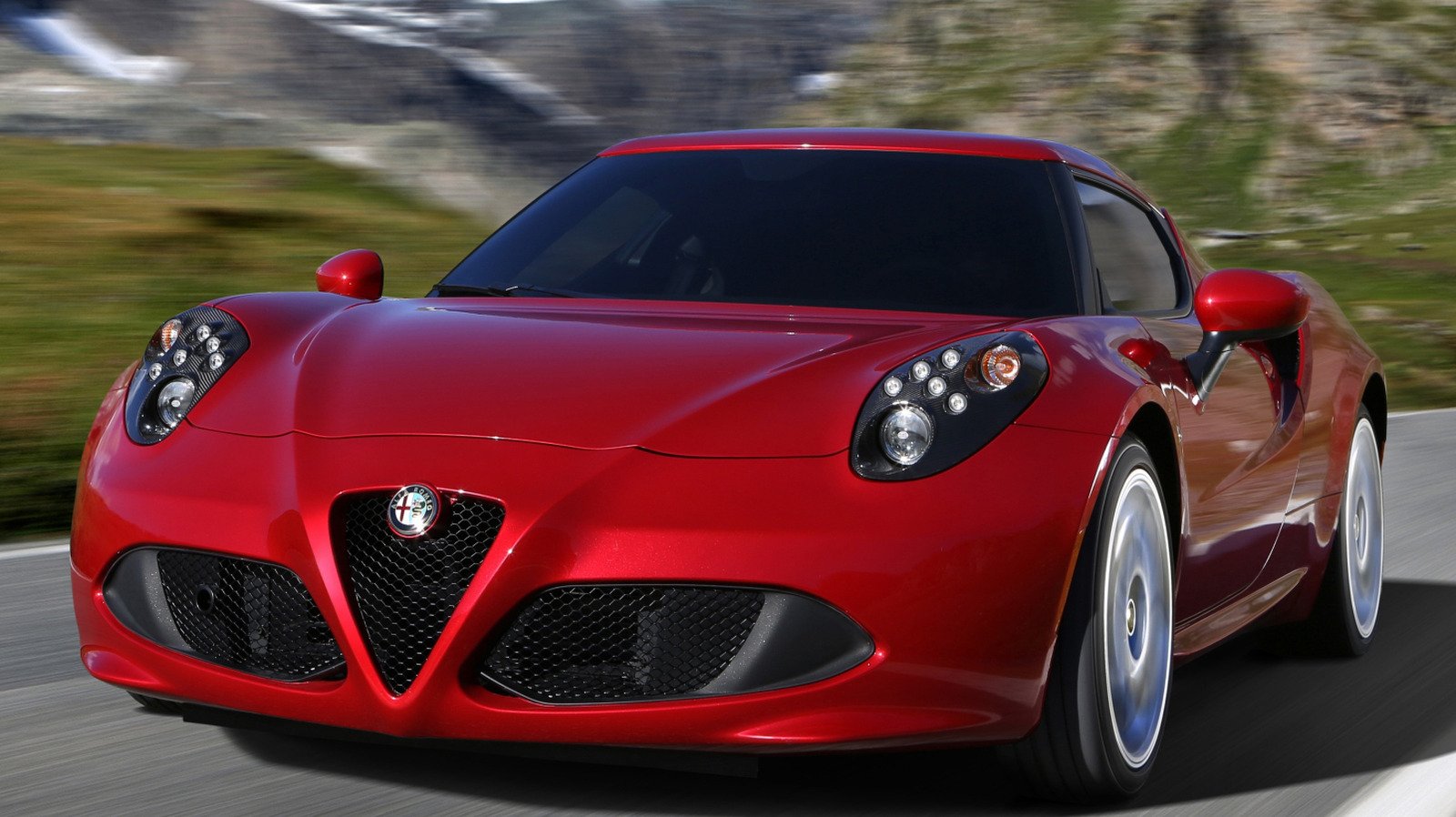
In the modern era, manufacturers have focused on the power-to-weight ratio to achieve supercar performance without the weight penalty of large engines. The BAC Mono and the Alfa Romeo 4C are the primary standard-bearers for this philosophy.
The BAC Mono represents a departure from traditional car design. As a single-seat, road-legal machine, it utilizes a carbon-fiber tub and graphene panels to achieve a curb weight of roughly 1,200 pounds. Despite being powered by a naturally aspirated 2.5-liter four-cylinder, its lack of mass allows it to outperform much heavier hypercars on technical tracks. The Alfa Romeo 4C employs a similar tactic, utilizing an F1-inspired carbon-fiber monocoque and a 1.7-liter turbocharged engine. By keeping the dry weight under 2,000 pounds, the 4C achieves a 4.2-second sprint to 60 mph, proving that extreme light-weighting is a viable alternative to raw horsepower.
The Future of the Four-Cylinder Supercar
The most recent iteration of this performance philosophy is found in the Lotus Emira. While the brand is known for its history of internal combustion refinement, the Emira represents a sophisticated bridge between the past and the future. By utilizing a high-output, turbocharged 2.0-liter engine sourced from Mercedes-AMG, the Emira manages to exceed the performance of its own V6 counterpart, delivering 414 horsepower in its most potent form.
With features like titanium exhausts, two-way adjustable dampers, and ultra-high-performance tires, the Emira proves that the four-cylinder engine is not merely a compromise, but a strategic choice for weight distribution and agility. As the automotive industry shifts toward hybrid and electric platforms, these four-cylinder legends remain a testament to the fact that technical precision, clever materials science, and intelligent engineering can produce an experience that is just as thrilling as any traditional V12, regardless of how many cylinders are beating at the heart of the machine.
Disclaimer: This content is auto-generated for informational purposes only.
Source: Read Original News