









When a franchise reaches its third installment, it usually faces a terminal decline—the creative well runs dry, the stakes feel manufactured, and the audience begins to check their watches. Yet, the Drishyam series, anchored by the stoic, calculating brilliance of Ajay Devgn’s Vijay Salgaonkar, has defied gravity. With Drishyam 3: The Conclusion smashing box office records, crossing a staggering ₹150 crore net in India within just three days of release, it’s clear that the public’s appetite for the “common man’s” war against the system hasn’t waned. Behind the scenes, however, this cinematic victory was forged in the fires of an exhaustive, almost obsessive writing process.
The Architecture of Suspicion
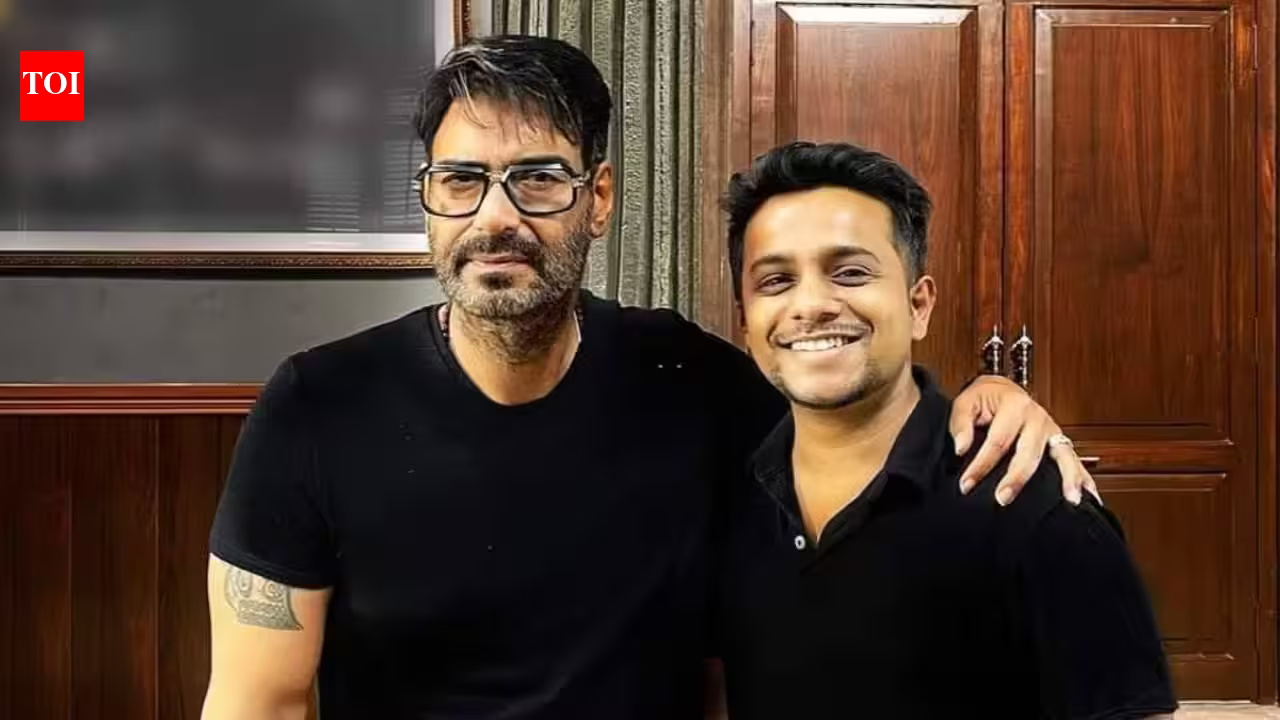
Screenwriter Aamil Keeyan Khan, the man tasked with penning the final chapter, recently pulled back the curtain on the Herculean task of crafting a narrative that could satisfy a hyper-aware audience. Writing for Drishyam isn’t just about plot; it’s about managing the collective skepticism of a nation that has spent years dissecting Vijay Salgaonkar’s every move.
“It was an enormous mountain to climb,” Khan admitted during a recent interaction. “You have a beloved franchise, a family that the audiences have lived with for years, and the legacy of two hugely loved films sitting on your shoulders.”
The fundamental challenge, Khan notes, is that the element of surprise has been commoditized. In the first film, Vijay was a blank slate—an ordinary man hiding a dark secret. By the third installment, the audience knows the playbook. They know his mind, his penchant for misdirection, and his ability to turn a simple movie night into an alibi. For the writer, the goal wasn’t just to repeat the formula but to evolve it without breaking the character’s core identity. It was, as he puts it, “a very, very thin tightrope.”
Over 100 Drafts: The Obsession of Perfection
If there is one thing that defines the modern blockbuster, it is usually a bloated, rushed script. Drishyam 3 took the opposite approach, opting for a grueling iterative process that would break most writers. Khan revealed that he lost count of the number of drafts he produced, estimating the final tally to be well north of one hundred.
The writer’s description of his computer folders provides a glimpse into the creative madness required to sustain such a high-stakes thriller: “I have folders inside folders, drafts with dates, numbers, dates after numbers, and files called things like ‘FINAL’, ‘FINAL 2’, ‘FINAL FINAL’ and presumably ‘FINAL PLEASE GOD’.” This level of meticulousness is rarely seen in the industry today, but it is precisely what was required to ensure the film’s complex narrative threads didn’t unravel under scrutiny.
Protecting the Plot Like Vijay Salgaonkar
The culture of spoilers and leaks has turned film production into a high-security operation, but for Drishyam 3, director Abhishek Pathak took it a step further. The production was treated with the same level of paranoia that defines the franchise’s protagonist.
The climax—the holy grail of any thriller—was hidden behind layers of compartmentalized information. Crew members were often given only the “need-to-know” details for their specific scenes, ensuring that the “why” remained a secret even to those physically building the sets or lighting the frames.
“Abhishek basically ran the production like Vijay Salgaonkar would,” Khan shared. The pressure to divulge secrets was constant, with friends and family members attempting to bribe the screenwriter for a hint, but he remained a vault. By treating the set as a microcosm of the film’s own secretive world, the makers ensured that the final, earth-shattering twists were protected until the very moment they hit the big screen.
A Massive Box Office Statement
The numbers validate the madness. Drishyam 3: The Conclusion has proven that quality, suspense, and a well-told story can still move mountains at the box office. With a Sunday collection of ₹61 crore net and a worldwide gross sitting at a commanding ₹272.80 crore, the film has firmly cemented itself as a cultural phenomenon.
In an era where streaming services have accustomed audiences to shorter attention spans and binge-watch formats, Drishyam 3 has reaffirmed the power of the “event film.” It demands theatrical attention, requiring viewers to sit in the dark, follow the breadcrumbs, and hold their breath until the final frame.
The Legacy of the Common Man
Ultimately, the success of this franchise rests on the relatability of Vijay Salgaonkar. He isn’t a superhero with gadgets or a spy with government backing; he is a man who loves his family more than he fears the consequences of his actions. Khan’s writing captures this ethos, balancing the “DNA of Drishyam”—humor, family, emotion, drama, and thrill—without letting one element overshadow the others.
As the dust settles on this massive release, Aamil Keeyan Khan’s journey from folder one to folder “FINAL PLEASE GOD” serves as a reminder of what happens when creators refuse to compromise. They set out to surprise an audience for the third time, and in doing so, they provided a satisfying, edge-of-the-seat conclusion that honors the legacy of one of Hindi cinema’s most iconic characters. The mountain was climbed, the tightrope was walked, and against all odds, the audience is still standing up and cheering for the man who saw it all coming.
Disclaimer: This content is auto-generated for informational purposes only.
Source: Read Original News