









The genre of science fiction has long served as a sandbox for filmmakers to test the boundaries of human imagination. While many productions prioritize cinematic spectacle over physical reality, a select group of films strives to anchor their narratives in the rigorous laws of nature. By utilizing scientific consultants and applying current astronomical data, these movies provide a grounded look at the challenges of navigating the vacuum of space, ultimately transforming complex physics into compelling storytelling.
Destination Moon: An Underrated Pioneer
Released in 1950, Destination Moon remains a foundational text in the history of technically accurate space cinema. The narrative follows a group of visionaries who assemble an aviation firm to construct a manned lunar rocket. From a technical perspective, the film excels in its depiction of hardware. The rocket design features a vertical, multistage configuration with the crew module at the apex, a standard that eventually became the blueprint for real-world space programs.
The film serves as an early attempt to visualize the mechanics of weightlessness and orbital trajectories. While it is hampered by the scientific limitations of its era—such as the portrayal of an impossible starry sky against the harsh glare of the lunar sun—it succeeds in establishing the premise of space exploration as an engineering endeavor rather than a mere fantasy. It remains a testament to the effort to depict a realistic voyage to the lunar surface before such a journey had ever been attempted by humanity.
Project Hail Mary: Applying the Scientific Method
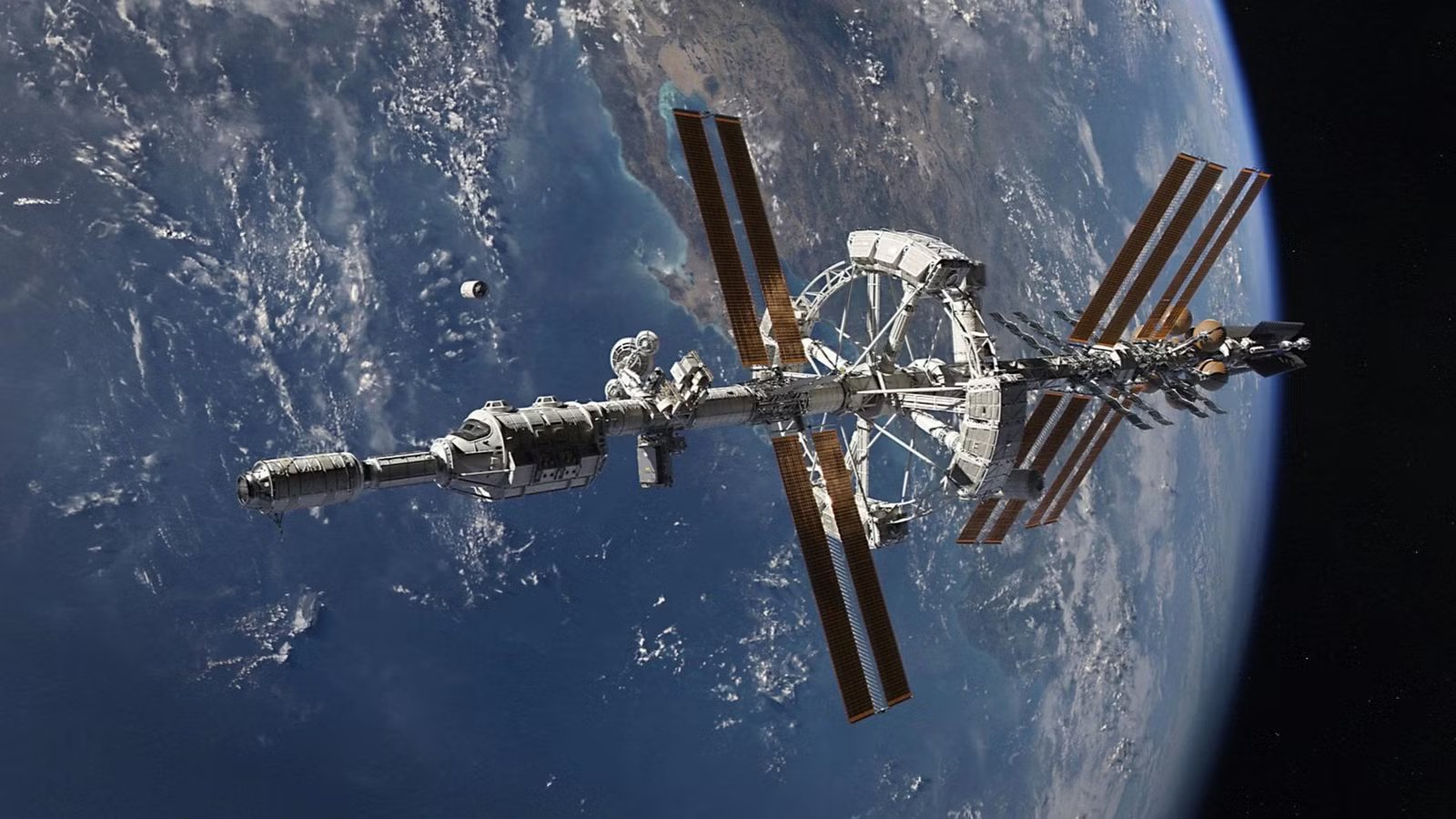
As audiences look forward to the adaptation of Project Hail Mary, the emphasis remains on the application of the scientific method as the primary driver of the plot. The film, grounded in the principles of relativity, explores the challenges of deep space travel through the use of centrifugal design for artificial gravity. By spinning a section of the spacecraft, the crew can experience a consistent force, effectively mitigating the physiological decline associated with prolonged exposure to zero-gravity environments.
A significant impact of this film is its focus on relativistic time dilation. As the spacecraft reaches speeds necessitating the inclusion of such physics, the narrative ensures that the audience grasps the divergence between time spent on the vessel and time elapsed on Earth. While the story introduces a fictional element, “astrophage,” to enable interstellar propulsion, the narrative logic surrounding this substance follows established physical principles, demonstrating how speculative fiction can maintain structural integrity when built upon a foundation of legitimate inquiry.
Deep Impact: The Realities of Orbital Mechanics
Deep Impact is frequently cited by physicists as a rare example of a disaster film that treats its subject with a high degree of technical respect. Unlike depictions that treat space as a medium for sound propagation or atmospheric maneuverability, this film forces characters to contend with the stark realities of vacuum conditions. The depiction of the astronauts anchoring themselves to the surface of a comet to perform structural work is a nod to the friction-less reality of space, where movement is dictated by momentum and tethering.
The technical impact of the film lies in its portrayal of comet behavior and the immense scale of planetary threats. It successfully communicates that a celestial impact is not just an explosion but a multi-faceted event involving seismic, tidal, and atmospheric consequences. While the film downplays the secondary catastrophic effects—such as global firestorms and atmospheric collapse—it remains a benchmark for portraying the logistical difficulties of interacting with high-velocity celestial bodies.
Apollo 13: A Document of Human Ingenuity
Apollo 13 represents the pinnacle of “hard” science fiction rooted in historical reality. Because the event itself was an exercise in extreme problem-solving, the film functions as a manual for survival. The production team utilized real NASA flight logs and telemetry data to guide the screenwriting process. The famous scene involving the fabrication of a carbon dioxide filter adapter from spare parts is not a cinematic invention; it is an accurate recreation of the actual emergency procedures implemented by engineers at Mission Control.
The film’s reliance on the KC-135 aircraft, often referred to as the “Vomit Comet,” to simulate true weightlessness provides a level of visual authenticity that digital effects cannot replicate. By exposing the actors to real parabolic flight, the movie captures the specific, erratic movement of objects and people in a low-gravity environment. The impact of this approach is that it forces the audience to feel the claustrophobia and the physical strain of the crew, making the technical successes in Houston feel like genuine triumphs of engineering.
Interstellar: Simulating the Impossible
Interstellar pushed the boundaries of modern science cinema by involving theoretical physicist Kip Thorne as a lead consultant. The collaboration resulted in a simulation of a supermassive black hole that was so mathematically sound it informed actual academic publications regarding the visual behavior of light near a gravitational singularity. The portrayal of time dilation, exacerbated by the intense gravitational pull of a black hole, is perhaps the most accurate representation of Einstein’s theory of general relativity ever put to film.
The film’s use of a spinning ring-shaped station to simulate gravity is another instance of prioritizing standard physics to explain how humans would endure long-term space flight. While the narrative eventually ventures into speculative territory—specifically the use of a tesseract to represent higher-dimensional space—it does so as a visual interpretation of high-level mathematical theory. The film’s legacy lies in its demonstration that complex concepts such as space-time curvature and gravitational flux can be communicated through visual storytelling without sacrificing the gravity of the science.
The Martian: Engineering in a Vacuum
The Martian is perhaps the modern standard-bearer for applied science. The narrative requires the protagonist to “science the sh*t out of” his surroundings, a directive that forces the film to showcase the chemistry of water production, the mechanics of oxygen generation, and the harsh realities of agricultural survival on a barren world. The use of hexadecimal communication protocols and long-distance radio latency highlights the realities of interplanetary logistics.
The technical impact of The Martian is found in its portrayal of the Hermes spacecraft, which utilizes consistent artificial gravity and orbital slingshot maneuvers. While the film has faced criticism for the opening storm sequence—which lacks the density required to damage a spacecraft—it recovers by keeping its focus on the procedural nature of the survival. By treating every problem as an equation to be solved, the film educates the audience on the interdependency of systems required for human life in a hostile, extraterrestrial environment.
Disclaimer: This content is auto-generated for informational purposes only.
Source: Read Original News