




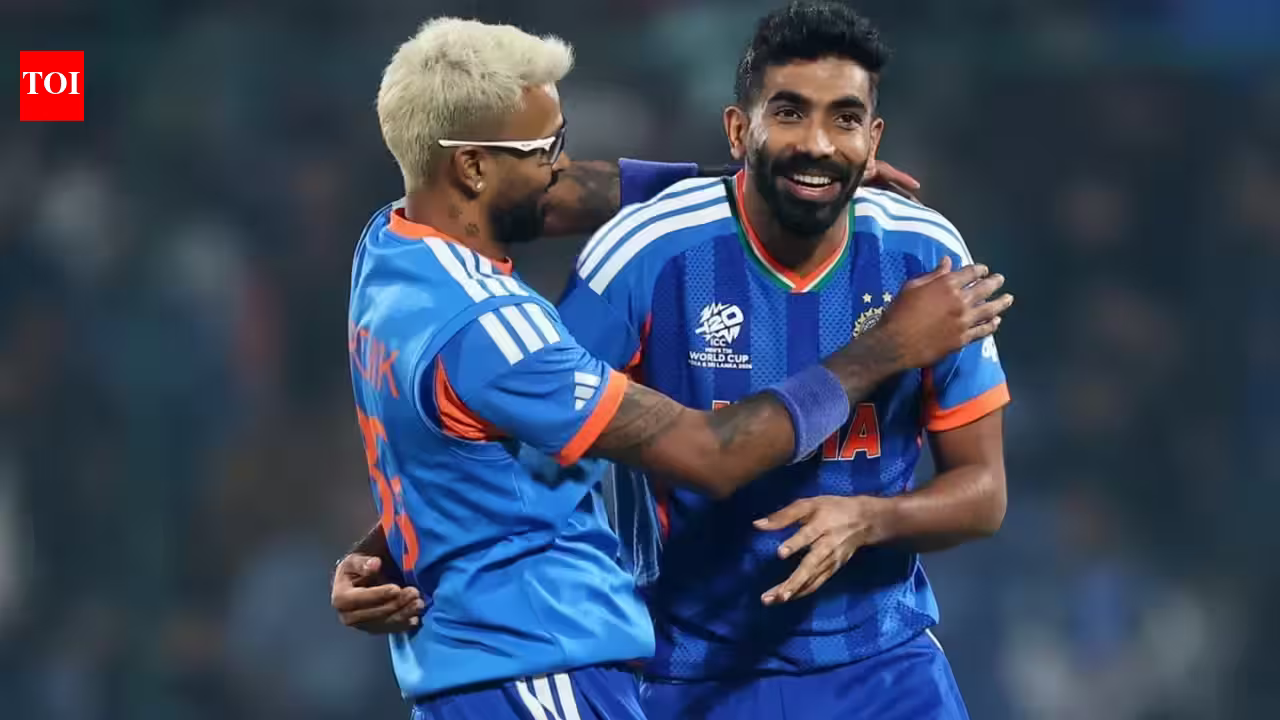
CRITICISM of India’s current ODI bowling setup has reached a fever pitch following a startling defensive collapse against the West Indies, prompting former national team batter Hanuma Vihari to issue a stern warning to the selectors. After watching a formidable total of 351 runs evaporated with ease by the West Indies—who chased the target down in just 48.2 overs—Vihari has called for an immediate shift in strategy. The message is clear: India’s over-reliance on the star-studded duo of Jasprit Bumrah and Hardik Pandya is a high-risk gamble that could derail their ambitions for the 2027 ODI World Cup.
## The Over-Reliance Dilemma
For years, the Indian bowling attack has functioned like a finely tuned engine, often anchored by the world-class precision of Jasprit Bumrah and the utility of all-rounder Hardik Pandya. However, Vihari argues that this dependence is no longer a sustainable blueprint for success. As injury management becomes a defining factor in modern cricket, the Indian team finds itself in a precarious position whenever their primary weapons are unavailable or off-color.
“You cannot just depend on Bumrah and Hardik,” Vihari stated during an insightful breakdown on his YouTube channel. “You have to have backup in case of such injuries. I will say go with experience. Get Bhuvneshwar and Shami back.”
Vihari’s plea highlights the fragile nature of the current setup. When the frontline stars aren’t firing, the lack of depth becomes glaringly obvious. By advocating for the return of seasoned campaigners, Vihari is emphasizing that in the high-pressure cooker of a World Cup, technical brilliance must be complemented by the calm composure that only comes with years of international experience.
## Bringing Back the Old Guard: Bhuvi and Shami
The suggestion to reintegrate veterans like Bhuvneshwar Kumar and Mohammed Shami is rooted in the belief that experience provides a safety net that young, experimental bowlers currently lack.
Bhuvneshwar Kumar, who last donned the ODI blue in 2022, has been written off by many due to his age and recurring injury history. Yet, Vihari points to the pacer’s recent exploits in the Indian Premier League (IPL) as proof of his enduring quality. Playing for Royal Challengers Bengaluru over the 2025 and 2026 seasons, the 36-year-old has displayed remarkable consistency, bagging 45 wickets in 30 matches. According to Vihari, Bhuvneshwar’s mastery of the new ball and his ability to swing the ball under any conditions remain unmatched.
Similarly, the call for Mohammed Shami’s return is driven by his knack for taking wickets when the team needs them most. In a climate where the Indian bowling attack has struggled to close out games against teams like the West Indies, the inclusion of a proven strike bowler like Shami would provide a much-needed psychological edge.
## A ‘Wake-Up Call’ After Defensive Disaster
The core of Vihari’s frustration stems from the recent loss against the West Indies. Defending 351 should, in theory, be a routine victory for a side of India’s stature. Instead, the match turned into a nightmare for the bowling unit. Bowlers like Anshul Kamboj, Gurnoor Brar, and Nitish Kumar Reddy were taken to the cleaners, leaking runs at an alarming rate on flat pitches.
For Vihari, this wasn’t just a bad day at the office—it was an indictment of the current development pathway. “We could not defend 350. Is this not a wake-up call? I think the team is going backwards. This is a big blow,” Vihari lamented.
He raised the terrifying prospect of what might happen when India encounters batting giants like Australia, South Africa, or England. If the current bowling crop struggles against a West Indies side that did not even qualify for the upcoming marquee tournament, the gap in quality against the sport’s heavyweights could be catastrophic.
## The Road to 2027
With the 2027 ODI World Cup looming on the horizon, the pressure on the BCCI and the team management to solidify their bowling rotation is mounting. Vihari’s critique serves as a reminder that youth development is vital, but it cannot come at the expense of necessary, short-term stability.
“You will have some security with experience,” Vihari reiterated. “When you need a breakthrough, you can go to them, and they will do the job for you. You need stability, and experience will always count.”
As the Indian side looks to recalibrate, the debate between investing in raw potential and relying on proven veterans will likely dominate the conversation. Whether or not the selectors choose to heed Vihari’s advice and recall the old guard remains to be seen. However, one thing is certain: if India continues to struggle on flat pitches and falter in defending large totals, the demand for stability—and for the return of names like Bhuvneshwar and Shami—will only grow louder as the clock ticks down toward 2027.
Disclaimer: This content is auto-generated for informational purposes only.
Source: Read Original News