







The Economic Resilience of India in a Fragmented Global Landscape
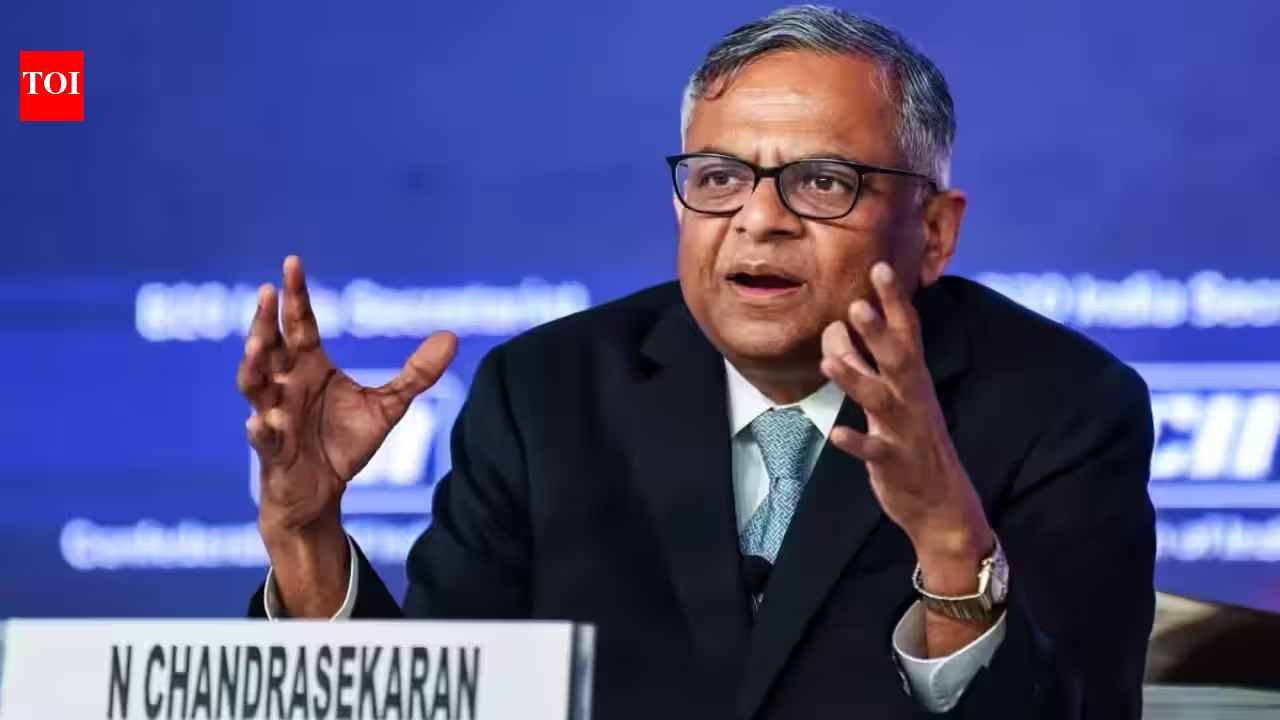
The contemporary global economy is defined by volatility, geopolitical friction, and shifting supply chains. Amidst this backdrop, India has emerged as a resilient outlier, maintaining a growth trajectory that continues to outperform most major economies. At the recent Indian Foundation for Quality Management (IFQM) Symposium 2026, N. Chandrasekaran, Chairman of Tata Sons, underscored this stability, noting that India has consistently exceeded growth expectations despite persistent international headwinds.
India’s economic performance is not merely a result of favorable base effects but is deeply rooted in strong domestic demand and structural reforms. While global markets have grappled with inflationary pressures and restrictive monetary policies, India’s internal consumption—evident in sectors such as automobile sales, infrastructure-linked industries like cement, and robust credit growth—has acted as a primary engine of expansion. Furthermore, the resilience of the financial sector, characterized by healthy bank balance sheets and significantly reduced non-performing assets (NPAs), provides a stable foundation for corporate investment.
The macroeconomic indicators supporting this outlook remain favorable. With a current account deficit consistently managed below one percent of GDP and services exports accounting for roughly 11 percent of the national output, India is effectively insulating itself from external shocks. These indicators suggest that the current growth cycle is built on a framework of fiscal prudence and export-oriented services, signaling a departure from the historical vulnerabilities that once plagued the Indian economy during global downturns.
Defining the Pillars for Long-Term Growth
While current growth rates are commendable, sustaining them over the next two decades requires a pivot toward structural transformation. Chandrasekaran identified three primary areas that are essential to ensuring that India reaches its potential: energy security, advanced manufacturing, and human capital development.
Energy security is arguably the most pressing mandate. As India scales its industrial base, the demand for affordable, reliable, and sustainable power is set to skyrocket. Transitioning to a green energy mix is no longer an environmental ambition alone; it is an economic necessity to reduce import dependency and manage logistics costs.
Simultaneously, the focus must shift from basic production to advanced and precision manufacturing. This involves moving up the value chain by prioritizing high-end engineering and quality-driven manufacturing processes. Finally, investment in human capital—upskilling the workforce to meet the demands of a high-tech global economy—serves as the catalyst for the other two pillars. Without a workforce adept in modern technical standards and digital proficiency, the ambition to become a global manufacturing hub will remain constrained by a lack of specialized talent.
Institutional Excellence and the Viksit Bharat 2047 Vision
The vision of Viksit Bharat (a developed India) by 2047 is the guiding framework for the country’s long-term policy formulation. Achieving this status requires more than just GDP growth; it necessitates the creation of world-class infrastructure, robust legal and business institutions, and a sophisticated intellectual property regime.
Chandrasekaran’s emphasis on these elements highlights a move toward institutional maturity. For businesses operating in India, the expectation is that the state will continue to foster an environment where intellectual property is respected, legal processes are expedited, and infrastructure facilitates the seamless movement of goods and information. This institutional development is critical for attracting sustained foreign direct investment and fostering indigenous innovation. When companies perceive that the regulatory environment is transparent and the infrastructure is globally competitive, they are more inclined to commit to long-term capital expenditure, which in turn fuels further economic expansion.
Quality as a National Competitive Advantage
A significant portion of the discourse at the IFQM Symposium centered on the necessity of quality as a driver for productivity and innovation. Citing the Japanese model, particularly the success of Toyota, Chandrasekaran highlighted that quality should not be viewed as a static output or a post-production check. Instead, it must be embedded as a core driver of innovation.
This perspective is particularly relevant for the Indian manufacturing sector. For too long, Indian industry has relied on cost-competitiveness to capture market share. While cost advantages remain important, they are insufficient to secure a dominant position in high-value global supply chains. By drawing a parallel to Germany’s industrial transformation, where national success was built on precision engineering, standardized processes, and a highly capable medium-sized enterprise (Mittelstand) sector, Chandrasekaran articulated a roadmap for India.
The goal is to foster a manufacturing ecosystem where small and medium enterprises are as focused on global quality standards as the larger conglomerates. This creates a multiplier effect: as suppliers become more precise and efficient, the entire national ecosystem becomes more competitive. When India shifts its collective mindset from “value-based” to “quality-based,” it will naturally gain a stronger voice in shaping international standards for product safety, environmental sustainability, and precision engineering.
Embedding Sustainability in the Industrial Roadmap
Modern manufacturing cannot be decoupled from sustainability. As global trade regulations, such as the European Union’s Carbon Border Adjustment Mechanism (CBAM), begin to impact export-oriented industries, Indian manufacturers must integrate sustainable processes into their core operations.
This is not merely a compliance requirement but a strategic necessity. Companies that adopt energy-efficient and low-emission manufacturing processes will be better positioned to integrate into global supply chains where sustainability reporting is becoming a prerequisite. As Chandrasekaran noted, sustainability must be embedded in the nation’s manufacturing ambition. This suggests that the next phase of India’s economic story will be defined by its ability to balance rapid industrial growth with responsible resource management.
The Road Ahead for Indian Industry
The Indian market is currently at an inflection point. The combination of a favorable demographic profile, a stable macro-fiscal environment, and a clear national vision provides a unique opportunity to scale up. However, the transition from an emerging economy to a developed one depends on the ability of the private sector to align its internal operations with the requirements of a high-growth, high-quality, and sustainable economy.
As India navigates the next decade, the partnership between policy makers and industry leaders will be instrumental. By focusing on precision manufacturing, nurturing institutional quality, and ensuring that the workforce is prepared for the next generation of industrial tasks, India can solidify its position as a global leader. The lessons shared by Tata Sons regarding the necessity of quality and innovation are not just internal corporate guidelines; they are fundamental principles that, if adopted at a national scale, will determine the trajectory of the Indian growth story for years to come.
Disclaimer: This content is auto-generated for informational purposes only.
Source: Read Original News