








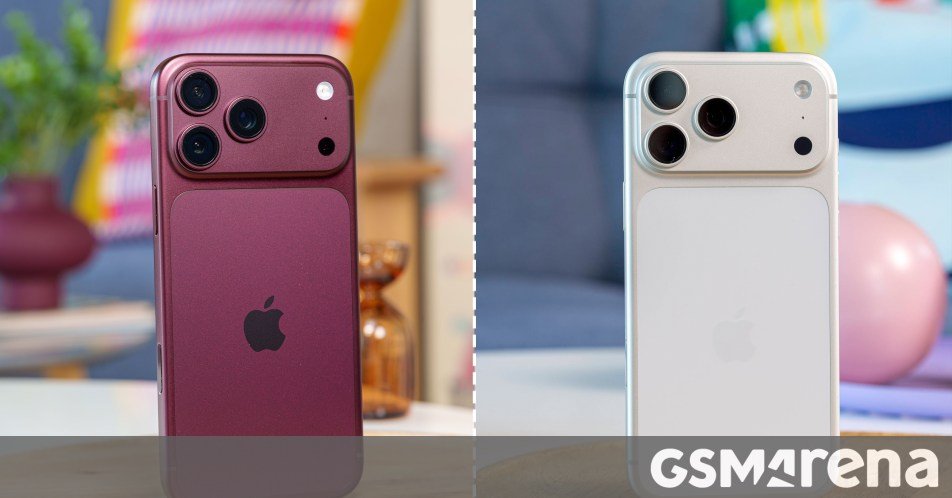
The release of the Apple iPhone 18 Pro Max has reignited the annual debate regarding generational upgrades. While the latest flagship introduces refinements in hardware, performance, and power management, its predecessor, the iPhone 17 Pro Max, continues to offer a high-tier experience at a lower price point. This assessment breaks down the functional differences to help determine whether the newest model justifies the transition for current users.
Design and Display Refinements
At a glance, the iPhone 18 Pro Max is visually indistinguishable from the iPhone 17 Pro Max, maintaining the established aluminum unibody and robust IP68 dust and water resistance ratings. However, the internal architecture differs, with the 18 Pro Max weighing 15 grams more due to a larger battery and an expanded heatsink.
The most noticeable display update is the reduction of the Dynamic Island. By relocating the infrared camera to a position directly beneath the screen, Apple has reduced the pill-shaped cutout by 35%. While the 6.9-inch LTPO Super Retina XDR OLED panel retains the same 120Hz ProMotion refresh rate and 3,000-nit peak brightness as the previous generation, this reduction in the display obstruction provides a marginally more immersive visual experience.
Performance and Thermal Management
Under the hood, the iPhone 18 Pro Max houses the A20 Pro chip, manufactured on a 2nm process. This chip introduces a 6-core CPU with higher clock speeds, a more capable 7-core GPU, and double the Neural Engine cores compared to the A19 Pro. The device also benefits from a 96-bit memory bus, which provides a 50% increase in memory bandwidth.
Crucially, the 18 Pro Max addresses thermal management with a vapor chamber three times larger than that of the 17 Pro Max. Benchmark testing confirms that the A20 Pro delivers roughly 30% higher CPU and GPU performance, with overall system scores in AnTuTu showing an increase of nearly 48%. While the A19 Pro remains a highly capable processor, the A20 Pro represents a significant leap in raw computational power and sustained performance.
Battery Efficiency and Charging Capabilities
The power delivery system on the iPhone 18 Pro Max sees a meaningful upgrade. It features a 5,391mAh battery, representing a capacity increase of approximately 500mAh over the 17 Pro Max. This physical size increase, combined with the efficiency of the A20 Pro, results in a longer active use rating, particularly during web browsing and extended calls.
Charging speed is another area of improvement. The new model supports a maximum charging power of 54W, compared to 42W for the 17 Pro Max, when paired with a compatible 40W+ dynamic power adapter. In practical testing, the 18 Pro Max reaches a 50% charge in just 15 minutes and 81% in 30 minutes, noticeably outpacing its predecessor. Both models continue to support 25W wireless charging via MagSafe.
Imaging Capabilities and Manual Control
The camera system on the iPhone 18 Pro Max introduces a variable-aperture lens for the main sensor, ranging from f/1.48 to f/4.0. This allows users to adjust light intake and depth of field, though the benefits are more pronounced in specific creative scenarios rather than general photography. The ultrawide, telephoto, and selfie cameras remain hardware-identical to the 17 Pro Max.
A significant new software feature is the introduction of granular manual controls. Users can now adjust shutter speed, white balance, and aperture directly within the camera interface. This addition bridges the gap for enthusiasts who previously required third-party applications for such control. However, when comparing image quality, the differences between the 18 Pro Max and 17 Pro Max remain minimal. While the newer model displays slightly finer detail rendition in some daylight shots, the real-world difference for the average user is negligible, even in low-light environments.
Verdict and Market Positioning
The iPhone 18 Pro Max succeeds as a premium iteration, offering a smaller Dynamic Island, faster charging, improved thermals, and greater versatility through variable aperture and manual camera controls. It is the superior device for users prioritizing the latest technical benchmarks and charging speeds.
However, the iPhone 17 Pro Max continues to hold significant value. It shares the same high-quality display, build materials, and, for most users, indistinguishable camera output. Unless the specific advantages of the A20 Pro architecture or faster charging are required, the 17 Pro Max remains a formidable powerhouse that renders the latest model a luxury rather than an essential upgrade.
Disclaimer: This content is auto-generated for informational purposes only.
Source: Read Original News