





Lutyens’ Delhi Gridlocked as INDIA Bloc Protest Triggers Massive Traffic Disruptions
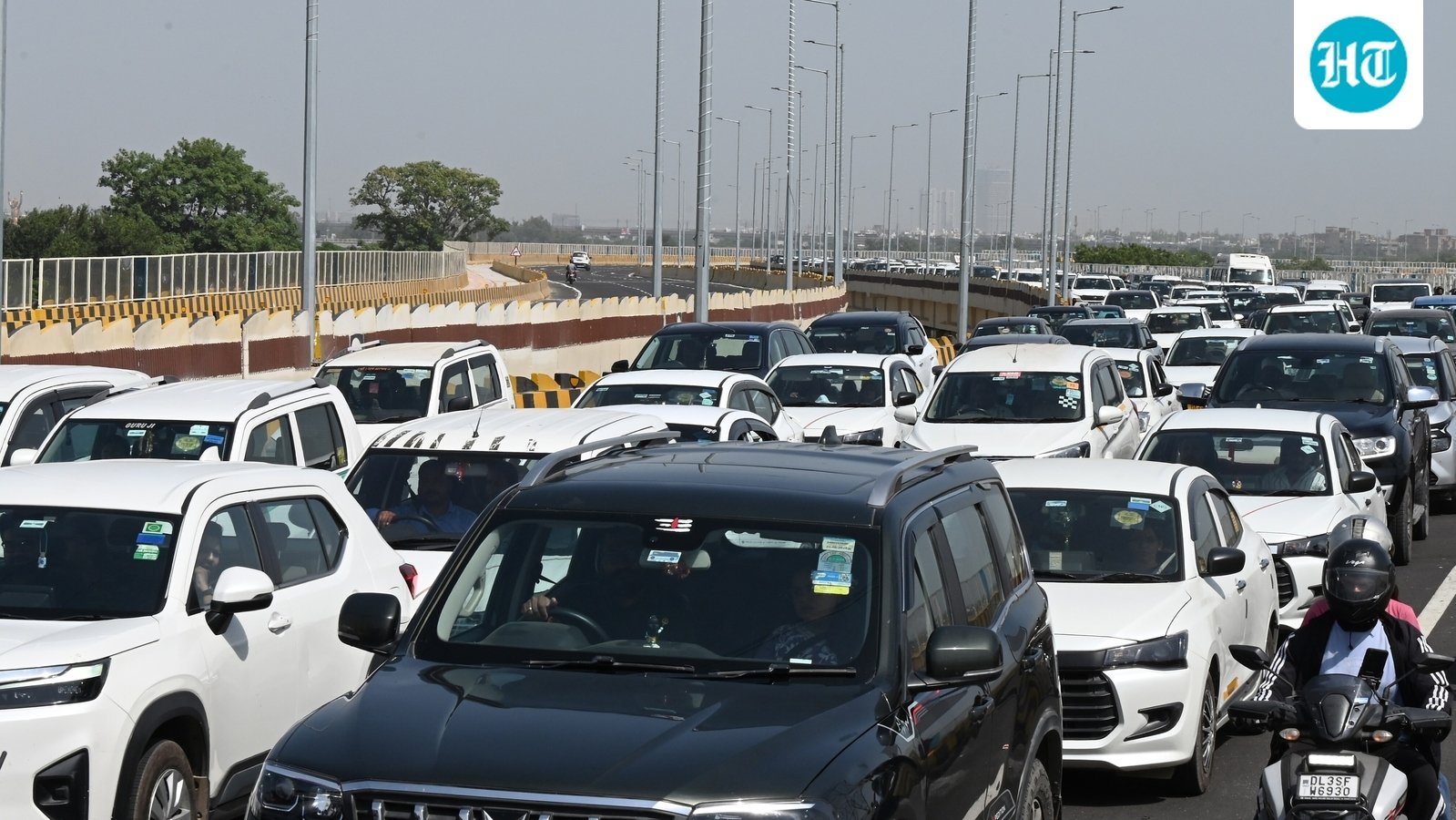
Commuters in the national capital faced a harrowing experience on Tuesday as a series of security restrictions and police barricades, prompted by an INDIA bloc protest, brought traffic to a near-standstill across central Delhi. The demonstration, which saw opposition leaders marching toward the Election Commission (EC) headquarters, resulted in hours of bumper-to-bumper congestion that rippled through key arteries of the city.
A City at a Standstill
From the iconic India Gate and Connaught Place to the busy stretches of Parliament Street and Jantar Mantar, vehicles were forced to crawl at a snail’s pace. The sheer volume of traffic, combined with spontaneous diversions, created a cascading effect, with snarls spilling over into residential and arterial roads. Many motorists, trapped for over an hour without any sign of progress, opted to abandon their vehicles altogether.
“We were stuck on Ashoka Road with the traffic moving at almost zero speed,” one stranded commuter noted. “After nearly an hour of no movement, many of us chose to get out, leave our cars behind, and walk to the nearest Metro station just to reach our offices.”
The congestion was widespread, affecting major junctions including Patel Chowk, Rafi Marg, Motilal Nehru Marg, Teen Murti Marg, Prithviraj Road, and Windsor Place. Reports of gridlock also extended to the Mori Gate roundabout and the area around the Pul Dufferin rail over bridge, leaving thousands of city dwellers struggling to navigate the urban chaos.
Security Measures and VIP Movements
Compounding the frustration of the general public was the simultaneous implementation of high-security protocols around luxury hotels like the Taj and the Marriott. While the Delhi Traffic Police clarified that these measures were standard procedure for VIP and VVIP movements, their convergence with the political protest created a “perfect storm” of disruption.
In an official statement, the police acknowledged the inconvenience caused to citizens. “Traffic regulation during VIP movements is carried out based on essential security requirements,” a spokesperson stated. “We make every effort to ensure these restrictions are need-based and last for the shortest duration possible, but the situation today required extensive regulation to maintain order.”
Political Tensions Spill Onto the Streets
The traffic turmoil was the direct result of a planned march organized by the INDIA bloc, aimed at protesting the Election Commission’s special intensive revision (SIR) of electoral rolls. Tensions escalated near the NITI Aayog office on Parliament Street, where high-profile leaders—including Rahul Gandhi and Priyanka Gandhi Vadra—led a contingent of opposition MPs and supporters toward the EC office.
The marchers were met with heavy security deployments and iron-clad barricades, effectively sealing off large sections of the New Delhi area. The opposition has been vocal in its opposition to the SIR exercise, citing concerns over electoral transparency, while the Election Commission has steadfastly maintained that all its internal processes, including the revision, were carried out with unanimous agreement among its members.
As evening approached, traffic personnel remained stationed at critical nodes to facilitate the slow return to normalcy. While the police advised citizens to continue avoiding the Jantar Mantar and Parliament Street vicinities, the day served as a stark reminder of how political activity and heightened security can bring the heart of the national capital to a grinding halt.
Disclaimer: This content is auto-generated for informational purposes only.
Source: Read Original News