









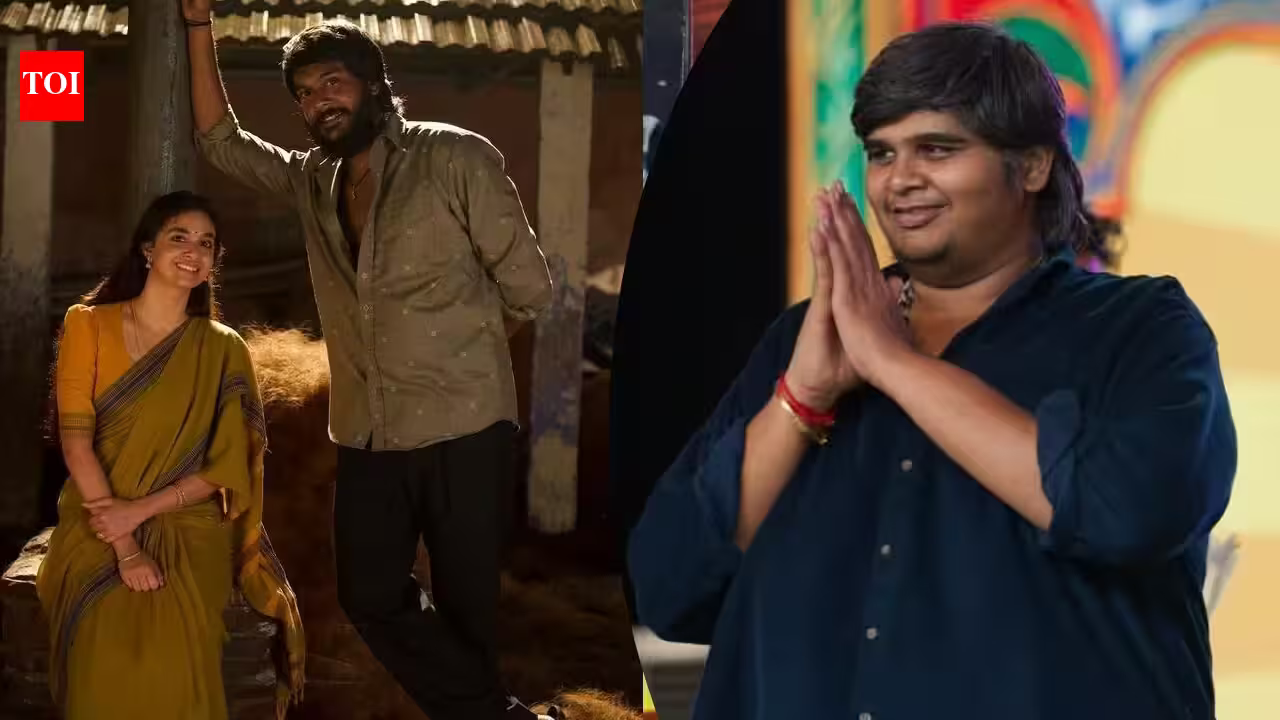
In the bustling landscape of contemporary Indian cinema, where high-octane actioners and star-driven spectacles often dominate the conversation, there occasionally emerges a project that transcends the medium, transforming into a cultural touchstone. Karthik Subbaraj, a filmmaker who has carved a reputation for his idiosyncratic storytelling and visual panache, has found himself at the helm of such a phenomenon with his latest outing, Dorothy. While the box office numbers are undeniably positive, it is the ripple effect the film has created in the social consciousness that has left the director most moved.
At a recent success meet held to celebrate the film’s triumphant run, Subbaraj sat before an auditorium of journalists and fans, but his focus wasn’t on the profit margins. Instead, he spoke with the quiet, profound weight of a director who realizes he has done more than just tell a story—he has shifted a perspective.
The emotional shift: A new lens on transgender identity
The most poignant moment of the event occurred when Subbaraj addressed the shifting attitudes of his male audience members. In a society where masculinity is often performatively rigid, the vulnerability displayed by men after watching Dorothy caught even the director by surprise.
Subbaraj recounted stories of men approaching him, their eyes wet with emotion, admitting that the film had dismantled long-held biases they hadn’t realized they possessed. “We may have looked at transgender people as fellow human beings, but a lot has changed now,” Subbaraj told the crowd. “Many men told me that they cried after watching this film and that their perspective towards transgender people has changed. That is the real success of this film.”
For a director whose past work is often lauded for its technical precision and genre-bending intensity, this feedback serves as a sobering reminder of the power of empathy in cinema. To move an audience to tears is one thing; to move them toward a more nuanced, inclusive worldview is a victory that renders traditional metrics of success almost trivial.
Silence as a strategy: Trusting the audience
Long before the film arrived at this point of critical and commercial acclaim, Dorothy navigated choppy waters. In the lead-up to its release, the film faced a barrage of negative speculation and premature skepticism. In an industry where PR machinery usually jumps to defend a project at the first sign of trouble, Subbaraj chose a radically different path: silence.
“When negative opinions came about the film, I stayed quiet and trusted the fans and the people,” he explained. It was a gamble of faith. By refusing to engage in the digital noise or the frantic social media discourse, he allowed the work to speak for itself. It’s a testament to the audience’s discernment that the film ultimately found its footing. This isn’t just a victory for the film, but a vindication of the filmmaker’s belief that viewers, given the chance, will identify quality and authenticity far better than any marketing campaign can dictate.
The Maestro’s touch: Ilaiyaraaja’s emotional scaffolding
No discussion of Dorothy is complete without acknowledging the architect of its emotional landscape, the legendary Ilaiyaraaja. In an era of aggressive sound design and bombastic background scores, the inclusion of the Maestro’s music provided a rare, timeless heartbeat to the film.
Subbaraj, who grew up as an admirer of the composer, spoke about the symbiotic relationship between the visuals and the music. “We have grown up listening to his songs since childhood,” he said. “His music has become an important part of this film and helped it reach this level.”
Ilaiyaraaja’s score acts as more than just an accompaniment; it serves as a bridge between the screen and the audience’s memories. It is the invisible thread that ties the film’s narrative to the personal histories of the viewers, making the experience of watching Dorothy feel less like viewing a film and more like reconnecting with a half-forgotten emotion.
Breaking the mold: The climax controversy
Perhaps the most anxiety-inducing aspect of the film’s production was its climax. The narrative choices Subbaraj made for the closing act were unconventional, leading to internal concerns that they might alienate the average theater-goer.
“Everyone asked me whether people would accept the climax,” Subbaraj admitted. There was a palpable tension leading up to the release, with skeptics wondering if the ending was too daring for a mainstream audience. Yet, the theater experience told a completely different story.
Instead of confusion or rejection, the director found the audience fully engaged. He specifically highlighted college students—often seen as the harshest critics—who celebrated the film with an enthusiasm usually reserved for blockbuster anthems. He noted that in many screenings, the energy in the room shifted from passive viewing to something resembling a concert, particularly once the track “Muthu Mani” began. It serves as a reminder that audiences aren’t afraid of complex or risky endings; they are simply hungry for a narrative that respects their intelligence.
A commitment to action
The event was not merely a retrospective; it was a call to action. Proving that the film’s commitment to the transgender community extends far beyond the credits, the team announced that a portion of the film’s earnings would be donated to support 25 transgender individuals.
This gesture underscores a growing trend in Indian cinema where social impact is becoming a tangible component of success. Karthik Subbaraj has managed to balance the art of the filmmaker with the heart of an activist. By championing a story that demands compassion and backing it with material support, Dorothy has moved from being a piece of entertainment to a movement. As the team celebrates, it’s clear that while the accolades are nice, the true legacy of Dorothy will be written in the quiet, profound changes in the hearts of those who walked out of the theater feeling just a little more human than when they walked in.
Disclaimer: This content is auto-generated for informational purposes only.
Source: Read Original News