

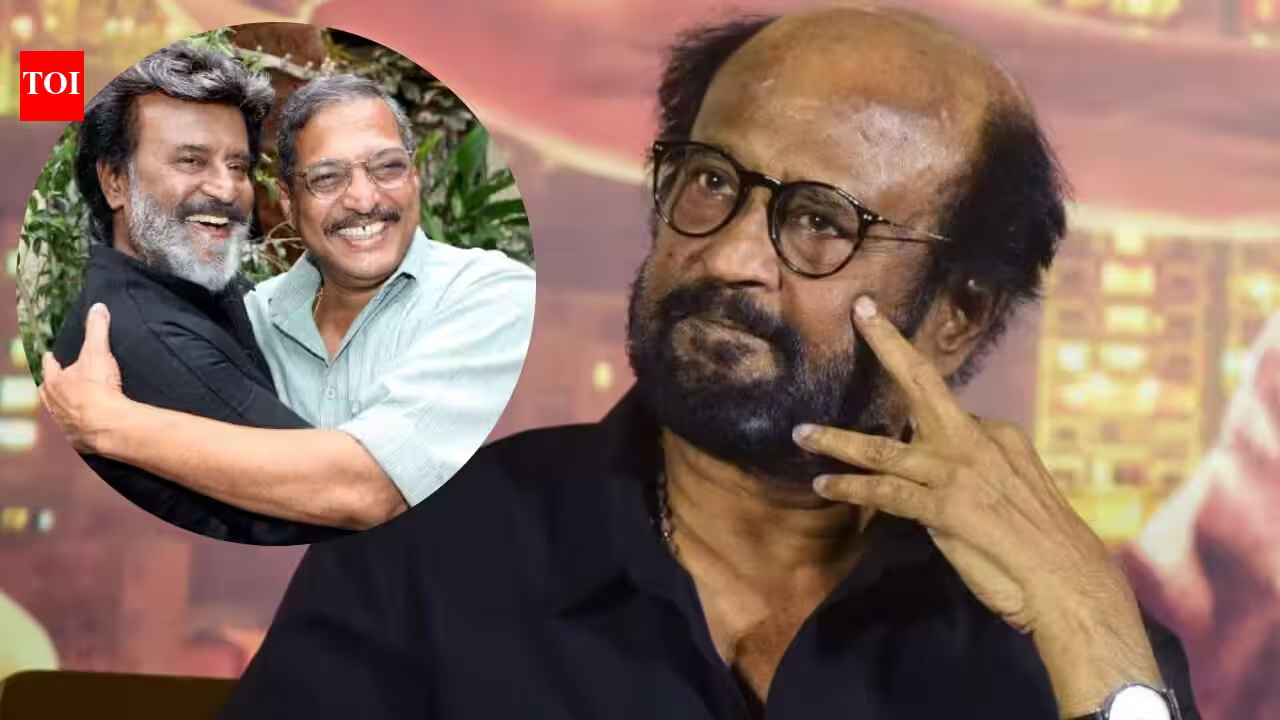






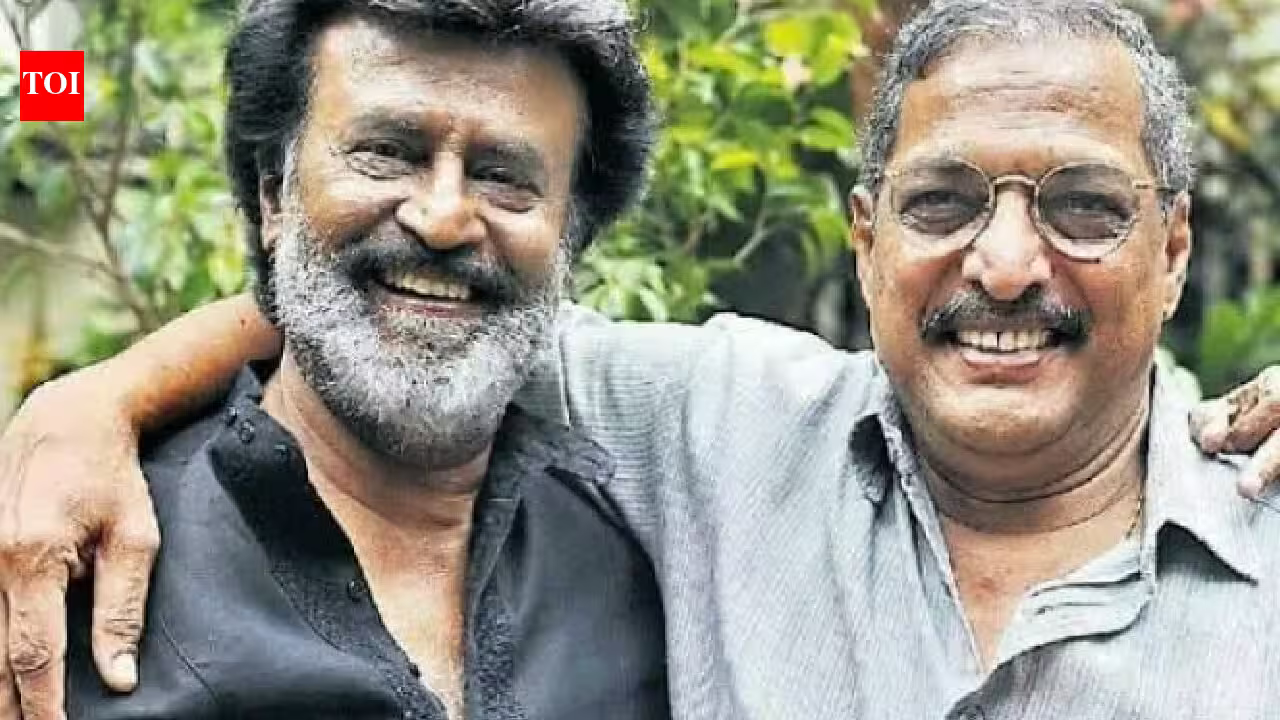
The Indian film industry stands a little quieter today, mourning the loss of a titan whose screen presence could command silence in a packed theater with nothing more than a furrowed brow or a singular, gravelly line of dialogue. As we look back on the sprawling, multi-decade tapestry of Nana Patekar’s career, one particular chapter stands out for its sheer cinematic gravity: his electrifying face-off against the legendary Rajinikanth in Pa. Ranjith’s 2018 political drama, Kaala.
It was a casting choice that felt both inevitable and impossible—a collision of two distinct acting philosophies. Patekar, the method-heavy, intensity-driven veteran of Marathi and Hindi cinema, stepping into the world of the “Superstar” in a high-stakes Tamil production. The result was pure electricity, but as we reflect on this legacy, it is worth remembering that this legendary confrontation nearly never happened at all.
The Hesitation of a Titan
To understand the significance of Kaala, one must understand the man who played Haridev Abhyankar. Nana Patekar was never a man to chase the spotlight for the sake of ego; he chose scripts that gnawed at his sensibilities. When the offer for Kaala arrived, the initial answer from his camp was a resounding “no.”
Patekar was genuinely conflicted. At this stage in his illustrious career, the lure of playing a “villain”—even a complex, politically charged antagonist—wasn’t enough to tempt him. He was wary of being relegated to a one-dimensional foil, a caricature of evil meant only to be vanquished by the hero. He wanted substance, nuance, and a reason to invest his soul into a role that wasn’t his own. It was a classic Patekar stance: if the script didn’t move him, the paycheck certainly wouldn’t.
The Superstar’s Personal Plea
What turned the tide was not a massive budget or a persuasive producer, but the singular, humble influence of Rajinikanth himself. In a move that showcased the grace for which he is famous, Rajinikanth personally reached out to the veteran actor. He didn’t send an assistant or a casting director to convince him; he made the call himself.
During their interaction, Rajinikanth stripped away the aura of the “Superstar” and engaged in an actor-to-actor conversation. He recounted the vision for the film and, with characteristic modesty, uttered a sentiment that stunned Patekar. Rajinikanth confessed to him that in the scenes they would share, he was worried about the audience’s gaze—specifically, that the viewers would be so mesmerized by Patekar’s performance that they would forget to look at the hero.
It was a masterclass in diplomacy and genuine appreciation. Patekar, known for his own rigorous professional standards, was disarmed by the gesture. He later recalled at the film’s pre-release event that it was this deep sense of mutual respect and the affection he held for Rajinikanth that ultimately convinced him to step into the shoes of the formidable Haridev Abhyankar.
A Visionary’s Casting Choice
While Rajinikanth provided the emotional push, the vision for the character belonged to director Pa. Ranjith. The filmmaker had long been an admirer of Patekar’s distinct brand of intensity. He didn’t want a conventional baddie for Kaala; he wanted a mirror image of the protagonist—a man of deep-seated conviction, albeit one whose ideology stood in stark contrast to the hero’s.
For Ranjith, Patekar was the only choice. He needed someone who could stand toe-to-toe with Rajinikanth, someone whose silence felt heavier than a monologue. Rajinikanth, for his part, was palpably excited. He had famously compared the stakes of this particular rivalry to his most iconic cinematic battles—the legendary intensity of Antony in Baasha and the formidable, unstoppable force of Neelambari in Padayappa. By bringing Patekar into the fold, the Kaala team weren’t just hiring an actor; they were hiring an institution.
Mentorship on the Set of ‘Kaala’
The set of Kaala became a unique confluence of generations and acting styles. Alongside heavyweights and a stellar supporting cast including Eswari Rao, Huma Qureshi, and Samuthirakani, the production also featured Pankaj Tripathi—an actor who, much like Patekar, has built a career on authentic, grounded performances.
It was here that the legendary nature of Patekar’s mentorship revealed itself. There is a famous anecdote from the sets where Patekar, ever the perfectionist and the critical thinker, questioned why an actor of Tripathi’s caliber had accepted such a limited screen time in the film. It was a classic “Patekar moment”—unfiltered, direct, and rooted in an absolute belief that an actor must respect their own craft enough to demand more. He encouraged Tripathi to hold out for roles that would fully challenge his potential, providing a moment of guidance that speaks volumes about the man’s respect for the sanctity of acting.
A Legacy Etched in Stone
When we revisit Kaala today, it serves as a testament to what happens when two giants decide to leave their egos at the door for the sake of the story. The film remains a highlight in the later part of their respective careers, a rare instance where the “Hero vs. Villain” trope was elevated into a profound meditation on power, land, and identity.
Nana Patekar’s departure marks the end of an era. Yet, as we watch his performance as Haridev Abhyankar—the subtle shifts in his eyes, the calculated calm of his dialogue delivery—we are reminded that he was an actor who never did anything by halves. He demanded excellence from himself and from those around him. Kaala was not just a film; it was the final, triumphant collaboration of two forces of nature who understood that the true magic of cinema lies not in the spectacle of the hero, but in the tension between two souls sharing the frame. He leaves behind a body of work that is as formidable as it is unforgettable.
Disclaimer: This content is auto-generated for informational purposes only.
Source: Read Original News