








In the rapidly shifting landscape of Indian cinema, where the glitter of VFX often threatens to outshine the soul of a script, the voice of a veteran carries significant weight. Subhash Ghai, the “Showman” of Hindi cinema whose name is synonymous with the grandeur of the 80s and 90s, recently turned his gaze toward the most ambitious project currently gestating in the corridors of Bollywood: Nitesh Tiwari’s Ramayana.
Speaking at the India Today Conclave Mumbai 2026, Ghai didn’t just offer a polite nod of approval; he provided a masterclass on the permanence of human emotion in an era obsessed with silicon-based intelligence. For a man who defined the template of the Indian “big-screen entertainer,” his endorsement of the upcoming epic serves as a beacon of optimism for a project that holds the weight of a billion expectations.
The Pillars of the New Epic: Nitesh Tiwari and His Cast
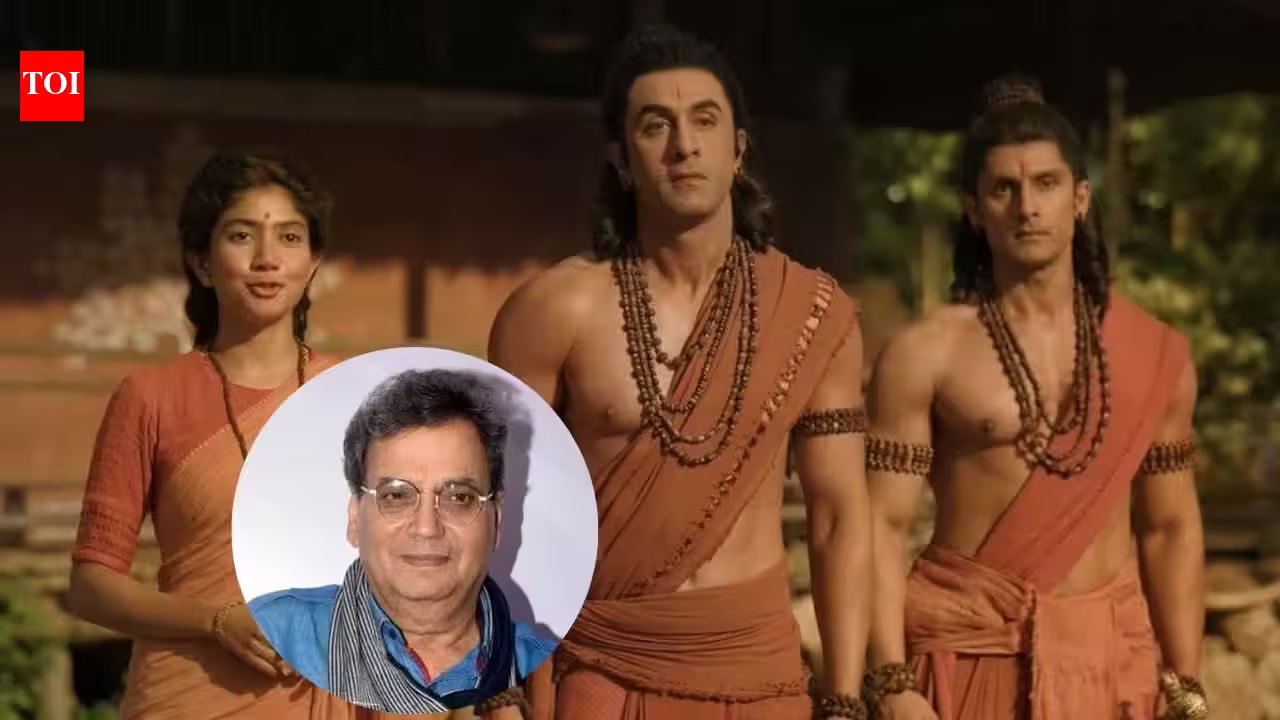
When Ghai speaks about Ramayana, he is not merely discussing a film; he is evaluating the stewardship of India’s most sacred narrative. With Nitesh Tiwari at the helm, Ghai sees a filmmaker who understands the delicate balance between spectacle and heart. Tiwari, known for his grounded yet impactful storytelling in Dangal and Chhichhore, is widely considered the ideal shepherd for a project of this magnitude.
“Content will always remain the king,” Ghai stated firmly. He emphasized that even with a monumental budget and a sprawling production house backing it, the core of the film’s success rests on the shoulders of the storyteller. He heaped praise on the casting choices, specifically acknowledging Ranbir Kapoor, who is tasked with embodying the gravity and divinity of Lord Rama. Alongside Sai Pallavi as Sita and Yash as the formidable Ravana, the ensemble is being viewed as one of the most intriguing lineups in recent memory. By framing the project through the lens of “good storytelling and big-hearted people,” Ghai signaled that the team behind Ramayana is looking in the right direction: focusing on the character arcs rather than just the digital bells and whistles.
The Human Heart vs. The Algorithm
A recurring theme of the Conclave was the looming shadow of Artificial Intelligence. In an industry where AI can now write scripts, generate imagery, and potentially manipulate performances, the question of whether a machine can replicate the soul of a blockbuster is more relevant than ever. Ghai’s take on this is refreshingly analog. He posits that while AI is an inevitable evolution, it remains a tool—a sophisticated paintbrush, if you will—but it lacks the pulse of a human creator.
“Whatever technology may come, it will always need a good director, a storyteller. That will always be there for 200 years,” Ghai remarked. His philosophy is rooted in the idea that the director’s role is to act as the bridge between the written word and the audience’s emotional receptors. To Ghai, the writer speaks through the pen, but the director translates that essence through the camera. It is this translation—the nuances of a gaze, the pacing of a scene, the unspoken tension—that technology struggles to grasp with the same depth as a seasoned human artist.
The Eternal Resilience of Ancient Narratives
One of the most poignant moments of his address was his reflection on the endurance of India’s epics. He reminded the audience that stories like the Ramayana and the Mahabharata have survived for millennia, transitioning from oral traditions to palm-leaf manuscripts, then to the Ramleela stage, and eventually to television and global cinema.
Ghai pointed out a simple, immutable truth: the core of these stories is immovable. “You will not turn Ram into Ravan in Ramayana,” he quipped, underscoring that while technology allows us to visualize the Pushpaka Vimana with unprecedented clarity, it cannot, and should not, change the fundamental morality or the emotional trajectory of the characters. By grounding the upcoming Ramayana within the continuity of these epic traditions, he effectively silenced the cynical whispers that worry about the “modernization” or “distortion” of the text. He sees the film as the latest chapter in a story that is designed to outlive the technology used to film it.
The Future of Filmmaking: Accessibility Through Technology
While Ghai champions the supremacy of human emotion, he is far from a technophobe. He challenged the younger generation of filmmakers to look beyond the fear of being replaced by AI and instead consider how these tools can democratize the industry. He drew a fascinating parallel between the budgets of the past and the possibilities of the future, suggesting that a project costing 100 crores today could eventually be realized for 10 crores, thanks to the optimization brought about by AI.
This perspective is crucial for independent creators. By lowering the barrier to entry, technology could unlock a wave of fresh, diverse voices that previously lacked the financial backing to produce high-concept, visually immersive stories. It is a bold vision that suggests that instead of making cinema “lesser,” technology could be the catalyst for a second golden age of Indian storytelling, provided the human at the center remains the focus.
Passing the Torch: Legacy and the Road Ahead
The session also touched upon the legacy of the Ghai household, with his daughter, Meghana Ghai Puri, addressing the daunting yet fulfilling task of maintaining a standard of excellence in an evolving media landscape. For Subhash Ghai, who has given the world classics like Karz, Khalnayak, and Pardes, the transition from the master of big-budget dramas to a mentor for the digital age is seamless.
As the industry looks toward the Diwali 2026 release of the first part of Ramayana, the excitement is palpable. With the endorsement of the industry’s resident “Showman,” Nitesh Tiwari’s epic carries more than just the burden of its production budget; it carries the collective hope of the Indian film industry. If Ghai’s predictions hold true, this project will not just be a technological marvel—it will be a masterclass in the kind of emotional storytelling that resonates long after the screen goes black and the servers are powered down. In the end, as Ghai suggests, it isn’t the pixels that will make the audience cry, cheer, or reflect; it is the human journey, immortalized by a director who understands that, above all else, content remains king.
Disclaimer: This content is auto-generated for informational purposes only.
Source: Read Original News