








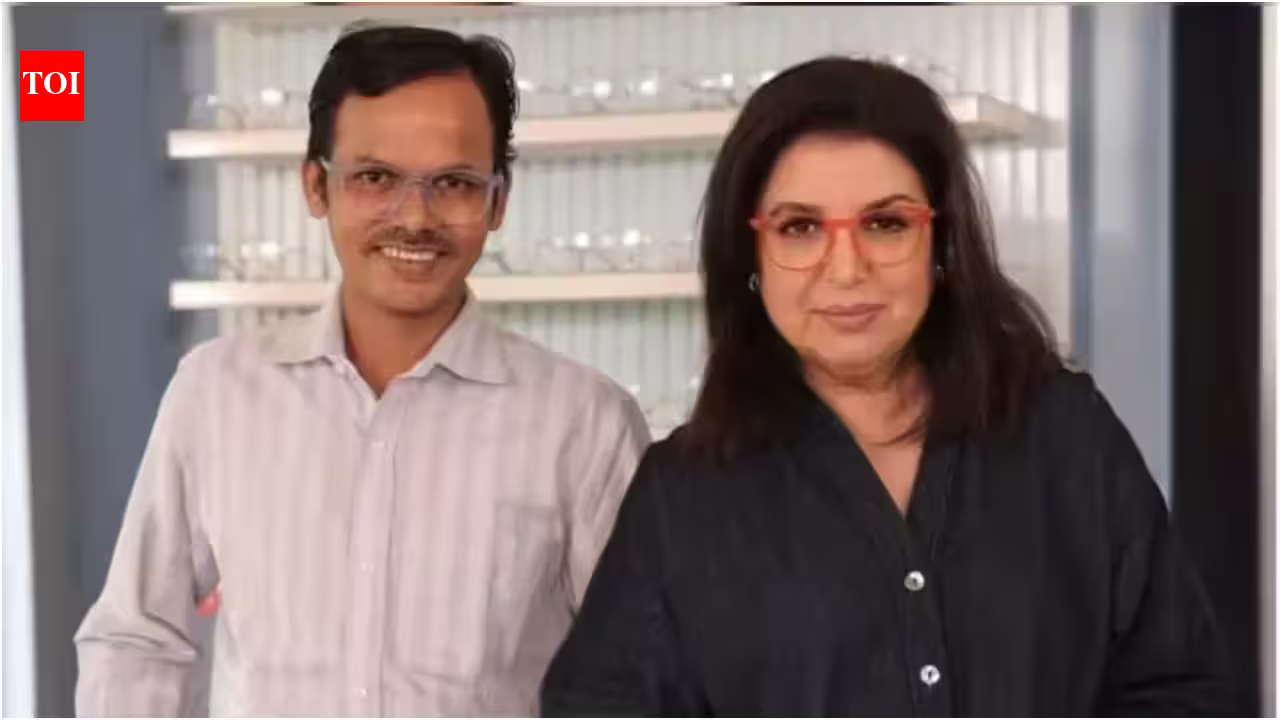
In the curated, polished world of Bollywood celebrity vlogging, where every frame is meticulously lit and every interaction is designed to feel “relatable,” there exists an unlikely breakout star: Dilip, the longtime cook of director Farah Khan. For millions, Dilip has become a staple of the YouTube diet—a man whose unvarnished, dry wit and playful back-and-forth with the outspoken filmmaker have made him a beloved household name. But for seasoned comedian and professional cynic Cyrus Broacha, the charm has worn thin.
In a recent, typically unfiltered episode of his podcast Cyrus Says, Broacha didn’t mince words. While the rest of the internet seems to have collectively decided that Dilip is a national treasure, Broacha is officially the dissenting voice.
Cyrus Broacha on Dilip: ‘He is overrated’
The critique came during a guest spot by comedian and improviser Shantanu Anam. As the conversation veered toward the viral nature of Farah Khan’s behind-the-scenes content, Broacha abruptly halted the praise, painting a picture of Dilip that stands in stark contrast to the “lovable cook” persona viewers have grown accustomed to.
“I don’t like that guy. He irritates me,” Broacha declared, his tone oscillating between amusement and genuine vexation. “He is like acting all the time now. The first couple of times he was nice; otherwise, he looks like a fraud to me.”
Broacha’s primary contention isn’t just with Dilip’s demeanor, but with the suspected artifice behind the lens. “I think Farah feeds him the lines and then he says whatever he wants,” he argued. “Sometimes I feel his heart is not in it. He is overrated.”
The retort from his guest was immediate. Shantanu Anam, serving as the voice of the defense, reminded Broacha that he occupies a lonely island of dissent. “You are the only person in the world who doesn’t like Dilip,” Anam pointed out, highlighting the massive, protective fanbase Dilip has amassed. In an era where authenticity is the highest currency, Broacha’s accusation—that Dilip has become a character rather than a person—is perhaps the harshest critique one can level at a reality-vlogger.
How Farah Khan’s YouTube success changed Dilip’s life
Whether one finds Dilip’s humor scripted or endearing, there is no denying the profound, tangible impact Farah Khan’s YouTube venture has had on his life. For those who view the vlogs as merely entertainment, the subtext—a story of social mobility and employer loyalty—is often missed.
By 2025, the narrative arc of the channel shifted from purely chaotic celebrity home tours to something more altruistic. Farah has been candid about her role in transforming Dilip from an employee into a collaborator. The vlogs haven’t just provided a platform for his dry humor; they have served as a financial engine that helped Dilip clear years of debt and break ground on a house in his hometown in Bihar.
In a heartfelt conversation with Soha Ali Khan, Farah laid bare the realities of the “help” she provides. She described the cycle of debt she found him in, noting that simply handing over money wasn’t the solution. “Whatever I am giving him is going down a well,” she noted, highlighting her role in financial mentorship—steering him away from high-interest loans and toward structural stability. Beyond the house, she has championed his children’s education and supported his son’s culinary aspirations, proving that the bond between them transcends the viral clips.
Dilip’s journey from Rs 300 to a share of vlog earnings
To understand why Dilip’s presence resonates so deeply with the audience, one must look at the trajectory of his career. It is the classic “rags to success” story that Bollywood loves to script, yet this is playing out in the real world. Dilip has recalled his early days in Delhi, earning a meager Rs 300—a sum that wouldn’t cover a casual lunch in most of the upscale kitchens he now traverses.
When he first entered Farah Khan’s employ, his salary was Rs 20,000. While that was a baseline for his service as a cook, the YouTube revolution changed the math entirely. Farah has openly acknowledged that her vlogs are a collaborative effort, and she has ensured that Dilip participates in the spoils. By sharing revenue and securing brand partnerships that contribute to his personal milestones, Farah has turned the “vlog cook” role into a legitimate career path.
For the average viewer, this transparency is what cements the appeal. When viewers see Dilip, they aren’t just seeing a man making jokes; they are seeing the fruit of a relationship where a celebrity is using her massive influence to lift the people directly around her.
The “Scripted” Debate: Is Authenticity Dying?
The central tension in Broacha’s critique touches on a broader cultural anxiety: the death of the “candid” moment. In the early days of YouTube, creators were often praised for their raw, unedited lives. Today, as influencers and celebrities professionalize their channels, the line between “life” and “performance” has blurred.
Broacha, a veteran of improvisational comedy, is uniquely attuned to the timing and cadence of a “joke.” When he calls Dilip’s humor “scripted,” he is highlighting a transition point: the moment when a person stops being themselves and starts playing a version of themselves that works for the algorithm.
Yet, perhaps the “scripted” nature of it doesn’t matter. In the context of Farah Khan’s vlogs, the charm isn’t necessarily that it’s unrehearsed; the charm is in the dynamic itself. Whether or not Farah whispers a punchline to him, Dilip provides a grounded, grounded-in-reality presence that celebrities often lack.
Whether he is a “fraud,” as Broacha claims, or a genuinely lovable soul, one thing is certain: Dilip isn’t going anywhere. With his new house in Bihar and a growing portfolio of brand work, his status as a digital icon is secure. Cyrus Broacha may be the only one shouting from the rooftops that he’s “overrated,” but in the theater of YouTube, a little controversy only keeps the audience watching.
Disclaimer: This content is auto-generated for informational purposes only.
Source: Read Original News