








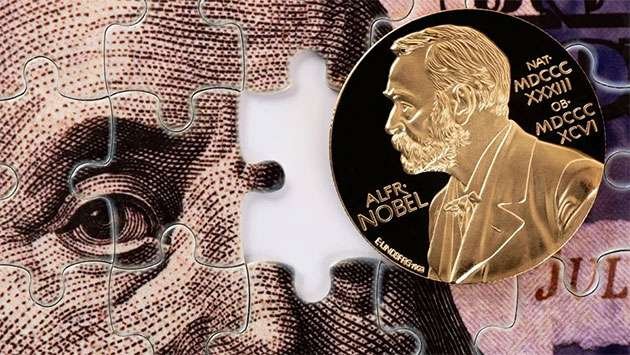
STOCKHOLM — The Royal Swedish Academy of Sciences announced today that the 2026 Sveriges Riksbank Prize in Economic Sciences in Memory of Alfred Nobel has been awarded to American economists Robert E. Hall and Michael Woodford. The pair were recognized for their seminal contributions to macroeconomics, specifically their transformative research into the dynamics of labor markets and the mechanics of monetary policy.
The academy lauded Hall, a professor at Stanford University, and Woodford, a professor at Columbia University, for providing the analytical framework that has come to define modern central banking and economic stability policy. In their citation, the Nobel Committee noted that the laureates’ work has been instrumental in helping policymakers navigate the complexities of inflation, unemployment, and economic shocks over the past three decades.
Robert E. Hall, often referred to as the “economist’s economist,” was cited for his groundbreaking analysis of labor market fluctuations. His research into the “Hall-Shimer” puzzle—which examines why unemployment is so sensitive to small changes in productivity—has fundamentally changed how economists understand recessions. His work challenged existing models by demonstrating that the intensity of job-finding rates is driven more by business cycle fluctuations than previously believed. By dissecting the friction between firms and job seekers, Hall provided a clearer lens through which to view the costs of economic downturns.
Michael Woodford was honored for his profound influence on the conduct of monetary policy. His 2003 masterpiece, Interest and Prices: Foundations of a Theory of Monetary Policy, is widely considered the “bible” of modern central banking. Woodford shifted the focus of economic theory away from the quantity of money toward the importance of managing public expectations. His theory of “expectations management” posits that a central bank’s greatest tool is not necessarily its balance sheet, but its ability to credibly communicate future policy paths. This framework, known as the New Keynesian synthesis, has been adopted by the Federal Reserve, the European Central Bank, and the Bank of England to maintain price stability in an era of digital finance and global economic integration.
“Together, Hall and Woodford have built the bridge between how we measure the struggles of the individual worker and how we craft the policies of the global financial system,” said Göran Hansson, secretary-general of the academy. “Their work has provided the intellectual scaffolding that has allowed the global economy to avoid total collapse during the turbulence of the 21st century.”
The award, which includes a cash prize of 11 million Swedish kronor (approximately $1 million), will be presented at a formal ceremony in Stockholm on December 10, the anniversary of Alfred Nobel’s death. The recognition of Hall and Woodford underscores a broader trend in the Nobel Committee’s recent choices: prioritizing practical, policy-oriented research that addresses the immediate challenges of inflation and labor market volatility in an increasingly interconnected global economy.
Disclaimer: This content is auto-generated for informational purposes only.
Source: Read Original News