







The Emergence of AI-Accelerated Software Development
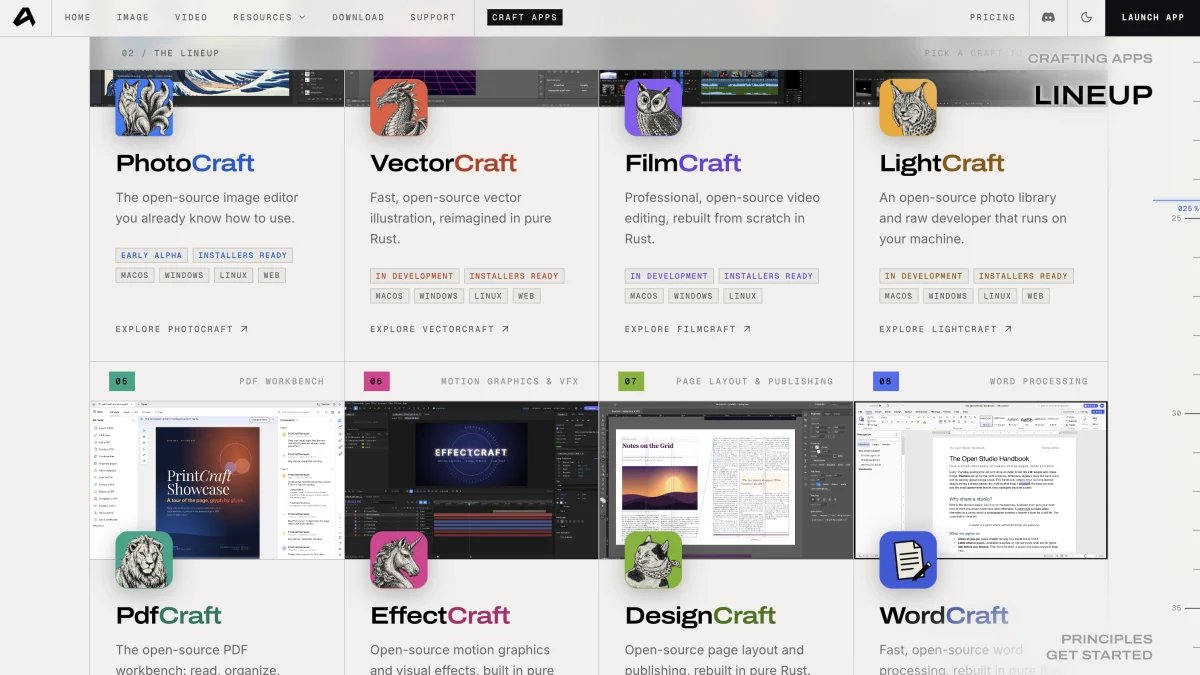
The software industry is witnessing an unconventional disruption as a single developer, Brandon Thomas, has released a suite of open-source applications that aim to replicate the functionality of industry giants Adobe and Microsoft. Operating under the brand ArtCraft, Thomas has utilized artificial intelligence to build a collection of tools—including PhotoCraft, FilmCraft, WordCraft, and GridCraft—written primarily in the Rust programming language. This project represents a significant shift in how complex software suites are architected, moving away from massive, multi-decade corporate engineering teams toward streamlined, AI-assisted development workflows.
The project encompasses a vast array of functionalities, effectively offering free, open-source alternatives to subscription-based standards like Photoshop, Premiere Pro, Microsoft Word, and Excel. By leveraging AI to speed up the coding process, Thomas has been able to bridge the gap between niche utility tools and comprehensive creative suites. This development raises a fundamental question for the tech sector: can AI-driven software creation produce high-performance applications that are robust enough to displace legacy giants, or will these tools remain limited by the lack of institutional polish and long-term maintenance?
The Mechanics and Security of AI-Assisted Code
The rapid development cycle of the ArtCraft suite has sparked a rigorous debate regarding the use of artificial intelligence in professional software production. Critics often point to the potential for security vulnerabilities and “black box” code when development is heavily reliant on automated model generation. While Thomas, a software engineer by trade, has defended the project by stating that he actively oversees and maintains the codebase, the reliance on AI to generate the foundational logic for complex applications like video editors and word processors is a point of contention for many security-conscious users.
From a technical perspective, building in Rust provides memory safety and performance advantages that are often lacking in older, legacy software suites. However, the complexity of creative tools goes beyond simple code structure. High-end software requires years of performance tuning, GPU optimization, and integration with a wide ecosystem of plugins and hardware drivers. The success of ArtCraft will depend on whether an open-source community can provide the rigorous testing and maintenance required to ensure that these tools remain stable and secure enough to replace the mature software relied upon by creative professionals globally.
Disrupting the Subscription-Based Business Model
A primary driver behind the interest in ArtCraft is widespread dissatisfaction with the current subscription-driven landscape. Adobe and Microsoft have effectively shifted the industry toward a recurring revenue model, where users must pay monthly or annual fees to maintain access to their creative tools. Many professional users view these tactics as restrictive, particularly when companies make it challenging to cancel plans or when feature updates do not justify the recurring costs.
Thomas’s initiative serves as a form of ideological protest against these corporate structures. By offering functional replicas for free, ArtCraft challenges the premise that high-end software must be locked behind a paywall to remain sustainable. For many independent creators, students, and small business owners, the prospect of a free alternative that matches core professional capabilities is highly appealing. This movement mirrors trends seen elsewhere in the technology sector, where open-source communities are increasingly attempting to reclaim control over their digital tools from centralized corporate providers.
Technical Limitations and Professional Scalability
While the existence of free, AI-assisted alternatives to Photoshop or Excel is impressive from a development standpoint, the transition to these tools in a professional environment is fraught with challenges. Legacy software like the Adobe Creative Suite or Microsoft Office is built upon decades of edge-case handling, file format compatibility, and specialized hardware acceleration. Creative professionals rely on specific workflows that involve complex file imports, precise color management, and collaborative features that are notoriously difficult to replicate.
For ArtCraft to achieve actual market displacement, it must do more than simply mimic basic functionality; it must offer a reliable ecosystem. This includes the ability to open legacy file formats with total accuracy, support for third-party hardware peripherals, and a consistent roadmap for feature updates. Current sentiment suggests that while these tools might suffice for hobbyists or basic tasks, they may lack the deep technical integrations required for high-stakes, enterprise-level creative workflows. Whether the ArtCraft suite can evolve from a collection of “AI-coded clones” into a sustainable platform depends on community contributions and the long-term dedication of its maintainers.
The Future of Open-Source Software Ecosystems
The long-term impact of projects like ArtCraft will likely be felt more in how they change developer behavior rather than immediate industry collapse. The ability for a lone developer or a small group to utilize AI as a force multiplier to replicate the work of thousands of corporate engineers is a watershed moment for software engineering. Even if ArtCraft itself does not replace Adobe or Microsoft, it has proven that the barrier to entry for building feature-rich, competitive software is drastically lower than it was a decade ago.
If this trend continues, we may see a surge in “bespoke” software suites designed for specific user needs, rather than the bloated, all-encompassing apps that define today’s market. The era of the monolithic, paid software suite may be heading toward a period of significant competition from smaller, more agile, and community-owned tools. As developers continue to refine the use of AI in generating efficient code, the balance of power within the software industry may shift away from corporate gatekeepers, favoring platforms that prioritize accessibility, open source distribution, and user autonomy.
Disclaimer: This content is auto-generated for informational purposes only.
Source: Read Original News