







A Decade of Infrastructure: The Impact of Swachh Vidyalaya on Education
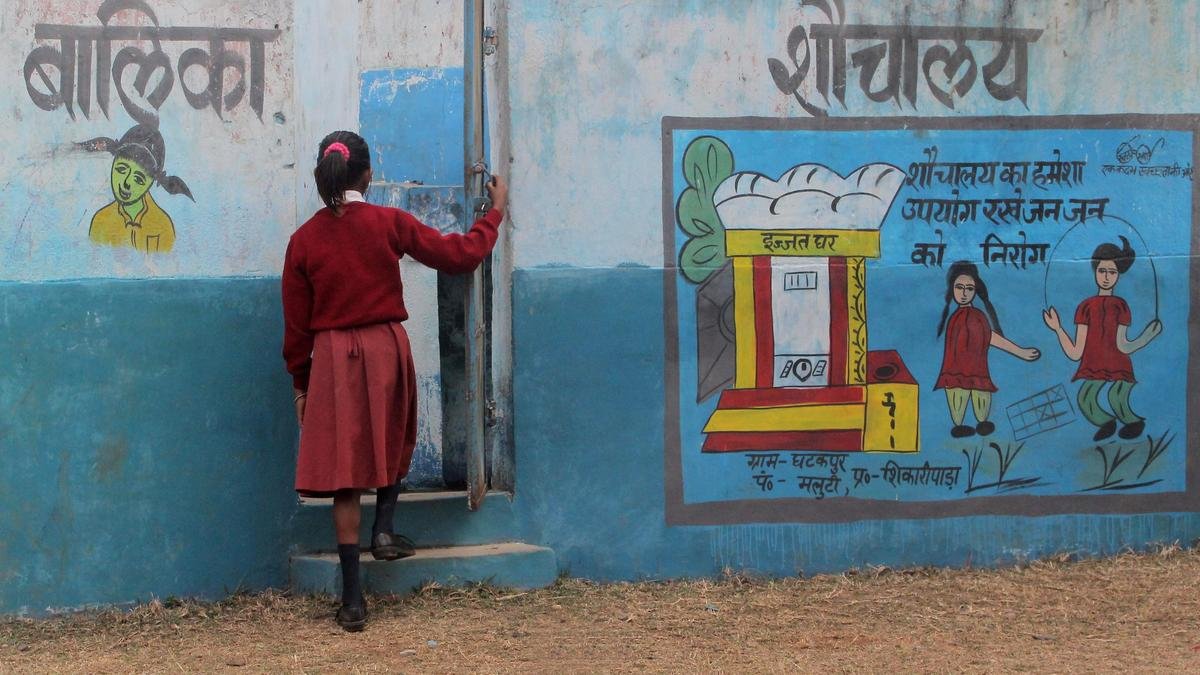
When the Swachh Bharat Mission was launched on October 2, 2014, its reach extended far beyond public spaces; it became a cornerstone of India’s educational policy. The “Swachh Vidyalaya” initiative established a clear mandate: every government school must provide separate, functional toilets for boys and girls. Twelve years later, data confirms that this massive infrastructure drive has achieved, by and large, the promise of near-universal basic facilities in Indian schools.
The Quantitative Leap
The progress recorded over the last decade is statistically significant. According to the WHO/UNICEF Joint Monitoring Programme (JMP), the percentage of Indian schools with access to basic drinking water skyrocketed from 55% in 2015 to 97% by 2025. In terms of global progress, India stands among the top performers, with only five other nations demonstrating a faster rate of improvement.
Similarly, basic sanitation coverage in schools rose from 62% to 81%. Data from the Ministry of Education’s UDISE+ (Unified District Information System for Education Plus) 2025-26 report corroborates this upward trend, indicating that 98.5% of India’s 14.56 lakh girls’ and co-educational schools now possess a dedicated girls’ toilet.
Toilets as an Educational Catalyst
The importance of this infrastructure extends well beyond public health; it is a critical driver of educational equity. Research, such as the 2017 study by economist Anjali Adukia, highlights that the availability of separate school latrines has a measurable impact on the enrollment and retention of adolescent girls. For these students, the intersection of puberty, privacy, and safety is a deciding factor in whether they remain in the classroom.
The current data suggests a positive correlation between these facilities and school retention. UDISE+ figures for 2025-26 show that girls in Classes 9 to 12 are dropping out at a lower rate (5.7%) than boys (8.3%). Furthermore, the National Family Health Survey (NFHS-6) indicates that the proportion of women with ten or more years of schooling has grown to 46.4%. For rural students, the presence of a clean, functional facility is often the bridge that allows them to attend school during their menstrual cycles, directly impacting their academic continuity.
The Challenge of Maintenance
Despite these gains, the focus must now shift from construction to maintenance. A toilet is only as effective as its utility; currently, over 61,000 schools—roughly 4% of the total—either lack a girls’ toilet entirely or possess one that is non-functional.
The crisis of maintenance is geographically uneven. Hill states, such as Meghalaya and Nagaland, struggle with environmental challenges like difficult terrain and seasonal water shortages, necessitating specialized, sustainable sanitation designs. In larger states like Rajasthan and Madhya Pradesh, the sheer volume of schools requiring repairs presents a massive logistical hurdle that current funding models struggle to meet.
Bridging the Data and Policy Gap
Discrepancies between datasets—such as the 16-percentage-point difference in sanitation figures between UDISE+ and the JMP—suggest that the next phase of the policy must focus on better verification. Relying solely on self-reported “yes/no” surveys by school heads is insufficient.
Moving forward, the educational system needs a more robust framework:
- Targeted Funding: A dedicated portion of school grants should be earmarked for daily maintenance, cleaning supplies, and repairs, specifically prioritized for schools with the largest infrastructure gaps.
- Community Oversight: School Management Committees and parents should be empowered to conduct monthly inspections using clear, uniform criteria, with findings integrated into school reports to foster accountability.
- Menstrual Health Integration: Schools must move beyond mere construction and prioritize the installation of incinerators and pad vending machines, using data to identify schools with the most urgent needs.
The Swachh Bharat Mission has demonstrated that India possesses the capacity to overhaul national infrastructure in a single decade. As the country pivots to the next chapter, the focus must move toward ensuring these facilities are safe, hygienic, and fully operational. After all, a girl should never be forced to choose between her dignity and her education.
Disclaimer: This content is auto-generated for informational purposes only.
Source: Read Original News