








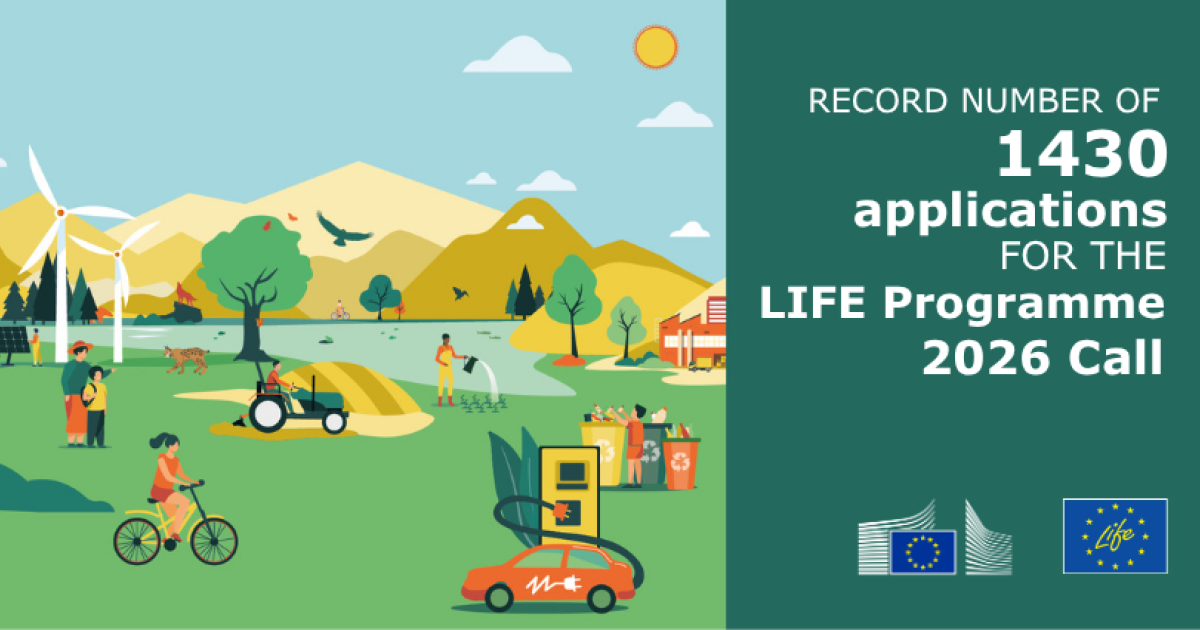
The European Union’s commitment to environmental sustainability has reached a new milestone as the LIFE Programme reports a record-breaking surge in interest for its 2026 Call for Proposals. With 1,430 project applications submitted, the funding instrument has seen a 30% increase in participation compared to the previous year, signaling a heightened urgency among stakeholders to address the climate and biodiversity crises.
This influx of applications is matched by a significant rise in capital requirements. Applicants have requested a total of €4.3 billion in EU funding, a 38% increase over 2025 figures. The breadth of these submissions underscores a growing momentum across Europe to leverage collaborative innovation to meet the bloc’s ambitious Green Deal objectives.
The 2026 submissions span the four core sub-programmes of the LIFE framework, each designed to tackle a specific pillar of European environmental policy:
- Circular Economy and Quality of Life: This sub-programme led the pack with 448 project proposals. These initiatives aim to deploy innovative technologies that reduce waste, improve resource efficiency, and enhance the living standards of European citizens.
- Climate Change Mitigation and Adaptation: Attracting 373 submissions, this category focuses on projects tasked with the critical dual goal of slashing greenhouse gas emissions and bolstering the continent’s resilience against the increasingly severe impacts of climate change.
- Clean Energy Transition: With 363 proposals, this category reflects a strong drive to accelerate the adoption of energy efficiency measures and renewable energy sources, facilitating an affordable and sustainable transition for the European power grid.
- Nature and Biodiversity: Rounding out the portfolio, 246 projects were proposed to address the urgent need to halt and reverse biodiversity loss, protect vital ecosystems, and restore Europe’s natural heritage.
The LIFE Programme is designed to support entities—including businesses, NGOs, public authorities, and academic institutions—that operate either individually or through cross-border collaborations. By fostering partnerships across EU Member States and associated countries, the programme seeks to bridge the innovation gap and drive systemic change in industrial and environmental practices.
Managed by the European Climate, Infrastructure and Environment Executive Agency (CINEA), the programme acts as a cornerstone of the EU’s environmental strategy. Since its inception nearly 35 years ago, LIFE has been the primary vehicle for co-funding environmental action, having supported approximately 6,500 projects to date. The current funding cycle, running from 2021 to 2027, boasts a total budget of more than €5.4 billion.
The selection process is rigorous, with every proposal undergoing an independent evaluation to ensure technical viability and alignment with EU climate, environmental, and energy policies. Given the high volume of interest this year, the competition for the available funding will be intense.
For the applicants, the next phase is one of anticipation. CINEA is scheduled to notify candidates of their results in the spring of 2027. Following the selection process, successful applicants will finalize grant agreements throughout the summer, with the expectation that the selected projects will commence their work before the end of that year.
As the European Union moves toward its 2030 and 2050 climate targets, the 2026 LIFE call for proposals serves as a clear indicator of the private and public sector’s appetite for funding green solutions. By focusing on circularity, clean energy, and ecosystem resilience, the programme continues to position itself as a vital catalyst for the ecological transformation of the European economy.
Disclaimer: This content is auto-generated for informational purposes only.
Source: Read Original News